A few dozen protesters showed up to last weekend’s “Justice for J6” rally in Washington DC, but that did not stop the authoritarian Washington Beltway establishment from spending millions to again turn the area into a fortress, complete with a militarized Capitol Hill Police force and an army of undercover FBI agents. The protesters were easily outnumbered by reporters desperate for another “insurrection” story and by police officers who looked like they were ready for military combat.
Of the reported four people arrested at the event, one turned out to be an undercover FBI agent who was then escorted to “safety” by police after showing his badge. As conservative commentator Dinesh D’Souza Tweeted, the comedy of the event was that “there were so many undercover cops they were arresting each other by accident.”
Earlier, former President Trump warned that the rally was a set-up by an FBI, Homeland Security Department, and Capitol Hill Police Department eager for more trophies in their war against “insurrectionists.” He advised people to avoid the event and it appears their advice was taken.
They did not get their “Second Insurrection.” In fact, as we know from the FBI itself, they did not even get their First Insurrection. Though the Left elites continue to use that term, the FBI affirmed last month that there was no organized plan among the January 6th protesters to overturn the presidential election.
The media’s non-stop hysterical reporting about the January 6th “insurrection” – repeated endlessly by Democratic Party politicians – did serve an important propaganda purpose: anyone with concerns about the way the 2020 presidential election was conducted was immediately demonized and silenced.
But to me it seems a little too obvious that Biden backers and their allies in the deep state would hold a fake rally just to set-up more “insurrectionists” to be arrested. It’s possible that they believe conservatives and Trump supporters are dumb enough to walk into a trap – or perhaps another trap – but I find it unconvincing.
Instead, perhaps this rally was in reality a kind of psychological operation. After all, such an exercise would be a win-win for the planners. On one hand if a massive crowd showed up it would give new life to the now-discredited narrative that an attack on “our democracy” more serious than 9/11 (as President Biden laughably claimed) was operating just below the surface of society.
Authoritarians must be able to point to “the enemy” to consolidate their power.
On the other hand, if no one showed up, as it turns out happened, the real organizers could laugh and crow about how support has evaporated for the hundreds originally arrested after January 6th (many still held without bail, but none charged with “insurrection”). And also, they can claim that support for Donald Trump, who for some reason continues to mortally terrify them, has likewise disappeared.
Maybe that’s just a crazy conspiracy theory, but then again anyone claiming just a few weeks ago that Biden would implement a vaccine mandate was also considered a crazy conspiracy theorist.
This failed rally is a success for Team Biden on one front: very few would now dare to hold a rally calling attention to the shocking injustice that continues to stain the prosecution of so many January 6th protesters. But we must not let enemies of justice win. All liberty lovers must speak out for the unfairly persecuted. Even when it’s politically risky. We must not be silent!
Amazon’s relatively low tax bill in the UK has been a contentious issue for years. As online sales soared, driven by the COVID-19 restrictions adopted in 2020, the company nevertheless displayed a tax-to-turnover ratio of just 0.37 percent.
Boris Johnson is intent on discussing Amazon’s low tax payments in the UK with the company’s founder and executive chairman, Jeff Bezos on the fringes of the United Nations General Assembly in New York this week.
“You can expect the Prime Minister to raise this important issue. We have been an advocate for an international solution to the tax challenges posed by digitalisation of the economy… we will very much be looking to raising that,” the British Prime Minister’s official spokesman told reporters.
Johnson himself confirmed he would “certainly” tackle concerns over Amazon’s minimal tax bill in the UK with the billionaire, as he spoke to reporters on his flight to New York. The PM added: “I will also be congratulating him on his massive forestry initiative. He’s putting a huge amount into planting trees around the world.”
Digital Tax Crackdown
Accounts and public statements of ecommerce giant Amazon, which employs 55,000 people in the UK, registered £13.7bn in sales in the UK in 2019, according to analysis by union Unite. Of this sum, only £5.5bn worth were reported in filings for UK-based companies, with others routed via low-tax haven Luxembourg.
As the company witnessed a 50 percent sales boom amid coronavirus lockdown restrictions last year, to reach £20.63bn, it paid only £492m in direct taxation. Amid concerns that big tech giants sought to dodge higher taxes by re-routing profits through low tax jurisdictions, the British Government has been planning a 2 percent tax on digital sales outside of America targeting Amazon and other tech giants.
Earlier, UK Chancellor Rishi Sunak hailed a “historic” deal thrashed out with G7 finance ministers in June in what is seen as the biggest overhaul of international tax rules for decades. Championed by the Organization for Economic Cooperation and Development (OECD), it was touted as a “huge prize for British taxpayers – creating a fairer tax system for the 21st century”. The measure would force the world’s largest companies to pay a global minimum tax on their profits of at least 15percent, in a measure intended to seal off cross-border tax loopholes. The way companies like Amazon or Alphabet’s Google are taxed would, accordingly, be based partly on where they sell products and services, instead of the location of their headquarters.
After financial leaders from the Group of 20 large economies released a communique in July stating they had reached agreement on a “more stable and fairer international tax architecture,” French Finance Minister Bruno Le Maire described it as a “once-in-a-century tax revolution,” saying, “There is no turning back.” So far, 139 countries have signed up to the OECD’s “Inclusive Framework,” with a number of countries still showing reservations over the terms of the deal.
Former President Donald Trump said in a recent interview with Sky News Australia that COVID-19 originated at the Wuhan Institute of Virology, and claimed it was released due to “gross incompetence.”
Trump said, “Some of the intelligence is classified and I can’t talk about it, but it most likely, and when I say most likely, like 95%, came from the Wuhan lab. I don’t know if they had bad thoughts or whether it was gross incompetence, but one way or the other it came out of Wuhan, it came from the Wuhan lab. I started hearing stories … that there were lots of body bags outside of the lab. I heard that a long time ago. And if they did in fact have body bags, that was one little indication wasn’t it?”
He added, “I think it was probably an accident, I don’t think it was on purpose. If it was, that’s essentially war.”
Trump also shared his own theory about how the pandemic may have started.
“A scientist walked out and had lunch outside in a park or something with the girlfriend, and he had it and she had it,” he said.
“I don’t know if it was patient zero or patient something else, but that’s one theory. I think that it was incompetence. I think that it escaped from the lab through incompetence.”
Trump went on to criticize the World Health Organization and its leader, Director-General Tedros Adhanom Ghebreyesus, claiming that “the WHO is owned and controlled by China. I dropped out of the World Health Organization. I thought it was ridiculous. They were late, they were wrong. They were like a mouthpiece for China.”
Sky News Australia also interviewed Trump’s former secretary of state, Mike Pompeo, who said that Tedros was “deeply beholden” to the Chinese government.
“Dr. Tedros owed his leadership role at the WHO to deals that were cut with the Chinese Communist Party. Dr. Tedros couldn’t have been that next leader without the support of the Chinese Communist Party,” he said, adding that the WHO “weren’t willing to demand from the Chinese Communist Party that they be given access. They failed, they failed because of the absence of backbone and resolve and the world is deeply worse off for this. This was the tragedy, the central tragedy of the end of ’19 and the beginning of ’20. It became political, not scientific. It became driven by personal incentives and not the dataset.”
(Clarion News) On Sunday night, the Emmys were held in an enclosed tent with a slew of celebrities parading around unmasked, triggering condemnation on social media.
Some of the Emmys presenters commented on the fact that the event was not held in an open-air venue, and vaccines were required of the celebrity attendees, as USA Today reported.
Seth Rogen claimed, “They said this was outdoors. It’s not. They lied to us. We’re in a hermetically sealed tent right now. I would not have come to this … There is way too many of us in this little room.”
The show’s DJ Reggie Watts added, “Despite what Seth might have said, we’re going to celebrate and party, but while we’re doing that we’re absolutely following all the health and safety guidelines that some really smart people asked us to do to keep us safe from COVID.”
Cedric the Entertainer chimed in, “It actually feels amazing in here unlike what Seth (Rogen) was talking about. It feels good. We’re all vaxxed. We had to get vaxxed to come here. I got vaxxed. I did not have a reaction like Micki Minaj’s cousin’s friend. I got Pfizer because I’m bougie. Pfizer is the Neiman Marcus of vaccines. Moderna, that’s Macy’s. Johnson & Johnson, that’s TJ Maxx.”
Many social media users had no use for any excuses, especially after the recent star-studded Met Gala where celebrities paraded around maskless.
Fox News meteorologist Janice Dean: “I think after seeing all the celebs without masks or social distancing in a packed tent at @TheEmmys we should pretty much move on with our lives.”
I think after seeing all the celebs without masks or social distancing in a packed tent at @TheEmmys we should pretty much move on with our lives.
Arkansas GOP senator Tom Cotton: “These same liberals sanctimoniously mock Republicans for giving parents a choice about masks. They’re all frauds. And that includes Fauci, who removes his mask when the cameras are off.”
These same liberals sanctimoniously mock Republicans for giving parents a choice about masks.
They're all frauds.
And that includes Fauci, who removes his mask when the cameras are off. https://t.co/5mZAlprqTs
Former Senior Military Aide to President Bill Clinton Buzz Patterson: “Emmys = no masks. Our college and high school sons = masks. Where’s the outrage?”
Outkick founder Clay Travis: “Why did none of the celebrities at the Emmys have to wear masks indoors but all kids ages two and older have to wear them in preschool and school in Los Angeles?”
Why did none of the celebrities at the Emmys have to wear masks indoors but all kids ages two and older have to wear them in preschool and school in Los Angeles?
Another Twitter user: “The rich and famous can’t spread COVID. Masking is solely reserved for us peasants, vaccinated or not.”
One social media user cogently pointed out, “Why is it that only ‘the help’ have to wear masks at the Emmy’s? First it was the Met Gala. And now this. Seems that Covid-19 gives you a pass if you are wearing black tie or a designer frock. Or maybe it is just one rule for one group … and one for another.”
Why is it that only “the help” have to wear masks at the Emmy’s?
First it was the Met Gala. And now this. Seems that Covid-19 gives you a pass if you are wearing black tie or a designer frock. Or maybe it is just one rule for one group…and one for another. pic.twitter.com/H4DSLJ9w1D
The Los Angeles County Department of Health’s current mandate requires attendees at an indoor event with more than 1,000 attendees to wear masks at all times, except when eating, The Daily Mail noted.
A top official within the Michigan Republican Party confirmed to The Michigan Star that the House Oversight Committee chaired by State Rep. Steven Johnson (R-72) is on the verge of holding a hearing on the role of a Detroit-based nonprofit in the 2020 election.
The Starbroke the story on August 5 of how the Michigan Center for Election Law and Administration (MCELA) received a $12 million grant to support its purported purpose of “nonpartisan voter education” and then turned all but a sliver of the money over to two Democratic political consulting firms for a get-out-the-vote campaign.
Up until 2020, the “nonpartisan” nonprofit was led by Jocelyn Benson, the highly partisan Democratic secretary of state of Michigan. It is unclear exactly when Benson left that position, but it was not until September 2020 that her name no longer appears as an officer of the committee in the annual report. Coincidentally, that is the same month when the Center for Election Innovation and Research (CEIR), a nonprofit funded by Facebook founder Mark Zuckerberg and his wife Priscilla Chan, gave the $12 million grant to MCELA for the putative purpose of helping Michigan voters figure out how to navigate the supposed complexities of mail-in ballots.
During the 2020 election, Zuckerberg and Chan donated $350 million to the Center for Technology and Civic Life and an additional $69 million to the CEIR.
Since The Star’s story about MCELA’s Zuckerberg funding appeared on August 5, there has been no official response from state legislators but they have apparently been busy behind the scenes and could schedule a hearing as soon as late September or early October.
“Rep. Steve Johnson is aware of the story and is waiting to schedule a hearing when the Legislature is in session later this month,” said Paul Cordes, the Michigan GOP chief of staff. Cordes referred The Star to State Rep. Johnson for additional details, but Johnson, who is the chair of the Michigan House Oversight Committee, did not respond before this story was published.
In addition, State Sen. Ed McBroom (R-38) who chairs the Michigan Senate Oversight Committee, may have his own questions about the MCELA funding. In his controversial June 23 report dismissing most claims of election fraud in the 2020 election, there was one glaring gap. In the section dedicated to an investigation of “3rd Party/Private Funds Used for Public Election Activities and Equipment,” there was no report. Instead, the following sentence appeared:
“A summary of the work and findings on this issue is not finalized at this time and may be amended to this report at a later date.”
That amendment has not appeared yet, and according to a Senate staffer the oversight committee has not met on this issue since its June 23 report was issued. The staffer suggested that a new hearing might be held on private funding of election activities, including MCELA’s use of the Zuckerberg grants to hire two Democrat firms.
MCELA was formed in 2008, under the original name of The Richard Austin Center for Election Law and Administration, by Benson, who was elected Michigan secretary of state in 2018. In 2009, Benson removed herself as MCELA’s registered agent, possibly because she was running for secretary of state that year, but then resumed her role later after losing that election.
MCELA does not appear to be a “nonpartisan” organization. Benson, who has run as a Democratic candidate at least since 2010, was president of the nonprofit from 2011 through at least February of 2020 when the group’s secretary filed an annual report certifying that there had been no changes since the previous report in 2019 that listed Benson in the executive role. For some reason, Benson did not remove herself from the board when she ran for secretary of state in 2018, as she had done eight years previously.
Benson has been the Democratic secretary of state since January 2019, at which time she was still on the board of MCELA. Her assistant secretary of state, Heaster Wheeler, also served as a director of the MCELA from sometime in 2018 until at least February 28, 2020.
It wasn’t until the 2020 annual report for MCELA was filed with the state of Michigan in September 2020 that it became clear Benson and Wheeler were no longer on the board. That same month, September 2020, the Zuckerberg-funded CEIR announced it was giving the state of Michigan $12 million, part of its nationwide “Voter Education Grant Program to support states’ efforts to provide nonpartisan, accurate, and official voting information to the public.”
According to charitynavigator.org, MCELA reported it spent its $12 million grant on its mission to “support for the nonpartisan administration of elections through the production of research and resources geared toward enhancing the balanced implementation of election law and administration and to strengthen our democratic institutions and encourage citizens to be active in civic life through nonpartisan voter education efforts.”
The question of whether MCELA is indeed nonpartisan, and whether the money sent to Democratic political consultants was used for “nonpartisan voter education efforts” can only be answered by legislative inquiry, probably under subpoena.
The current board president of MCELA, Jen McKernan, did not respond to an inquiry from The Star for information on how the Zuckerberg money was spent. Neither did Waterfront Strategies nor Alper Strategies. They are not accountable to the public, perhaps explaining why the $12 million grant went to the nonprofit instead of the secretary of state’s office, which would have had to be transparent in its accounting.
If Michigan legislators do hold hearings on how third-party funding was used to influence public elections, then MCELA’s board members, both past and present, would likely be on the list of witnesses. So too would the owners or directors of Waterfront Strategies and Alper Strategies.
Here is a list of questions that Michigan legislators could ask witnesses who appear at any future hearings on third-party funding:
1) When did Benson step down as president of MCELA in 2020. Did she participate in the decision to apply for the $12 million grant from Mark Zuckerberg’s foundation?
2) The entire board was changed at the end of 2020. What prompted that wholesale shift? Did it have anything to do with the $12 million grant being awarded to MCELA?
3) Whose idea was it for MCELA to apply for the $12 million grant from Zuckerberg’s CEIR? In other states, the Zuckerberg money went directly to the offices of the secretaries of state, where transparency laws would ensure that the public could see all of the expenditures. Was there any accountability to the public provided to ensure that the money was spent in a nonpartisan manner as required by law?
4) Who recruited current president McKernan to take over as president? When?
5) Who recruited Ned Staebler to participate on the board of MCELA? Staebler is the individual who intimidated two Wayne County Board of Canvassers by saying they would be known as racists if they questioned the validity of the Wayne County election results.
6) Did the MCELA board ever have any discussion about the appropriateness of Benson and Wheeler participating on the board while they held elected office overseeing elections?
7) The MCELA lists its purpose as “nonpartisan voter education.” Was there ever any board discussion about the appropriateness of spending $12 million with Waterfront Strategies and Alper Strategies, two firms with extensive partisan ties to the Democratic Party?
8) What exactly did Waterfront and Alper do for the money? Can you provide a breakdown of how the money was spent by the two firms?
9) Where did Waterfront and Alper get the voter lists they used to contact people through email and text messages to encourage voting. Were these lists supplied by the secretary of state’s office? Were any lists used that had a partisan affiliation?
10) Will Waterfront and Alper provide those voter lists, and provide details of the breakdown between Republicans and Democrats on those lists, as well as records of how many Democrats versus Republicans were actually contacted via email and text messages to encourage voting?
11) McKernan said in an interview with Michigan public radio reporter Tracy Samilton that voters “who are being deluged” with text messages reminding them to vote could “get rid of them by simply voting.” Were these nuisance messages sent to all registered voters who had not yet voted, or could they be targeted to certain voter blocs who might be more likely to vote for one party over another?
12) Are board minutes and treasurer reports for MCELA available for 2020 and 2021? Please supply them to the committee in order to establish a timeline of when the committee positions rolled over to the new board and to establish any discussion regarding the Zuckerberg grant money, whether before the application or after.
13) Did the board have oversight of the campaigns run by Waterfront Strategies and Alper Strategies, or was the money just passed through to the political consultants without oversight?
The Vatican City State announced Monday that effective October 1 no one can enter its territory without presenting a coronavirus Green Pass, by order of Pope Francis.
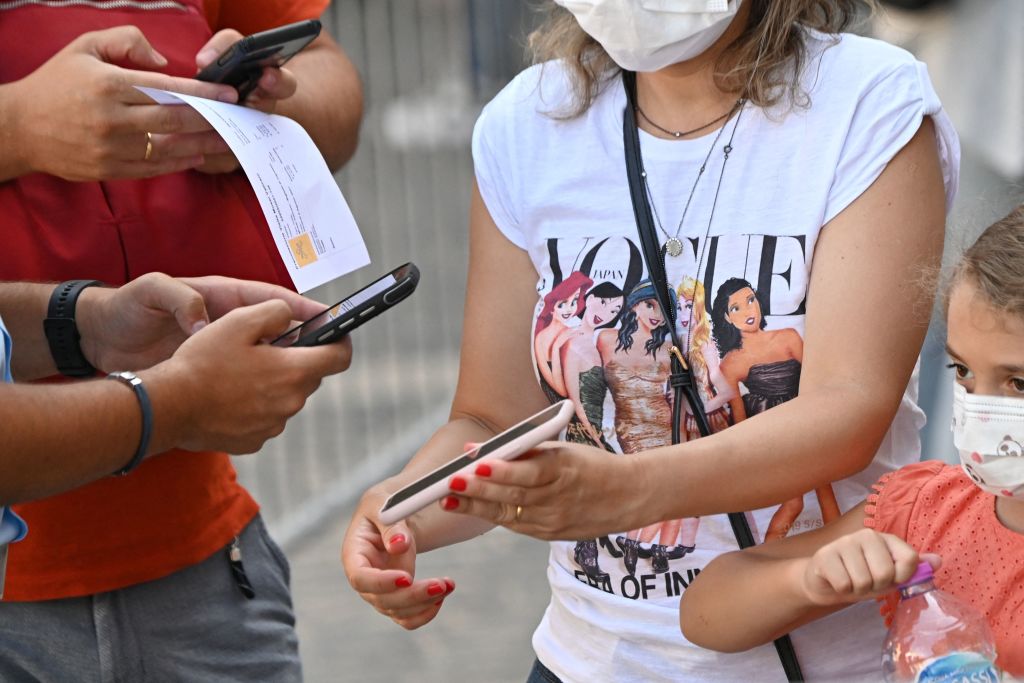
The Green Pass can be obtained by showing proof of vaccination against the coronavirus, demonstrating recovery from the coronavirus, or by showing a negative rapid antigen or PCR test, the Vatican ordinance states.
The decree also declares that the Green Pass mandate extends to the Vatican’s extraterritorial properties stipulated by the 1929 Lateran Treaty, which include Vatican-owned churches throughout Italy.
The pope himself instructed the Governorate of Vatican City State to issue the mandate in order “to prevent, control, and combat the public health emergency” in Vatican territory.
Pope Francis called Saturday for universal access to coronavirus vaccines and “the temporary suspension of intellectual property rights.” https://t.co/xIv2FI2THu
According to the decree, Francis did so while asserting the necessity of “ensuring the health and well-being of the working community with respect for the dignity, rights, and fundamental freedoms of each of its members.”
The Vatican has entrusted the enforcement of the mandate to its internal police force or “gendarmerie.”
“These provisions apply to citizens and residents of the State, personnel in service of any sort of the Governorate of the State of Vatican City and of the various bodies of the Roman Curia and the institutions connected to it, to all visitors and users of services,” the decree stipulates.
The Vatican diktat makes an exception for those who participate in liturgical celebrations “for the time strictly necessary for the performance of the rite,” while ensuring that such people adhere to health regulations on social distancing, the use of personal protective equipment, the limitation of movement, and gathering size.
The Vatican’s doctrinal office has declared that reception of the coronavirus vaccine must be “voluntary,” but Pope Francis has said he thinks “ethically everyone should take the vaccine” and that refusing the vaccine manifests “suicidal denialism.”
Italy announced last week that a vaccination Green Pass will be required for anyone wishing to be able to work. Anyone who goes to work without a certificate will be considered unjustifiably absent, will not be paid, and is subject to punitive fines.
(New York Times) Apple, known among its Silicon Valley peers for a secretive corporate culture in which workers are expected to be in lock step with management, is suddenly facing an issue that would have been unthinkable a few years ago: employee unrest.
On Friday, Tim Cook, Apple’s CEO, answered questions from workers in an all-staff meeting for the first time since the public surfacing of employee concerns over topics ranging from pay equity to whether the company should assert itself more on political matters like Texas’ restrictive abortion law.
Cook answered only two of what activist employees said were a number of questions they had wanted to ask in a meeting broadcast to employees around the world, according to a recording obtained by The New York Times. But his response was a notable acknowledgment that the workplace and social issues that have been roiling Silicon Valley for several years have taken root at Apple.
Over the past month, more than 500 people who said they were current and former Apple employees have submitted accounts of verbal abuse, sexual harassment, retaliation and discrimination at work, among other issues, to an employee-activist group that calls itself #AppleToo, said Cher Scarlett and Janneke Parrish, two Apple employees who help lead the group.
The group has begun posting some of the anonymous stories online and has been encouraging colleagues to contact state and federal labor officials with their complaints. Their issues, as well as those of eight current and former employees who spoke to the Times, vary; among them are workplace conditions, unequal pay and the company’s business practices.
A common theme is that Apple’s secrecy has created a culture that discourages employees from speaking out about their workplace concerns — not with co-workers, not with the press and not on social media. Complaints about problematic managers or colleagues are frequently dismissed, and workers are afraid to criticize how the company does business, the employees who spoke to the Times said.
“Apple has this culture of secrecy that is toxic,” said Christine Dehus, who worked at Apple for five years and left in August. “On one hand, yes, I understand the secrecy piece is important for product security, to surprise and delight customers. But it bleeds into other areas of the culture where it is prohibitive and damaging.”
Cook and Deirdre O’Brien, Apple’s human resources chief, said in response to a question about pay equity Friday that Apple regularly scrutinized its compensation practices to ensure it paid employees fairly.
“When we find any gaps at all, which sometimes we do, we close them,” O’Brien said.
Asked what Apple was doing to protect its employees from Texas’ abortion restrictions, Cook said that the company was looking into whether it could aid the legal fight against the new law and that its medical insurance would help pay for Apple workers in Texas if they needed to travel to other states for an abortion.
Cook’s comments received a mixed reception from Apple employees on Slack, the workplace message board, Parrish said. Some employees cheered for Cook, while others, including her, were disappointed.
Parrish said she had submitted a question about what concrete steps Apple had taken to ensure that pay gaps were resolved and that more women and people of color were being promoted to leadership roles. “With the answers Tim gave today, we weren’t heard,” she said.
Apple has about 160,000 employees around the world, and it was unclear if the newly public complaints reflected systemic problems or isolated issues that happen at many larger corporations.
“We are and have always been deeply committed to creating and maintaining a positive and inclusive workplace,” the company said in a statement. “We take all concerns seriously and we thoroughly investigate whenever a concern is raised and, out of respect for the privacy of any individuals involved, we do not discuss specific employee matters.”
While the airing of Apple’s workplace issues is remarkable to many people who have followed the company over the years, employee activism has become commonplace in Silicon Valley.
Three years ago, Google employees marched out of their offices around the world to protest sexual harassment policies. Last year, Facebook employees protested their company’s handling of posts by President Donald Trump. And some companies have explicitly banned discussions that aren’t work-related.
FILE — Tim Cook, Apple’s chief executive, speaks during an Apple event at the Brooklyn Academy of Music in New York, Oct. 30, 2018. (Erica Yoon/The New York Times)ERICA YOON/NYT
But at Apple, the rank and file had until recently appeared to be doing their jobs with little fuss.
Secrecy was a trait pushed by the company’s late co-founder, Steve Jobs, who was obsessed with preventing leaks about Apple’s new products to maximize the public’s surprise when he unveiled them onstage. The employees who spoke to the Times said that, over time, that culture had extended to the broader workplace.
“Never have I met people more terrified to speak out against their employer,” said Scarlett, who joined Apple as a software engineer in April and has worked at eight other companies.
An Apple spokesperson pointed to a company policy that said employees could “speak freely about your wages, hours or working conditions.”
Slack has been a key organizing tool for workers, several current and former employees told the Times. Apple’s siloed culture kept different teams of employees separate from one another, another result of efforts to prevent leaks. There was no wide-scale, popular internal message board for employees to communicate with one another, until Apple began using Slack in 2019.
When employees were told to work from home at the beginning of the pandemic, Slack became particularly popular. “For a lot of us, this was the first chance to interact with people outside our own silo,” Parrish said. Previously, “none of us were aware that anybody else was going through this.”
The complaints seem to be making an impact. When Apple this year hired Antonio García Martínez, a former Facebook manager, more than 2,000 employees signed a protest letter to management because of what they called “overtly racist and sexist remarks” in a book he had written, based in part on his time at Facebook. Within days, Apple fired him. García Martínez declined to comment on the specifics of his case.
In May, hundreds of employees signed a letter urging Apple to publicly support Palestinians during a recent conflict with Israel. And a corporate Slack channel that was set up to organize efforts to push Apple to be more flexible about remote-work arrangements once the pandemic ended now has about 7,500 employees on it.
Beyond the group activism, Apple is dealing with individual fights that are slipping into public view.
Ashley Gjovik, a former engineering program manager at Apple for six years, said she had complained to Apple for months about what she believed was inadequate testing for toxic chemicals at her office, as well as sexist comments from a manager.
After taking her complaints public this year, Gjovik was placed on leave and later fired. She said Apple had told her that she was fired for leaking product information and not cooperating with its investigation. She has filed complaints with the National Labor Relations Board, the Occupational Safety and Health Administration, the Equal Employment Opportunity Commission and the Justice Department, she said.
Apple declined to comment on specific employees’ cases.
Dehus, who worked at Apple to mitigate the impact of mining valuable minerals in conflict zones, said she had left Apple after spending several years fighting a decision to reassign her to a role that she said had involved more work for less pay. She said Apple had begun trying to reassign her after she complained that the company’s work on the minerals was not, in some cases, leading to meaningful change in some war-torn countries.
Richard Dahan, who is deaf, said he had struggled at his former job at an Apple Store in Maryland for six years because his manager refused to provide a sign-language interpreter for him to communicate with customers, which federal law requires under some circumstances. He said that he had communicated with customers by typing on an iPad, and that some customers had refused to work with him as a result. When he told his manager, the manager said it was the customers’ right, he said.
“Would it be OK if they said they didn’t want to work with a person of color?” Dahan asked in an interview via a sign-language interpreter.
He was eventually assigned an interpreter. But by that time, he said, upper management viewed him as a complainer and refused to promote him.
“Their culture is: Drink our Kool-Aid, buy into what we’re telling you, and we’ll promote you,” he said. “But if you’re asking for anything or making noise, then they won’t.”




 The measure would force the world’s largest companies to pay a global minimum tax on their profits of at least 15percent, in a measure intended to seal off cross-border tax loopholes. The way companies like Amazon or Alphabet’s Google are taxed would, accordingly, be based partly on where they sell products and services, instead of the location of their headquarters.



Apple faces the unthinkable: Widespread worker unrest
(New York Times) Apple, known among its Silicon Valley peers for a secretive corporate culture in which workers are expected to be in lock step with management, is suddenly facing an issue that would have been unthinkable a few years ago: employee unrest.
On Friday, Tim Cook, Apple’s CEO, answered questions from workers in an all-staff meeting for the first time since the public surfacing of employee concerns over topics ranging from pay equity to whether the company should assert itself more on political matters like Texas’ restrictive abortion law.
Cook answered only two of what activist employees said were a number of questions they had wanted to ask in a meeting broadcast to employees around the world, according to a recording obtained by The New York Times. But his response was a notable acknowledgment that the workplace and social issues that have been roiling Silicon Valley for several years have taken root at Apple.
Over the past month, more than 500 people who said they were current and former Apple employees have submitted accounts of verbal abuse, sexual harassment, retaliation and discrimination at work, among other issues, to an employee-activist group that calls itself #AppleToo, said Cher Scarlett and Janneke Parrish, two Apple employees who help lead the group.
The group has begun posting some of the anonymous stories online and has been encouraging colleagues to contact state and federal labor officials with their complaints. Their issues, as well as those of eight current and former employees who spoke to the Times, vary; among them are workplace conditions, unequal pay and the company’s business practices.
A common theme is that Apple’s secrecy has created a culture that discourages employees from speaking out about their workplace concerns — not with co-workers, not with the press and not on social media. Complaints about problematic managers or colleagues are frequently dismissed, and workers are afraid to criticize how the company does business, the employees who spoke to the Times said.
“Apple has this culture of secrecy that is toxic,” said Christine Dehus, who worked at Apple for five years and left in August. “On one hand, yes, I understand the secrecy piece is important for product security, to surprise and delight customers. But it bleeds into other areas of the culture where it is prohibitive and damaging.”
Cook and Deirdre O’Brien, Apple’s human resources chief, said in response to a question about pay equity Friday that Apple regularly scrutinized its compensation practices to ensure it paid employees fairly.
“When we find any gaps at all, which sometimes we do, we close them,” O’Brien said.
Asked what Apple was doing to protect its employees from Texas’ abortion restrictions, Cook said that the company was looking into whether it could aid the legal fight against the new law and that its medical insurance would help pay for Apple workers in Texas if they needed to travel to other states for an abortion.
Cook’s comments received a mixed reception from Apple employees on Slack, the workplace message board, Parrish said. Some employees cheered for Cook, while others, including her, were disappointed.
Parrish said she had submitted a question about what concrete steps Apple had taken to ensure that pay gaps were resolved and that more women and people of color were being promoted to leadership roles. “With the answers Tim gave today, we weren’t heard,” she said.
Apple has about 160,000 employees around the world, and it was unclear if the newly public complaints reflected systemic problems or isolated issues that happen at many larger corporations.
“We are and have always been deeply committed to creating and maintaining a positive and inclusive workplace,” the company said in a statement. “We take all concerns seriously and we thoroughly investigate whenever a concern is raised and, out of respect for the privacy of any individuals involved, we do not discuss specific employee matters.”
While the airing of Apple’s workplace issues is remarkable to many people who have followed the company over the years, employee activism has become commonplace in Silicon Valley.
Three years ago, Google employees marched out of their offices around the world to protest sexual harassment policies. Last year, Facebook employees protested their company’s handling of posts by President Donald Trump. And some companies have explicitly banned discussions that aren’t work-related.
But at Apple, the rank and file had until recently appeared to be doing their jobs with little fuss.
Secrecy was a trait pushed by the company’s late co-founder, Steve Jobs, who was obsessed with preventing leaks about Apple’s new products to maximize the public’s surprise when he unveiled them onstage. The employees who spoke to the Times said that, over time, that culture had extended to the broader workplace.
“Never have I met people more terrified to speak out against their employer,” said Scarlett, who joined Apple as a software engineer in April and has worked at eight other companies.
An Apple spokesperson pointed to a company policy that said employees could “speak freely about your wages, hours or working conditions.”
Slack has been a key organizing tool for workers, several current and former employees told the Times. Apple’s siloed culture kept different teams of employees separate from one another, another result of efforts to prevent leaks. There was no wide-scale, popular internal message board for employees to communicate with one another, until Apple began using Slack in 2019.
When employees were told to work from home at the beginning of the pandemic, Slack became particularly popular. “For a lot of us, this was the first chance to interact with people outside our own silo,” Parrish said. Previously, “none of us were aware that anybody else was going through this.”
The complaints seem to be making an impact. When Apple this year hired Antonio García Martínez, a former Facebook manager, more than 2,000 employees signed a protest letter to management because of what they called “overtly racist and sexist remarks” in a book he had written, based in part on his time at Facebook. Within days, Apple fired him. García Martínez declined to comment on the specifics of his case.
In May, hundreds of employees signed a letter urging Apple to publicly support Palestinians during a recent conflict with Israel. And a corporate Slack channel that was set up to organize efforts to push Apple to be more flexible about remote-work arrangements once the pandemic ended now has about 7,500 employees on it.
Beyond the group activism, Apple is dealing with individual fights that are slipping into public view.
Ashley Gjovik, a former engineering program manager at Apple for six years, said she had complained to Apple for months about what she believed was inadequate testing for toxic chemicals at her office, as well as sexist comments from a manager.
After taking her complaints public this year, Gjovik was placed on leave and later fired. She said Apple had told her that she was fired for leaking product information and not cooperating with its investigation. She has filed complaints with the National Labor Relations Board, the Occupational Safety and Health Administration, the Equal Employment Opportunity Commission and the Justice Department, she said.
Apple declined to comment on specific employees’ cases.
Dehus, who worked at Apple to mitigate the impact of mining valuable minerals in conflict zones, said she had left Apple after spending several years fighting a decision to reassign her to a role that she said had involved more work for less pay. She said Apple had begun trying to reassign her after she complained that the company’s work on the minerals was not, in some cases, leading to meaningful change in some war-torn countries.
Richard Dahan, who is deaf, said he had struggled at his former job at an Apple Store in Maryland for six years because his manager refused to provide a sign-language interpreter for him to communicate with customers, which federal law requires under some circumstances. He said that he had communicated with customers by typing on an iPad, and that some customers had refused to work with him as a result. When he told his manager, the manager said it was the customers’ right, he said.
“Would it be OK if they said they didn’t want to work with a person of color?” Dahan asked in an interview via a sign-language interpreter.
He was eventually assigned an interpreter. But by that time, he said, upper management viewed him as a complainer and refused to promote him.
“Their culture is: Drink our Kool-Aid, buy into what we’re telling you, and we’ll promote you,” he said. “But if you’re asking for anything or making noise, then they won’t.”