Home Blog Page 4

Family and Faith Among Top New Year’s Resolutions

DESIGNECOLOGIST/Unsplash

A recent survey from YouGov found that Americans seek to prioritize faith and family in 2026. Although 51% of respondents said they will not make a New Year’s resolution or goal, about a third of respondents responded positively to 2026 goals.

While the most common goal was “exercising more” (25%), other resolutions included “spending more time with family” (15%) and “praying more” (15%).

Other popular goals included “being happy” (23%), “eating healthier” (22%), “saving more money” (21%), “improving physical health” (21%), “losing weight” (17%), “improving mental health” (16%), “learning something new” (15%), “reading more” (15%), “improving relationships with friends or family” (13%), “paying down debts” (12%), “improving home or life organization” (12%), “traveling” (11%) and “quitting a bad habit” (11%),” and even “moving” (6%).

Half of respondents said it is “somewhat likely” that they will keep their resolutions.

More Republicans than Democrats (19% to 15%) said they would be praying more. The same was said about spending time with family, as 19% of Republicans and 14% of Democrats shared the goal.

According to YouGov, adults under the age of 45 are more likely to strive to save more money than those over the age of 45 (30% vs 14%). Those younger than 45 are also more likely to pursue a career goal, improve their mental health, and learn something new.

Interestingly, 15% of respondents believe things are “very bad” in the United States, and 28% of people said 2025 was “terrible” for the nation. Despite this belief, 17% of people think 2026 will be “good” for the country while another 14% believe it will be “great.”
Coast Guard Sees Massive Cocaine Seizure in One Year

coast guard
Levi Meir Clancy/Unsplash

The U.S. Coast Guard (USCG) has seized more than 469,000 pounds of cocaine since Jan. 20, 2025, under the Trump administration. The number is enough to kill up to 177 million Americans at a 1.2g lethal dose, the Department of Homeland Security said on social media.

“During Operation Pacific Viper, USCGC Stone offloaded approximately 49,010 pounds of illicit narcotics worth more than $362 million at Port Everglades, Florida,” DHS noted. “This offload marks the largest amount of cocaine seized by a single cutter in one patrol in Coast Guard history.”

In December, the Coast Guard seized 27,500 pounds of cocaine in San Diego worth approximately $203 million. Also in December, the Coast Guard seized more than 150,000 pounds of cocaine in the Eastern Pacific Ocean.

“Operation Pacific Viper has proven to be a crucial weapon in the fight against foreign drug traffickers and cartels in Latin America and has sent a clear message that we will disrupt, dismantle and destroy their deadly business exploits wherever we find them,” DHS Secretary Kristi Noem said at the time. “In cutting off the flow of these deadly drugs, the Coast Guard is saving countless American lives and delivering on President Trump’s promise to Make America Safe Again and reestablish our maritime dominance.”

Meanwhile, U.S. Customs and Border Protection officers seized 935 pounds of cocaine hidden inside a cargo trailer on December 24. “Our officers remain vigilant and dedicated to protecting our borders, even during the holiday season,” San Juan Area Port Director Kian Tomas said of the matter. “This seizure highlights the commitment and professionalism of our team in preventing dangerous drugs from reaching our communities.

Swalwell Pledges to Charge ICE Agents Amid Governor Campaign

(Photo by Anna Moneymaker/Getty Images)

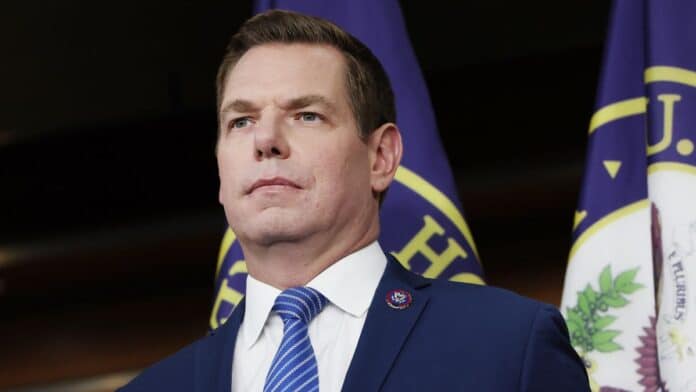
Rep. Eric Swalwell (D-CA), who recently launched a gubernatorial campaign, said he would charge ICE agents if he became governor.

Jason Johnson of MS NOW’s “All In” asked the Democrat, “What would you do if you are able to be elected as governor of California? Yes, we’ve seen over … just one year of this new regime, that it’s the states that tend to be the strongest pushback.”

“It’s the governors of Illinois, it’s the governor of Michigan, governor of Virginia, Maryland, everything else like that,” the host said. “What will you bring to the table? Because California, just by size and GDP alone, is sort of the tip of the spear. What would you bring to the table as a governor of California?”

“Well, you have immense powers as governor of California and your responsibility to protect the most vulnerable in the state. So if the president is going to send ICE agents to chase immigrants through the fields where they work, what I’m going to do is make sure that they take off their masks and show their faces, that they show their identification,” Swalwell responded. “And if they commit crimes that they’re going to be charged with crimes, if it’s falsely imprisoning people, if it’s kidnapping, if it’s assault battery, they’re going to be held accountable.”

He further threatened to revoke ICE agents’ licenses. “I also think if the governor has the ability to issue driver’s licenses to people in California, if you’re going to wear a mask and not identify yourself, you’re not going to be eligible to drive a vehicle in California,” he explained. “There’s a lot you can do, but most importantly, you have to go on offense. Otherwise, the most vulnerable in our community will always be on defense.”

Swalwell launched a gubernatorial campaign in November. Announcing his campaign on “Jimmy Kimmel Live,” Swalwell vowed to be a “protector and fighter” for California.

North Carolina Recognizes Biological Sex

(Photo by Drew Angerer/Getty Images)

A new law taking effect on January 1 officially recognizes biological sex in North Carolina. The law, House Bill 805, biological sex is defined as the “indication of male and female in the context of reproductive potential or capacity, such as sex chromosomes, naturally occurring sex hormones, gonads, and nonambiguous internal and external genitalia present at birth, without regard to an individual’s psychological, chosen, or subjective experience of gender.”

While the law recognizes biology, it also defines gender identity as “an individual’s self-declared identity that may not align with biological sex and, being a subjective internal sense, shall not be treated as legally or biologically equivalent to sex.”

Governor Josh Stein (D) vetoed the bill in July, although it was overridden by state lawmakers. “Instead of preventing sexual exploitation, the General Assembly chooses to engage in divisive, job-killing culture wars. North Carolina has been down this road before, and it is a dead end,” Stein wrote in his explanation for the veto. “My faith teaches me that we are all children of God no matter our differences and that it is wrong to target vulnerable people, as this legislation does. I stand ready to work with the legislature when it gets serious about protecting people, instead of mean-spirited attempts to further divide us by marginalizing vulnerable North Carolinians.”

Several other states have laws recognizing biological reality. In May, the Texas Senate passed a bill declaring that males and females “possess unique immutable biological differences that manifest prior to birth and increase as individuals age and experience puberty.”

Jack Smith’s Deposition Released

(Photo by Win McNamee/Getty Images)

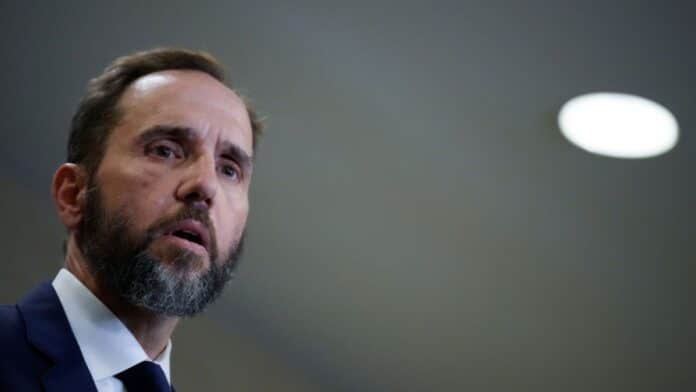
The deposition of former Special Counsel Jack Smith has been released. In it, Smith stood behind his prosecution of President Trump, declaring that his team “developed powerful evidence” against him.

“I made my decisions in the investigation without regard to President Trump’s political association, activities, beliefs, or candidacy in the 2024 Presidential election,” Smith claimed. “We took our actions based on the facts and the law, the very lessons I learned early in my career as a prosecutor. We followed Justice Department policies and observed legal requirements.”

“If asked whether to prosecute a former President based on the same facts today, I would do so regardless of whether that President was a Republican or a Democrat,” he further asserted.

Smith was asked by Congress, “So did you develop evidence that President Trump, you know, was responsible for the violence at the Capitol on January 6th?” He responded, “As I said, our evidence is that he, in the weeks leading up to January 6th, created a level of distrust. He used that level of distrust to get people to believe fraud claims that weren’t true. He made false statements to State legislatures, to his supporters in all sorts of contexts and was aware in the days leading up to January 6th that his supporters were angry when he invited them and then he directed them to the Capitol.”

Smith also acknowledged that some of the most publicized testimony from a key witness lacked firsthand evidence and relied heavily on hearsay, American Faith reported. Addressing testimony from Cassidy Hutchinson, a former White House aide, Smith told lawmakers that portions of Hutchinson’s statements suffered from evidentiary weaknesses that would have drawn challenges in court. “If I were a defense attorney and Ms. Hutchinson were a witness, the first thing I would do was seek to preclude some of her testimony because it was hearsay,” he said.

Quantum Physics and God

Dynamic Wang/Unsplash

Why Modern Science Is Catching Up to Ancient Truth

We live in an extraordinary moment in human history. Scientific discovery is accelerating at a pace unmatched by any previous generation. Quantum physics, cosmology, and advanced mathematics are revealing layers of reality once considered invisible, unknowable, or purely philosophical. And yet, paradoxically, as our understanding of the universe deepens, our culture’s attention span shrinks. Social media noise, ideological reductionism, and materialism have rendered both science and faith increasingly irrelevant in public discourse.

This cultural myopia could not be more ironic. At precisely. . .

This content is only available for American Faith Premium Subscribers. You can view our Premium content for only $1.00! Learn more here.

If you are already a Premium subscriber, please log in to view this content.

Venezuela Detains Americans as Trump Tightens Pressure on Maduro

Maduro
(Photo by Jesus Vargas/Getty Images)

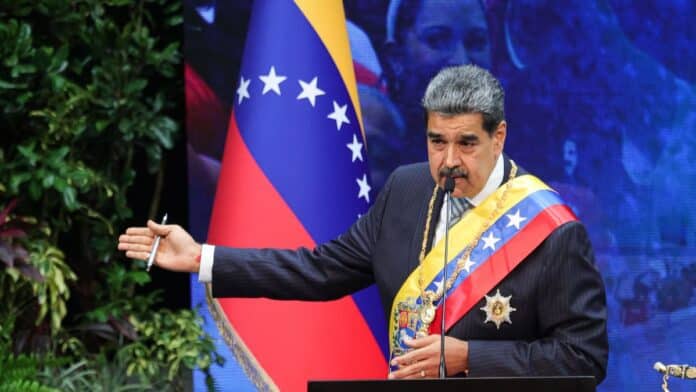
Venezuela has arrested additional American citizens as President Donald Trump escalates pressure on the socialist regime led by Nicolás Maduro, according to a report highlighted by Fox News. The arrests raise renewed concerns about the safety of U.S. citizens in the country and underscore the Maduro government’s pattern of using foreign detainees as political leverage. U.S. officials have not released the names of those detained, citing security concerns.

The arrests reportedly occurred amid heightened diplomatic and economic pressure from the Trump administration, which has taken a hard line against Maduro’s authoritarian rule. Administration officials have accused the Venezuelan government of targeting Americans and other foreign nationals to extract concessions or gain international attention. Venezuela has a history of detaining U.S. citizens on vague or unsubstantiated charges.

The Trump administration has expanded sanctions and increased diplomatic isolation of the Maduro regime, arguing that economic pressure is necessary to force democratic reforms. Officials say Maduro’s government continues to suppress political opposition, manipulate elections, and rely on security forces to maintain control. Experts argue the arrests reflect desperation within a regime struggling to hold power.

Maduro’s government has claimed those detained were involved in destabilizing activities, a charge frequently leveled against political opponents and foreign visitors. Human rights groups have documented widespread abuses in Venezuelan detention facilities, including denial of due process and harsh conditions. These reports have intensified calls for international accountability.

President Trump has consistently framed the situation in Venezuela as a moral and strategic issue, warning that socialist regimes threaten freedom and regional stability. His administration has emphasized support for the Venezuelan people while refusing to legitimize Maduro’s rule. Officials have also urged Americans to avoid travel to Venezuela due to the high risk of arbitrary detention.

The latest arrests add urgency to ongoing diplomatic efforts to secure the release of U.S. citizens held abroad. As pressure mounts, the situation highlights the broader clash between American foreign policy and entrenched authoritarian regimes in the Western Hemisphere.

Trump Withdraws National Guard From Chicago, LA, Portland

(Photo by Andrew Leyden/Getty Images)

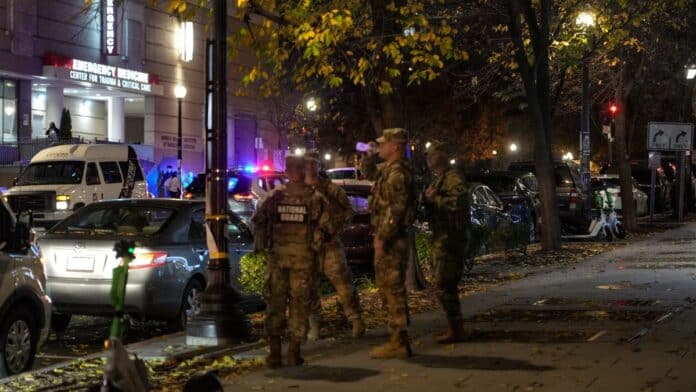
President Donald Trump has ordered the withdrawal of National Guard troops from Chicago, Los Angeles, and Portland, ending federal deployments that were put in place to address unrest and public safety concerns. Fox News reported the decision followed assessments that local and state authorities are now capable of maintaining order without federal assistance. The move reinforces the administration’s position that National Guard deployments are temporary measures, not permanent solutions.

The Guard was originally deployed after repeated incidents of violence, riots, and crime overwhelmed local law enforcement in the three cities. Federal officials said the troops were used to protect critical infrastructure, support police operations, and deter further disorder. The Trump administration framed the deployments as necessary after city leadership failed to maintain control.

Administration officials said conditions in the affected cities have stabilized enough to allow Guard units to stand down. They emphasized that the federal government remains prepared to redeploy forces if violence resurges or local officials again lose control. The withdrawal places renewed responsibility squarely on city and state leaders.

The decision has renewed scrutiny of Democratic leadership in Chicago, Los Angeles, and Portland, all of which have faced criticism over crime rates, reduced policing, and progressive criminal justice policies. Conservatives argue the need for federal intervention was caused by years of policies that weakened law enforcement and emboldened repeat offenders.

City officials welcomed the withdrawal, describing it as a return to normal operations. Law enforcement advocates, however, warned that staffing shortages and unresolved crime trends remain serious challenges. Police unions in multiple cities have continued to raise concerns about officer retention and morale.

President Trump has repeatedly stated that restoring law and order is a core federal responsibility when states fail to act. At the same time, he has insisted that long-term public safety depends on local leadership willing to enforce the law. The withdrawal underscores that balance while keeping federal options open if conditions deteriorate.

Luxury Collapse as Saks Weighs Bankruptcy Filing

Clothing Store (Rachel Claire/Pexels via Canva Pro)

Luxury retail giant Saks Fifth Avenue is reportedly weighing a potential bankruptcy filing as mounting debt, weakening consumer demand, and structural shifts in retail place increasing pressure on the high-end brand. According to Fox Business, the company is exploring restructuring options as it struggles to manage billions in liabilities tied to its real estate-heavy business model. The development highlights growing instability even among once-dominant luxury retailers.

Saks’ financial strain intensified following its separation of its online and brick-and-mortar operations under parent company HBC. While executives previously touted the split as a strategic move to unlock value, critics warned it left the core retail business saddled with debt and rising operating costs. Those concerns now appear increasingly justified as sales growth has failed to offset expenses.

Luxury retail has not been immune to broader economic headwinds. Persistent inflation, higher interest rates, and cautious consumer spending have slowed discretionary purchases, even among affluent shoppers. Fox Business reported that foot traffic at high-end department stores has softened, while competition from online luxury platforms and direct-to-consumer brands continues to intensify.

Saks’ physical stores, particularly flagship locations in major cities, come with enormous overhead costs. Long-term leases, staffing expenses, and inventory management have become increasingly difficult to sustain as shopping habits shift. Analysts note that department stores built for peak mall traffic decades ago are now oversized for today’s demand.

The company has reportedly engaged advisers to evaluate options ranging from refinancing to a potential Chapter 11 bankruptcy filing. A bankruptcy process would allow Saks to restructure debt while continuing operations, though it could also lead to store closures or asset sales. No final decision has been announced, and company leadership has not confirmed a filing.

The situation reflects a broader reckoning in American retail. Even iconic brands are struggling under economic conditions shaped by years of easy credit followed by aggressive interest rate hikes. Conservatives have argued that federal monetary policy and runaway inflation have distorted consumer markets, placing pressure on businesses that rely on discretionary spending.

Saks’ challenges also underscore the risks of financial engineering in retail. Critics say private equity-style restructuring and heavy borrowing left the company vulnerable when economic conditions tightened. Rather than focusing on core retail fundamentals, companies increasingly relied on debt-fueled strategies that assumed perpetual growth.

If Saks proceeds with bankruptcy, it would mark another major warning sign for the luxury retail sector. While demand for high-end goods has not vanished, it has become more selective and price-sensitive. For legacy retailers built on expansive physical footprints, adaptation may come at a steep cost.

Brown University Overhauls Campus Security After Deadly Shooting

Brown University (Keming Tan/Unsplash)

Brown University announced a comprehensive overhaul of campus security in response to a Dec. 13 mass shooting that killed two students and injured nine others inside the Barus and Holley engineering building. Interim Vice President for Public Safety Hugh T. Clements Jr. outlined the enhanced measures in a letter to the campus community, emphasizing a commitment to prevent a similar tragedy in the future.

University officials said immediate actions include a significant increase in public safety staffing and an expanded presence of security officers throughout campus. The university is also accelerating the transition from traditional key access to card-access entry systems for all buildings to better control who enters academic and residential spaces.

In addition to access control upgrades, Brown will install more security cameras, including inside the Barus and Holley building where the shooting occurred, and expand the network of emergency “blue light” phones equipped with cameras. The school is also increasing the number of panic buttons in critical areas.

The campus safety overhaul includes expanded trauma-informed safety and active-shooter preparedness training for students and staff, planned for the spring 2026 semester. Brown officials say the enhanced training will help the community recognize and respond to potential threats more effectively.

Rodney Chatman, who previously served as Brown’s vice president for public safety, has been placed on administrative leave amid ongoing reviews of the university’s safety protocols and response to the shooting. Former Providence Police Chief Clements, appointed as interim public safety vice president, is leading the implementation of these security initiatives.

The Department of Education’s Office of Federal Student Aid is also conducting a program review to determine whether Brown complied with the Jeanne Clery Campus Safety Act, which requires institutions to meet certain safety and security standards to receive federal student aid.

Brown’s leadership said the security changes aim not to create a campus defined by fear but to build one grounded in preparedness, vigilance, and trust. The measures, many set to be in place by the start of the spring semester, reflect both immediate actions and broader assessments of campus safety systems.