Home Blog Page 3

Schumer Attempts to Federalize Pride Flag

(Photo by Chip Somodevilla/Getty Images)

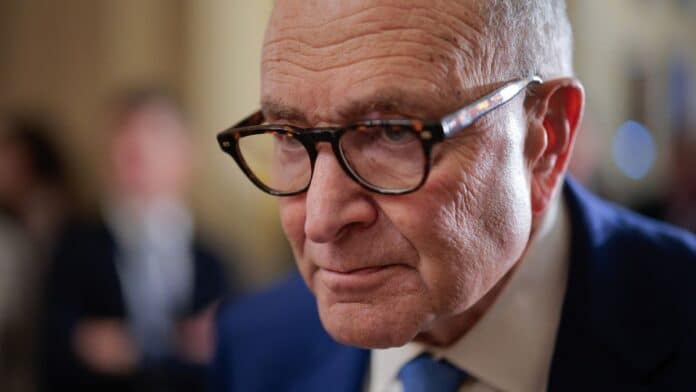
Senator Chuck Schumer (D-NY) intends to introduce legislation federalizing the Pride flag. The move follows the Trump administration removing it from the Stonewall National Monument.

“When the Trump administration ripped the Pride flag down, it was a direct attack on this community—an attempt to chip away at hard-won civil rights,” Schumer said over the weekend, declaring Democrats to be “fighting back and taking action.”

“I am introducing legislation to designate the Pride flag as a congressionally authorized flag in America, and that means it can be flown here and everywhere else,” he said. “No one can take it down.”

Schumer, alongside Senator Gillibrand (D-NY) and Representative Dan Goldman (D-NY), sent a letter last week to Secretary of the Interior Doug Burgum and National Park Service Acting Director Jessica Bowron, demanding that the flag be “replaced immediately.”

“We unequivocally reject this administration’s attempts to erase or otherwise rewrite LGBTQ+ history, which fundamentally undermines the trust and respect of communities that are central to our American story,” the letter condemned. “At a time when hate crimes against LGBTQ+ individuals remain alarmingly high, we all must work to support and uplift the LGBTQ+ community – not sow further division and strife.”

The National Park Service said upon removing the flag, “Under government-wide guidance, including General Services Administration policy and Department of the Interior direction, only the U.S. flag and other congressionally or departmentally authorized flags are flown on NPS-managed flagpoles, with limited exceptions. Any changes to flag displays are made to ensure consistency with that guidance. Stonewall National Monument continues to preserve and interpret the site’s historic significance through exhibits and programs.”

Exiled Iranian Prince Urges Trump ‘Intervention’ in Iran

prince
(Photo by Kiran Ridley/Getty Images)

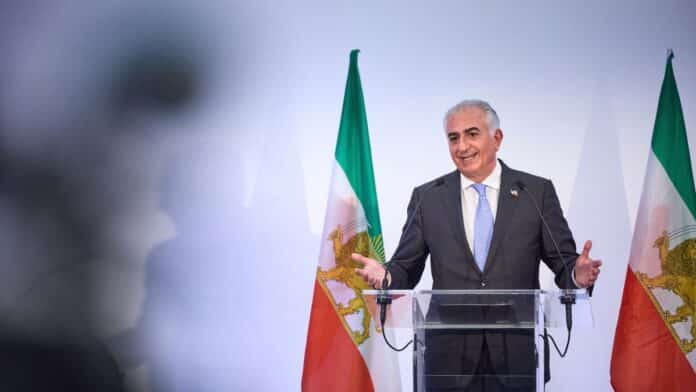
Exiled Iranian Crown Prince Reza Pahlavi urged President Trump to take action in Iran, calling such intervention “humanitarian.”

Speaking to Maria Bartiromo of Fox News’ “Sunday Morning Futures,” Pahlavi explained that the “president should also know that they have also kept on killing and killing and killing,” referring to the Iranian regime. “That’s why an intervention is so necessary because the first ask of Iranians today, at home and abroad, is asking for help. This intervention is a humanitarian intervention to save lives that will otherwise also continue to be lost.”

Pahlavi added that he hopes the president “realizes how urgent” the idea of an intervention is and how it “could save lives and also help us put an end to this unwanted regime.”

Last year, Pahlavi expressed hope that the “Islamic Republic is collapsing.”

“Credible reports indicate that Ali Khamenei’s family – and the families of senior regime officials – are making preparations to flee Iran,” he said during a press conference. “The regime is on its last legs, in towns and cities across the country. The military is fractured. The people are united. The foundations of this 46-year tyranny are shaking.”

“This is our Berlin Wall moment,” he stated, adding that as long as the regime is in power, “no country and no people are safe: whether on the streets of Washington, Paris, Jerusalem, Riyadh or Tehran.”

“I am here today to submit myself to my compatriots to lead them down this road to peace and a democratic transition,” Pahlavi further declared. “I do not seek political power, but rather to help our great nation navigate through this critical hour toward stability, freedom, and justice.”

California Exodus: Wealthy Buyers Flood Las Vegas Homes as Wealth Tax Looms

(Getty Images/rarrarorro)

A growing number of wealthy California residents are turning their attention to the Las Vegas housing market, driven by high home prices and looming tax proposals in the Golden State. New market data shows that over 23 % of Realtor.com listing views for Las Vegas homes came from Los Angeles area buyers by the end of 2025 — a leading indicator of cross-state interest.

Experts say the shift reflects stark differences between the two markets. Median home prices in Los Angeles recently topped $1 million, and San Jose’s median exceeded $1.1 million, while Las Vegas homes showed a median listing price around $465,000. Nevada’s lack of state income tax further enhances the appeal for affluent buyers looking to protect their wealth and stretch their real estate dollars further.

Realtor.com analysts emphasize that tax considerations play a significant role in the migration trend. Nevada’s tax structure allows residents to keep more of their income compared with California’s high tax burden. For some buyers, selling luxury homes in California enables them to purchase larger or higher-end properties in Las Vegas while reducing ongoing expenses and tax liability.

The housing shift happens as California considers a proposed wealth tax that would impose a one-time 5 % levy on residents with net worth exceeding $1 billion. The measure, backed by the Service Employees International Union and United Healthcare Workers West, seeks enough signatures to reach the November ballot. California Governor Gavin Newsom has publicly opposed the proposal, warning that such taxes could accelerate high-earner departures.

As affluent individuals reassess where to live, the Las Vegas market continues to attract interest not only for cost savings and tax advantages but also for broader economic and lifestyle opportunities.

Kennedy Promises Transparency in Food Fight

(Photo by Heather Diehl/Getty Images)

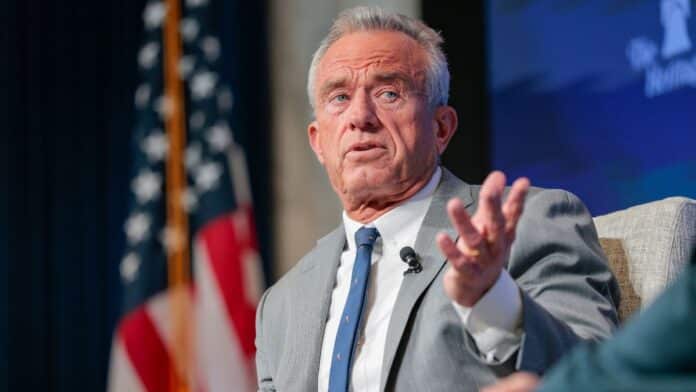
Health Secretary Robert F. Kennedy Jr. announced that he would be reviewing a petition that calls for the reduction of refined carbs and ultra-processed foods.

Speaking to Bill Whitaker of CBS’s “60 Minutes,” Kennedy promised, “We will act on David Kessler’s petition.” Kessler served as the FDA Commissioner from November 1990 to February 1997.

“And the questions that he’s asking are questions that FDA should’ve been asking a long, long time ago,” Kennedy added. He further explained that he is not saying that the agency is going to “regulate ultraprocessed food,” but instead “make sure that everybody understands what they’re getting, to have an informed public.”

Kessler wrote in his August petition to the FDA: “Evidence over the last several decades since the [Generally Recognized as Safe] GRAS evaluation of processed refined carbohydrates used in industrial processing demonstrates that ultra-processed foods that contain these ingredients put people at risk for increased caloric intake, weight gain, and metabolic abnormalities.”

“FDA’s past GRAS determinations are based on outdated data that did not properly assess the biological effects of these processed refined carbohydrates on blood insulin, blood lipid parameters, energy partitioning, inflammatory markers, brain reward signaling, or visceral adiposity,” the petition says, adding, “There is no expert consensus that refined carbohydrates in ultraprocessed foods are safe under present conditions of use.”

The FDA announced last week that it is reviewing the preservative butylated hydroxyanisole (BHA), which has been listed as GRAS by the agency since 1958.

The current GRAS rule allows companies to self-approve the use of a substance without FDA approval. Kennedy moved to consider eliminating the loophole in March.

Rubio Defends Christian Heritage of Western World

(Photo by Johannes Simon/Getty Images)

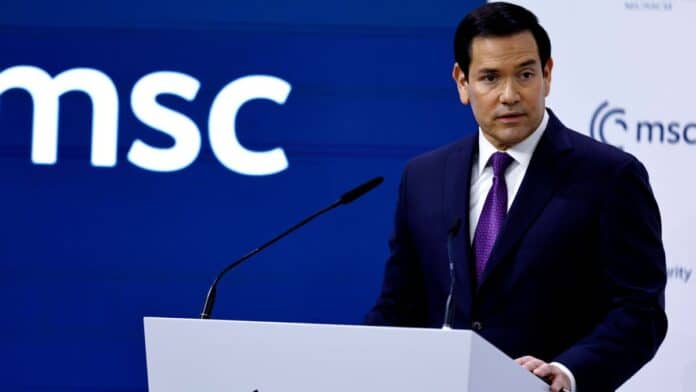
Secretary of State Marco Rubio highlighted the role Christianity played in the development of the Western world during his speech at the Munich Security Conference.

“Under President Trump, the United States of America will once again take on the task of renewal and restoration, driven by a vision of a future as proud, as sovereign, and as vital as our civilization’s past,” he declared during the conference. “And while we are prepared, if necessary, to do this alone, it is our preference and it is our hope to do this together with you, our friends here in Europe.”

Rubio asserted that the United States and Europe “belong together.”

“America was founded 250 years ago, but the roots began here on this continent long before. The man who settled and built the nation of my birth arrived on our shores carrying the memories and the traditions and the Christian faith of their ancestors as a sacred inheritance, an unbreakable link between the old world and the new,” he explained, noting that the U.S. and Europe are “part of one civilization – Western civilization.”

“We are bound to one another by the deepest bonds that nations could share, forged by centuries of shared history, Christian faith, culture, heritage, language, ancestry, and the sacrifices our forefathers made together for the common civilization to which we have fallen heir.”

Discussing issues such as immigration, foreign policy, nuclear programs, and other matters, Rubio urged, “America is charting the path for a new century of prosperity,” and declared that the nation wants to pursue prosperity “together with you, with a Europe that is proud of its heritage and of its history; with a Europe that has the spirit of creation of liberty that sent ships out into uncharted seas and birthed our civilization; with a Europe that has the means to defend itself and the will to survive.”

Ahead of his travels to Munich, Rubio told reporters, “We’re very tightly linked to Europe.”

“I think most people in this country can trace both their cultural or their personal heritage back to Europe, so we’re deeply tied to Europe and our future,” he said. “So we’ve just got to talk about what that future looks like.”

Pentagon Moves Next-Gen Reactor in Bold Nuclear Leap

(Photo by Anna Moneymaker/Getty Images)

The Department of Defense has transported a next-generation nuclear reactor prototype, marking a significant milestone in America’s push for advanced energy security. Defense officials confirmed the move as part of a broader initiative to deploy reliable, resilient power sources for military installations. The development signals renewed federal commitment to nuclear innovation after years of regulatory and political roadblocks.

The reactor, developed in coordination with the Department of Energy, is designed as a small modular system capable of delivering dependable power in remote or high-risk environments. Known as a microreactor, the system can be transported more easily than traditional nuclear plants and installed at domestic bases or overseas facilities. Defense leaders view the technology as a safeguard against grid failures, cyberattacks, and fuel supply disruptions.

Officials stated that stable energy is critical to national defense infrastructure. Military bases rely heavily on civilian power grids, which remain vulnerable to natural disasters and hostile interference. A portable nuclear reactor offers independent power generation, reducing exposure to external threats. The Pentagon has prioritized this capability as global instability and cyber warfare risks increase.

The reactor transport represents progress under Project Pele, a Defense Department initiative aimed at demonstrating advanced nuclear capabilities for military use. The program focuses on safety, rapid deployment, and compliance with federal nuclear regulations. Engineers designed the reactor with passive safety systems intended to shut down automatically in the event of malfunction.

Energy security has become central to broader national security policy. Under President Trump, federal agencies have emphasized American energy independence, including nuclear development. Supporters argue that next-generation nuclear systems strengthen both military readiness and domestic energy resilience. Critics have raised questions about cost and long-term oversight, though defense officials maintain that rigorous safeguards remain in place.

The milestone arrives as global powers such as China and Russia invest heavily in advanced nuclear technologies. Pentagon planners have warned that failure to modernize could leave U.S. forces dependent on aging infrastructure. By advancing portable nuclear power, defense leaders aim to ensure operational continuity in contested regions.

Transport of the reactor does not signal immediate activation. Officials indicated that testing and regulatory evaluation will continue before deployment. The project remains under federal oversight to meet Nuclear Regulatory Commission standards.

The move reflects a broader national debate about nuclear energy’s role in America’s future. For defense planners, the priority remains clear: reliable, secure power that strengthens military readiness without relying on unstable grids. The Pentagon’s latest action underscores that advanced nuclear technology is once again central to U.S. strategic planning.

Clinton Blitzes Trump Policy at Munich, Czech Leader Tells Her to Tone Down Attacks

(Photo by Alex Wong/Getty Images)

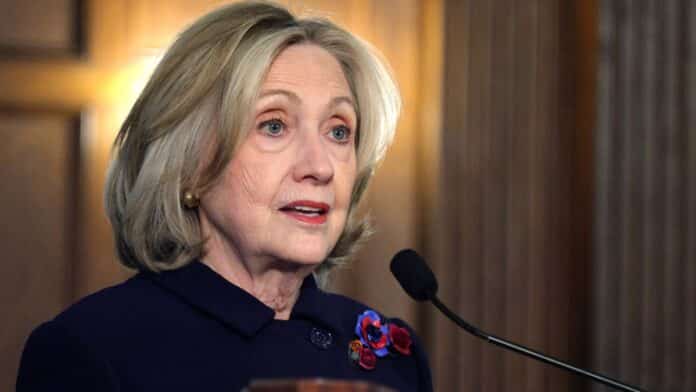
Former Secretary of State Hillary Clinton engaged in a sharp dispute with a Czech government leader over President Trump’s foreign policy during a panel discussion at the Munich Security Conference in Germany this weekend. The confrontation highlighted deep divides among Western elites over America’s role in global security.

Clinton criticized President Trump’s handling of relations with Europe and broader global strategy while speaking on a session examining the future of the West. Her comments drew a direct rebuke from Petr Macinka, who serves as both Deputy Prime Minister and Foreign Minister of the Czech Republic, for what he described as unwarranted partisan attacks on the Trump administration.

Macinka told Clinton, “First, I think you really don’t like him,” asserting Clinton’s personal feelings were clouding her judgment and undermining constructive debate on serious policy issues. Clinton acknowledged she does not like President Trump’s policies but argued her criticisms were rooted in concern about their implications for Western alliances and global stability.

The exchange turned to broader points of contention over ideology and governance. Macinka pushed back against Clinton’s remarks by emphasizing Western defense priorities and urging calm, respectful dialogue among allies rather than ad hominem attacks. The Czech leader also referenced cultural and societal trends he sees as distractions from core security interests.

This confrontation comes amid a larger backdrop of debate at the Munich Security Conference, where European leaders and U.S. officials have wrestled with differing visions for NATO, Ukraine policy, and transatlantic cooperation. Some European voices have expressed frustration over nationalist currents in U.S. policymaking, while others defend stronger sovereign approaches to security.

Clinton’s appearance underscored persistent fault lines between long-time Democratic foreign policy figures and supporters of President Trump’s America First approach. Her remarks, and the firm pushback from Macinka, reflect ongoing tension between traditional globalist frameworks and rising nationalist sentiments among Western governments.

Republican policymakers and conservative commentators viewed the exchange as a stark reminder that global debates over strategy and sovereignty now extend beyond American partisan politics into the broader international arena.

Poll: Brandon Herrera Surges on Conservative Energy, Incumbent Tony Gonzales on Defensive

Photo by Kelly Sikkema, Unsplash

New polling in the Republican primary for Texas’s 23rd Congressional District shows challenger Brandon Herrera overtaking incumbent Republican Tony Gonzales among likely GOP voters, signaling a potential upset in the March 3 primary. Herrera, a Second Amendment activist and small-business entrepreneur, is gaining ground as conservative dissatisfaction with Gonzales grows.

A Political Intelligence poll conducted in December 2025 found Herrera leading Gonzales when likely primary voters were asked if the contest were held immediately. The survey of 422 respondents showed about 43% backing Herrera versus 34% for Gonzales in a hypothetical head-to-head scenario, with nearly one-quarter of voters still undecided. Gonzales — first elected to the seat covering portions of West and South Texas — drew support from roughly 29% of respondents and an additional 11% who said they were leaning toward him.

Herrera’s campaign emphasizes staunch conservative positions, including strong support for gun rights, pro-life policies, and alignment with former President Donald Trump’s agenda. Herrera told the Daily Caller he wants to provide the district with “a pro-gun, pro-life, pro-Trump congressman” — a clear appeal to the district’s conservative base.

President Trump has publicly endorsed Gonzales, issuing what he described as his “COMPLETE and Total Endorsement for Re-Election” in December, aiming to bolster the incumbent’s support.

Gonzales has faced political headwinds tied to controversy over the death of a staff member, Regina Santos-Aviles, whose tragic passing in September sparked scrutiny within the district. Multiple news outlets and sources reported Gonzales was romantically linked to Santos-Aviles, though Gonzales has denied specifics of the allegations and has urged the public to remember her for her community service.

Earlier polling, including a Trafalgar Group survey from late 2025, showed Gonzales with a narrow edge when voters were not briefed on the controversies surrounding his office. However, once issues around character and ethics were introduced in the polling context, Herrera gained the advantage, underscoring how localized political dynamics and perceptions of personal conduct can sway Republican primary voters.

The March 3 primary will determine the GOP nominee for this sprawling Southwest Texas district, which stretches from San Antonio’s suburbs to El Paso’s outskirts. Voters in the Republican primary will decide whether Herrera’s conservative critique resonates more forcefully than Gonzales’s incumbency and Trump endorsement.

Federal Probe Launched Into Lincoln Memorial U. Over Alleged Anti-Jewish Discrimination

Department of Justice (DOJ) (YinYang/Getty via Canva Pro)

The U.S. Department of Justice has launched a civil-rights investigation into Lincoln Memorial University over allegations that Jewish medical students were prevented from completing exams. Federal officials confirmed the inquiry this week, signaling heightened scrutiny of religious discrimination claims in higher education. The investigation centers on whether the university violated federal nondiscrimination laws tied to institutions receiving taxpayer funds.

According to the department, the probe focuses on the DeBusk College of Osteopathic Medicine campuses in Harrogate and Knoxville, Tennessee, as well as Orange Park, Florida. Authorities are examining reports that Jewish students were blocked from finishing required examinations during the spring semester. The department has not publicly released specific details about how the alleged actions occurred.

Assistant Attorney General Harmeet K. Dhillon stated that universities receiving federal financial assistance must comply with federal civil-rights statutes that prohibit discrimination based on shared ancestry or ethnicity, including antisemitism. The investigation will determine whether LMU’s conduct violated those protections. Officials emphasized that the inquiry does not represent a final finding of wrongdoing.

The Office for Civil Rights at the Department of Health and Human Services is assisting in the review. Because LMU’s medical school participates in federal funding programs, compliance with nondiscrimination law is a condition of that support.

Lincoln Memorial University issued a statement affirming its commitment to equal treatment under the law and pledged cooperation with investigators. The university did not directly address the specific allegations involving exam access.

The case reflects ongoing federal attention to rising antisemitism on college campuses nationwide. The investigation will include document reviews and interviews, with no timetable yet announced for its completion.

Seattle’s Gig Worker Minimum Pay Law Fails to Deliver for Drivers, Study Shows

Seattle
(Andrea Leopardi/Unsplash)

A new economic study confirms Seattle’s 2024 gig worker minimum wage law has failed to produce net benefits for delivery drivers and has weakened local delivery demand. Evidence shows that higher mandated pay was largely offset by fewer orders, lower tips, and increased idle time, leaving drivers no better off than before the law went into effect.

Seattle’s city council enacted a law in early 2024 that required app-based delivery drivers for services like DoorDash and Uber Eats to receive a guaranteed minimum rate tied to time and distance worked. The measure was framed as a worker protection and pay increase, with initial results showing higher base pay per delivery.

However, a National Bureau of Economic Research (NBER) study found that the law’s increases in base pay were matched or exceeded by drops in tips, fewer total deliveries, and longer idle periods for drivers. According to the research, active drivers saw no increase in monthly earnings once these factors were accounted for.

The law also appears to have reduced consumer demand for app-based orders. Data cited in the report shows DoorDash experienced a drop of about 30,000 orders shortly after the law took effect, and Uber Eats saw roughly a 30 % fall in order volume, signaling consumers pulled back in response to higher prices.

Economic analysis underscores the unintended consequences: by imposing a wage floor without adjusting for the economics of the gig model, the policy disrupted tipping patterns, increased service costs, and reduced delivery traffic. Delivery platforms and independent researchers attribute the stagnation in earnings to structural shifts in how pay and tips are distributed once base wages are mandated.

Local small businesses also felt the ripple effects. Interviews with restaurant owners reported that customers balked at steep service fees added to cover compliance costs — in some cases ordering less or abandoning app deliveries altogether, which further reduced the flow of work for drivers.

City leaders have largely defended the law, saying it offers transparency and a baseline of earnings for gig workers. But critics argue the results show that interventionist labor mandates can distort flexible work arrangements, undermine market signals, and ultimately harm the very workers they aim to protect.