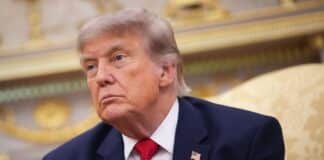
The Supreme Court struck down President Trump’s executive order on birthright citizenship.
“A child born on American soil and subject to American law was made an American citizen,” Chief Justice John Roberts wrote for the majority. The ruling added, “Citizenship, then and now, was the right to have rights— to freely participate in our political community. The Framers of the Fourteenth Amendment extended that promise to ‘every free-born person in this land.'”
Justices Clarence Thomas, Neil Gorsuch, and Samuel Alito dissented to the ruling. Thomas wrote in a dissent, joined by Gorsuch, “Blacks were entitled to citizenship because they were Americans. They had no other homeland, owed no allegiance to any foreign power, and were subject to no other authority.”
“The same could not be said for the children of foreign temporary visitors. Foreign temporary visitors were attached to their home country, lacked similar bonds to this country, and would not be called upon in time of war,” he added. “Americans, consistent with their settler ethos, believed that citizens were the people who called a place home. Accordingly, domicile—a person’s legal home—played a key role in both state and national citizenship in America.”
President Trump’s January 2025 order on the subject declared that the “Fourteenth Amendment has never been interpreted to extend citizenship universally to everyone born within the United States.”
Defending his understanding of the Fourteenth Amendment, Trump told reporters earlier this year, “It was about slaves.”
“All of this legislation, all of this having to do with birthright citizenship, it was at the end of the Civil War. The reason was, it had to do with the babies of slaves and the protection of the babies of slaves,” he said. “It didn’t have to do with the protection of multi-millionaires and billionaires wanting to have their children getting American citizenship.”