A group of restaurant owners and five small businesses filed a lawsuit Tuesday, Aug. 17, against New York City Mayor Bill de Blasio over the city’s vaccine mandate targeting “certain establishments.” The lawsuit was filed in Richmond County Supreme Court.
“This vaccine mandate is arbitrary and capricious due to the fact that it targets certain establishments but not others,” wrote the plaintiffs, led by a group called the Independent Restaurant Owners Association Rescue. Max’s Esca, DeLuca’s Italian Restaurant, Pasticceria Rocco, Evolve-33 and Staten Island Judo Jujitsu were also listed as plaintiffs. They’re seeking a permanent injunction against the order.
“For some reason, gyms, restaurants, we’re always the ones that have to take on this social responsibility to keep people safe. It’s not our job,” Cannizzo said. “My chances of survival are slim to none with all the other mandates and restrictions that Mayor de Blasio has put on my studio. It’s a business death sentence.”
According to the lawsuit, the mandate will “severely impact” the owners’ businesses, life savings and livelihood.
Restaurants and gyms throughout the city argue that the new rules are unfair because they don’t apply to other indoor spaces where people congregate for long periods of time, such as grocery stores with long lines and crowded office buildings.
Eateries that offer only take-out, delivery and outdoor dining are not required to ask customers for proof of vaccination but must remove or block off any indoor seating and tables.
“There are many other venues that involve groups of ‘unassociated people interacting for a substantial period of time’ such as grocery stores, pharmacies, hair salons, churches, office buildings, schools, healthcare facilities, etc. and yet these venues will not require vaccination of all workers and patrons,” the plaintiffs said.
They also noted that De Blasio’s mandate makes no exceptions for those who can’t or shouldn’t get the COVID-19 vaccine.
On Wednesday, Aug. 18, de Blasio said he would keep his comments on the lawsuit limited, but added that he had tremendous confidence that they’re in a strong legal position. “We’re in a global pandemic still. The decisions that have been taken have been taken with the leadership of our health officials who have been fighting this battle from the beginning, and we know we must get more people vaccinated,” he said.
De Blasio’s mandate is discriminatory and un-American
Some business owners have raised concerns about the mandate being discriminatory and un-American, about the rollout of fake vaccine cards and about restaurant staff having to bear the brunt of potential customers’ outrage over the new rule.
Other restaurant owners have expressed concerns about some of their workers quitting if they’re required to be vaccinated. Art Depole, who co-owns a Mooyah Burgers, Fries and Shakes franchise with his brother Nick in midtown Manhattan, said that some of his employees were not planning to get vaccinated. In a tight labor market, replacing those workers can be a huge challenge.
De Blasio’s controversial “Key to NYC” scheme officially kicked off Tuesday, separating the vaccinated and the unvaccinated in day-to-day life for the first time in a U.S. city. The cities of New Orleans and San Francisco have since followed suit with similar mandates.
New York’s rules require staff and customers at dining, entertainment and fitness venues to have at least one dose of a coronavirus (COVID-19) vaccine to enter indoor spaces. Enforcement won’t begin for another 25 days. Starting Sept. 13, businesses that don’t comply will be subject to fines.
Mary Josephine Generoso, manager of Pasticceria Rocco, responded to the mayor’s rules by erecting a huge sign outside of the bakery’s Bay Ridge location welcoming “vaccinated or unvaccinated” customers into the dining room.
Under the new rules, anyone aged 12 and older must show proof of vaccination to dine indoors in New York City’s restaurants. Customers can only dine outdoors if they fail to show their vaccine passports. Restaurant servers and bar staff have been designated as public enforcers of the mayor’s new mandate.
The Key to NYC had an uneven start, with many businesses opting out until they absolutely have to.
On Wednesday afternoon, fast-food restaurants in Manhattan were not yet asking for Centers for Disease Control and Prevention (CDC) vaccination cards or Excelsior passes, and the AMC Village 7 movie theater in the East Village said it hadn’t been checking.
A man in the East Village told DailyMail.com that he got takeout from Chipotle with no issues. He said he was only asked for his vaccination card at a bar.
Republicans back business owners’ lawsuit
Prominent Republicans like New York Rep. Nicole Malliotakis and City Council member Joe Borelli are backing the business owners’ lawsuit.
Malliotakis announced the lawsuit at a press conference earlier this month. She was joined by attorneys Louis Gelormino and Mark Fonte. Also present were Cannizzo and Charlie Cassara, who owns two gyms on Long Island and heads the U.S. Fitness Coalition.
“The U.S. Fitness Coalition is not anti-vaxxers. We are in the business of keeping people healthy and fit through proper nutrition and exercise,” Cassara said. “The city does not have the right to tell us who we can serve for any reason – that decision is up to us as private business owners.”
Cassara had already sued de Blasio last year after the mayor removed gyms from the city’s Phase 4 reopening list. He has appeared on Fox News, where he spoke about how difficult it was for some customers to feel comfortable under the mayor’s rules for gyms.
“For instance, in order for us to get rid of the social distancing inside of our gyms, we have to take people’s vaccination cards. This is creating a big problem between people who don’t want to give it or haven’t been vaccinated,” he said.
China’s communist regime has ordered citizens in the country’s northeastern region to spy on Christians and report any “illegal religious activities,” including preaching and religious house gatherings. Informants will be rewarded with $150 for each tip, according to a report.
The administration of the Meilisi Daur District in Heilongjiang Province’s Qiqihar city released a document titled, “The Reward System For Reporting Illegal Religious Activities Offences,” saying informants would be paid up to 1,000 yuan ($150), China Christian Daily reported.
Officials, it says, are looking for any information — through a phone call, email or letter — on unqualified religious personnel, unauthorized trans-regional activities, preaching and distribution of printed religious literature, audio-visual products outside places of worship, unauthorized donations or private house gatherings.
The objective, it adds, is to “strengthen the control of illegal religious activities in the district, prevent any COVID-19 cluster resulting from religious gatherings, mobilize the public to engage in preventing, suppressing illegal religious activities, and ensure a harmonious and stable religious landscape.”
The document was released this month by the Meilisi Daur District United Front Work Department of Qiqihar.
Similar reward systems were later introduced in Zibo city’s Boshan District and Weihai City’s Shandong area.
Previously, such rewards have been offered in Fujian, Guangxi, Henan, Hebei and Liaoning.
“While they do not specify which religion they are targeting, it is self-evident that house churches are being suppressed,” the U.S.-based persecution watchdog International Christian Concern commented.
Open Doors USA, which monitors persecution in over 60 countries, estimates that there are about 97 million Christians in China, a large percentage of whom worship in what China considers to be “illegal” and unregistered underground house churches.
According to recently-released reports, religious persecution in China intensified in 2020, with thousands of Christians affected by church closures and other human rights abuses.
Under the direction of President Xi Jinping, officials from the Chinese Communist Party, or CCP, have been enforcing strict controls on religion, according to a report released in March by the U.S.-based group China Aid.
Authorities in China are also cracking down on Christianity by removing Bible apps and Christian WeChat public accounts as new highly restrictive administrative measures on religious staff went into effect this year.
China is ranked on Open Doors USA’s World Watch List as one of the worst countries in the world when it comes to the persecution of Christians.
The U.S. State Department has also labeled China as a “country of particular concern” for “continuing to engage in particularly severe violations of religious freedom.”
The U.S. income tax system is “very progressive,” and it’s increasingly taking on the role of providing social benefits to households, according to the Tax Foundation.
Lower household income and tax relief measures introduced during the pandemic allowed more Americans to pay no taxes in 2020. And President Joe Biden’s Build Back Better plan aims to extend these measures, making the tax system even more progressive, Garrett Watson, senior policy analyst at the Tax Foundation wrote in a report.
The share of tax filers who pay income taxes dropped last year, thanks to several federal relief measures, including the expansions in the child tax credit (CTC) and earned income tax credit (EITC).
According to preliminary estimates from the Urban-Brookings Tax Policy Center released last week, nearly 61 percent of U.S. households paid no federal income taxes in 2020, up from 44 percent in 2019.
The data showed that out of 176.2 million individuals and married couples who could file a tax return, 144.5 million of them actually filed a tax return and about 107 million paid no federal income taxes last year, compared to 75.9 million in 2019.
The share of households that pay no income tax is projected to remain high at nearly 57 percent in 2021, according to the estimates.
“The large portion of households paying no income tax illustrates that the U.S. income tax system is quite progressive, and that the tax system is increasingly being used to provide social benefits to households,” Watson wrote.
According to him, the share of tax filers who pay no income taxes has increased since the 1990s, “largely due to expansions in refundable tax credits, which can more than offset tax liability for low-income households.”
The Biden administration significantly expanded the CTC for the 2021 tax year. As part of the $1.9 trillion COVID relief package signed into law in March, the annual CTC, for example, was increased to $3,000 per child from ages 6 to 17, and $3,600 for children under 6. Before this, the maximum annual credit was $2,000 for every child under 17.
The Biden administration is pushing to renew an expansion to the CTC, which is set to expire at the end of the year. It also announced its intention to make permanent or extend several tax credits, including the EITC, child and dependent care tax credit, and premium tax credit.
If the administration succeeds in maintaining these enhanced tax credits, it will keep the share of people paying no income tax elevated going forward, Watson said.
“Biden’s proposals would also raise tax rates on high earners, generally making an already progressive tax system still more progressive,” he said, challenging Democrats’ argument that the rich people do not pay their fair share in taxes.
The first monthly payment from the enhanced child tax credit started in July, benefiting 39 million families. Biden touted the CTC relief payments, calling it “one of the largest-ever single tax cuts for families.”
“It’s a reflection of our belief that the people of this country who need a tax cut aren’t the folks at the top,” he said on July 15 during a speech at the White House.
US President Joe Biden pledged during his election campaign to slap a new ban on “assault weapons”, but since taking office, his Democratic Party has focused on the sale of unfinished firearm receivers to enthusiasts building their own guns.
Attorneys general of a score of US states have kicked off a legal challenge to “unconstitutional” federal plans to ban so-called “ghost guns”.
West Virginia Attorney General Patrick Morrisey and his Arizona counterpart Mark Brnovich led 20 Republican Party-governed states in issuing an official “comments” document opposing Bureau of Alcohol, Tobacco, Firearms and Explosives (ATF) proposals to regulate the sale of firearms components.
“Private individuals and businesses have the right to assemble firearms for their own use — a fact borne out in early American history and expressly recognized by the Gun Control Act”, the document read.
“The Second Amendment is a core tenant of our Constitution, and this regulation would treat the activity of assembling firearm parts as a problem to be stamped out, rather than a right and tradition to be respected”.
In an echo of the 1994 federal ban on “assault weapons“, President Joe Biden’s new government has embarked on a crusade against citizens assembling guns from purchased parts, arguing that the lack of a factory serial number on such a weapon would make it impossible to trace if it were used in a crime.
The administration wants to ban the sale of partially-finished frames and receivers, dubbed “80 percent receivers”, without the background checks and record-keeping used for complete firearms.
Existing law already dictates that manufacturers of firearms frames or receivers — the body of a rifle or repeating shotgun — must be licenced by the ATF and mark their products with a unique serial number. However, many modern weapons have two-part receivers, and components such as barrels and bolts are readily interchangeable between mass-produced guns of the same basic model.
Forensic ballistics relies on matching marks left by the barrel and other parts on the fired bullet and ejected cartridge case to match a suspect’s weapon to a crime.
The statement argued that the planned rule changes would outlaw a long-standing practice of gun owners customising their weapons, and said they would hand powers reserved by the legislature to the bureau.
“By allowing ATF to decide for itself which firearms it will regulate, unconstrained by Congress’s guidance, the proposed rule is unconstitutional”, the 20 states’ top legal officials wrote.
The other states named in the document are Alabama, Arkansas, Alaska, Florida, Georgia, Indiana, Kansas, Kentucky, Mississippi, Missouri, Montana, Nebraska, New Hampshire, Ohio, Oklahoma, North Dakota, South Carolina, and South Dakota.
Mississippi’s top health official Friday threatened possible jail time and fines for people diagnosed with COVID-19 who don’t isolate, NBC News reported.
Mississippi State Health Officer Dr. Thomas Dobbs issued a “COVID-19 isolation order” on Friday, which told people they “must immediately home-isolate on first knowledge of infection with COVID-19.”
Any individuals infected with COVID-19 “must remain in the home or other appropriate residential location for 10 days from onset of illness or 10 days from the date of a positive test for those who are asymptomatic.”
“The failure or refusal to obey the lawful order of a health officer is, at a minimum, a misdemeanor punishable by a fine of $500 or imprisonment for six months or both,” the order states.
Those infected with a life-threatening disease who refuse to “obey the lawful order of a health officer is a felony,” punishable with potential fines of up to $5,000 and/or five years in jail, according to the order.
“Persons infected with COVID-19 should limit exposure to household contacts,” the order reads. “No visitors should be allowed in the home. Please stay in a specific room away from others in your home. Use a separate bathroom if available.”
“A negative test for COVID-19 is not required to end isolation at the end of 10 days, but you must be fever free for at least 24 hours with improvement of other symptoms,” the order states.
At Friday’s press conference unveiling the new order, state epidemiologist Dr. Paul Byers noted, “Mississippi… 25,000 cases in the last seven days, but our rate is 843 cases per 100,000 in the last seven days. These numbers are staggering guys.”
Mississippi reported 5,048 new cases of COVID-19 on Friday, surpassing the previous record of 5,023 cases from the previous Friday. There were 54 coronavirus deaths reported on Friday. As of Wednesday, there were 1,660 hospitalized patients with COVID-19, 457 were in the ICU, and 324 were on ventilators, according to the Mississippi State Department of Health.
Only 36% of people in Mississippi are fully vaccinated for COVID-19, the second least-vaccinated state, trailing only Alabama.
Mississippi also rolled out 40 locations offering monoclonal antibody treatments, which can be used to treat mild to moderate infections when COVID-19 is detected early.
“If you’re someone who is vaccine-hesitant and haven’t made that jump yet, don’t be antibody-hesitant,” Dobbs said. “If you get COVID, we don’t want to be having the conversation as you’re getting wheeled into the ICU, saying, ‘Hey Doc, what can I do about it?’ Now it’s too late.”
(LA Times) A new UC Berkeley Institute of Governmental Studies poll co-sponsored by the Los Angeles Times found that among the dozens of candidates in the running to replace Gov. Gavin Newsom, conservative talk radio host Larry Elder leads the race, with many voters still undecided.
The poll found that 47% of likely California voters supported recalling the Democratic governor, compared with 50% who opposed removing Newsom from office — a difference just shy of the survey’s margin of error.
Forty percent of likely voters remain undecided on a replacement candidate, providing ample opportunity for other gubernatorial hopefuls to rise in the ranks before the Sept. 14 special election.
When asked to pick their first choice among the candidates hoping to take the helm as California’s next governor, 18% of likely voters preferred Elder.
Among other Republicans, former San Diego Mayor Kevin Faulconer and Rancho Santa Fe businessman John Cox, who was trounced by Newsom in the 2018 gubernatorial election, both were backed by 10% of likely voters.
Assemblyman Kevin Kiley of Rocklin received support from 5% of those surveyed.
Caitlyn Jenner, a retired gold-medal Olympian and the most famous candidate in the race, was backed by just 3% of likely voters. Jenner is currently in Australia filming a reality television show.
Elder, a nationally syndicated conservative radio host, announced on his show July 12 that he was entering the race. He did not appear on the list of candidates who state election officials said had met the requirements to qualify for the ballot, but his campaign insisted that was an error that would be corrected. A judge ruled in his favor on July 21.
Elder, who calls himself “the Sage from South Central,” is a lawyer, documentary maker and writer who is well-known in GOP circles and frequently appears on Fox News.
The registered Republican, 69, contemplated challenging former U.S. Sen. Barbara Boxer in 2010 but did not run.
The international community is being called upon to do what it can to ensure the protection of women, children, and minorities in Afghanistan.
The call coincides with the UN International Day Commemorating the Victims of Violence Based on Religion or Belief.
Chaos continues to surround Kabul airport as thousands of Afghans attempt to flee the country before the Taliban stops evacuation flights for good.
The International Panel of Parliamentarians for Freedom of Religion or Belief (IPPFoRB) said the developments in Afghanistan were “distressing”.
“We are deeply concerned about the targeting of and the violence and persecution faced by various groups in Afghanistan,” it said.
“The international community must ensure the protection and safety of women, children and religious and ethnic minorities in Afghanistan and work towards an inclusive and just political settlement that upholds the human rights of all.”
US President Joe Biden has set 31 August as the deadline for the rescue mission, but it is under increasing pressure to extend it because of warnings that there is not enough time to get everyone out.
Former British army head, General Lord Richards, told BBC Radio 4’s Broadcasting House program that “there’s no doubt about it” that keeping troops in Afghanistan beyond 31 August would save lives.
He has urged the creation of an UN-led “multilateral humanitarian intervention operation” to keep access channels open to those beyond Kabul airport.
“On this one, I think there might be an international consensus and the Taliban ironically might well welcome it, because the alternative is some very bad headlines come 1 September when we see starving Afghans and worse potentially, simply because they don’t have the capacity to deal with it,” he said.
There have been reports of deadly stampedes outside Kabul airport and crowds being fired upon.
A spokesperson for the British Ministry of Defense said, “Conditions on the ground remain extremely challenging but we are doing everything we can to manage the situation as safely and securely as possible.”
Many Democratic leaders, including – most notably – Nancy Pelosi refuse to let go of the notion that the Jan. 6 “attack” on the Capitol was a terror attack on par with 9/11 or the Pulse nightclub shootings. Why? Because, they claim, the whole seige was planned and perpetrated by shadowy militia groups like the Oath Keepers, working in concert with Republican lawmakers.
Dems also blame President Trump for instigating the incident (the supposed reason behind Twitter and Facebook banning his accounts).
But according to a scoop from Reuters published Friday, prosecutors who once planned to try and lay charges of sedition, conspiracy or other serious offenses against members of the Oath Keepers and other militia groups have been stymied by the reality of what actually happened. And now that the first (surprisingly stiff) jail sentences have been handed down, the FBI has apparently determined that there’s “scant evidence” to suggest that the events of Jan. 6 resulted from an “organized plot”, according to a scoop published by Reuters.
The FBI tells Reuters that “95%” of these cases are “one offs”. And even among the “5%” who were more organized, there is still no evidence of a “grand scheme” to overthrow Congress and install President Trump for a second term.
Though federal officials have arrested more than 570 alleged participants, the FBI at this point believes the violence was not centrally coordinated by far-right groups or prominent supporters of then-President Donald Trump, according to the sources, who have been either directly involved in or briefed regularly on the wide-ranging investigations.
“Ninety to ninety-five percent of these are one-off cases,” said a former senior law enforcement official with knowledge of the investigation. “Then you have five percent, maybe, of these militia groups that were more closely organized. But there was no grand scheme with Roger Stone and Alex Jones and all of these people to storm the Capitol and take hostages.”
But that’s not even the most disappointing bit for Pelosi, who is trying to use her Jan. 6 Committee to punish GOP colleagues. Because the FBI also told Reuters that there’s no evidence that Trump, or people around him, were involved in organizing the unrest.
But the FBI has so far found no evidence that [Trump] or people directly around him were involved in organizing the violence, according to the four current and former law enforcement officials.
The report specifically cited “dirty trickster” Roger Stone (who was famously taken into custody by a SWAT team for a perp walk in front of CNN cameras) and InfoWars founder Alex Jones.
Stone, a veteran Republican operative and self-described “dirty trickster”, and Jones, founder of a conspiracy-driven radio show and webcast, are both allies of Trump and had been involved in pro-Trump events in Washington on Jan. 5, the day before the riot.
FBI investigators did find that cells of protesters, including followers of the far-right Oath Keepers and Proud Boys groups, had aimed to break into the Capitol. But they found no evidence that the groups had serious plans about what to do if they made it inside, the sources said.
The findings could also help the 40 or so defendants who belong to militia groups, and are facing more serious conspiracy charges. As we first learned a few weeks ago, prosecutors feel they don’t have enough evidence to lay charges of “seditious conspiracy”, or use the RICO act to target militia groups as if they were an organized criminal gang.
But one source said there has been little, if any, recent discussion by senior Justice Department officials of filing charges such as “seditious conspiracy” to accuse defendants of trying to overthrow the government. They have also opted not to bring racketeering charges, often used against organized criminal gangs.
Senior lawmakers have been briefed on the FBI’s findings and find them “credible”, according to Reuters. The ultimate takeaway is this: while some groups may have discussed the rally and attendant protest in advance, and while they ultimately may have “worked together” on the day in question, there’s simply no evidence of a grand conspiracy headed by a single nefarious ringleader (not Stone, not Jones, not even Trump).
Prosecutors have filed conspiracy charges against 40 of those defendants, alleging that they engaged in some degree of planning before the attack. They alleged that one Proud Boy leader recruited members and urged them to stockpile bulletproof vests and other military-style equipment in the weeks before the attack and on Jan. 6 sent members forward with a plan to split into groups and make multiple entries to the Capitol.
But so far prosecutors have steered clear of more serious, politically-loaded charges that the sources said had been initially discussed by prosecutors, such as seditious conspiracy or racketeering.
The FBI’s assessment could prove relevant for a congressional investigation that also aims to determine how that day’s events were organized and by whom.
With seditious conspiracy now off the table, the most serious charges are likely to be the assault on an office charges, which carry a penalty of up to 20 years in prison.
BlackRock, the world’s largest investment manager with more than $9 trillion in assets under management, recently made a very contrarian call.
The investing giant argued that China is no longer an emerging market and as such, investors need to boost their investments in Chinese stocks and bonds.
China is underrepresented in investors’ portfolios, Wei Li, chief investment strategist at BlackRock Investment Institute, told the Financial Times on Aug. 17.
BlackRock’s latest bullish call on China follows a research report it issued in May, which also argued that Chinese stocks and bonds allocation in global benchmark indices is too low. In that report, BlackRock said that global economic growth is becoming increasingly bipolar, led by the United States and China at opposite ends of that spectrum, and that investors need exposure to both in almost equal measures.
It’s an especially contrarian view considering the recent pain surrounding Chinese stocks.
Many experts are now questioning Chinese companies.
Goldman Sachs recently cut their rating on several Chinese firms, while UK hedge fund Marshall Wace has questioned whether Chinese stocks are investable in the near term.
More broadly, China’s A-shares have trailed global markets, and Chinese companies listed in the United States and Hong Kong have underperformed even more after recent regulatory crackdowns and compliance issues facing several well-known Chinese firms.
So should investors trust BlackRock, the world’s largest asset manager, and double down on their Chinese investments?
Let’s analyze further.
First, let’s examine BlackRock’s motives and incentives. Its CEO, Larry Fink, has been trying to cultivate a strong relationship with Beijing for many years. BlackRock in June became the first U.S. asset manager to receive approval to establish a mutual fund business in China, a position “we are honored to be in,” Fink said in a statement at the time.
BlackRock also has one of the biggest rosters of investment funds with China exposure, including dedicated China funds, as well as Asian and emerging markets funds with China allocation.
The firm’s flagship BlackRock China Fund, which has positions in Tencent, China Merchant Bank, and electric vehicle maker Xpeng, had assets under management of more than $1.5 billion as of Aug. 20. BlackRock also runs a China bond fund that invests in a variety of China fixed income products, including onshore and offshore RMB-denominated bonds, as well as USD-denominated offshore bonds.
In other words, BlackRock would be well-incentivized to drum up support for investing in China—it earns fees and other revenues from investors who put cash in their funds.
Looking beyond the sales pitch, let’s also examine the substance of investing in China.
On the surface, investing in China may seem attractive. It has the world’s largest population, the No. 2 economy, its second-biggest financial market, an expanding middle class, an internet-savvy populace, and unbound consumerism. All of these are good factors for investment.
But there are significant detractors that make investing in China risky and unappealing.
First, U.S. retail investors buying American depositary receipt (ADR) shares of Chinese companies listed on U.S. exchanges aren’t really buying what they think they’re buying. A share of BABA isn’t owning a share in the actual Alibaba operating company, which is the biggest online retailer in China. A share of BABA is a piece of an offshore holding company, or variable interest entity (VIE), that has a legal construct with the Chinese operating company that grants the offshore VIE a share of Alibaba’s profits. In other words, it’s synthetic ownership because China has banned foreign ownership in certain domestic industries. In addition, VIE structures aren’t officially recognized by the authorities and may be illegal under Beijing’s regulatory regime. But for now, it has worked for the last twenty years.
In addition, the Chinese Communist Party (CCP) has begun a series of regulatory reforms—in other words, crackdowns—targeting foreign listed companies. Numerous companies have been affected across industries such as education, internet, and transportation. Many of these companies have seen their shares listed in Hong Kong or New York tumble in recent weeks. Sudden regulatory shifts, which in some cases threaten the very existence of companies’ business models, pose a significant risk to foreign investors accustomed to the relatively stable regulatory regimes of the West.
More recently, the CCP has hinted that the “pseudo-Capitalism” it had peddled over the last twenty-plus years may require some drastic changes.
In August, the Central Committee for Financial and Economic Affairs outlined a series of edicts to ensure “common prosperity” within Chinese society. In a report by state media Xinhua, the guidelines seek to promote earnings equality, reduce excessive earnings, and encourage high earners and enterprises to give back to society, the report summarized.
As with most CCP guidelines, specificity was lacking. But such a change in tone could be detrimental to the financial earnings of for-profit corporations, especially if Beijing begins mandating donations or other social welfare taxes upon private companies. In other words, the unbridled money-making policy of the last two decades appears to be ending.
Chinese economists have recently discussed the possibility of a real estate property tax—something common in the United States but which did not exist in China for most private homeowners. Such taxes, if enacted, could be destructive to the real estate industry and China’s highly leveraged property developers whose dollar-denominated bonds are a popular investment with foreign investors.
Another recent development, which is seldom reported, strikes at the very core of China’s “pseudo-Capitalist” system: the CCP appears to be tightening its control over private companies in increasingly draconian ways.
The Information, a U.S. tech site, reported that one Chinese government entity recently took a small ownership stake and a board seat in a subsidiary of ByteDance, the parent company of the popular social media platform TikTok.
A separate report noted that the CCP recently took a stake and a board seat in Weibo, which runs China’s Twitter-like website, according to a SEC filing. Weibo is traded on the Nasdaq stock exchange in New York. ByteDance is not publicly traded but is partially owned by U.S. venture capital firms.
Many privately held companies in China already have communist party committee cells, and this development suggests that the CCP will assert more direct influence over companies’ culture, policies, and business strategy.
The CCP’s recent actions have even forced giant Chinese corporations to proactively warn investors of further regulatory risks. Tencent president Martin Lau said on an investor call in August that a variety of more stringent regulatory measures may be coming.
All of this isn’t to say that China has zero merit from an investment perspective. But before acting on any “expert” advice, investors must do their own due diligence and carefully examine these risks.
And going forward, investors must increasingly consider—to quote Donald Rumsfeld—the “potential known unknowns” of investing in China.
Houston hospitals have “reached a breaking point” amid a COVID-19 outbreak, which struck weeks after 150 hospital workers were fired by Houston Methodist hospital, one of several hospitals struggling.
Jennifer Bridges knew what was coming when her director at Houston Methodist hospital called her up in June to inquire about her vaccination status.
Bridges, a 39-year-old registered nurse, responded “absolutely not” when asked if she was vaccinated or had made an effort to get vaccinated. She was terminated on the spot.
“We all knew we were getting fired,” Bridges, 39, toldCBS News. “We knew unless we took that shot to come back, we were getting fired today. There was no ifs, ands or buts.”
Bridges was one of more than 150 hospital workers fired by Houston Methodist hospital.
“All last year, through the COVID pandemic, we came to work and did our jobs,” said Kara Shepherd, a labor and delivery nurse who joined Bridges and other workers in an unsuccessful lawsuit. “We did what we were asked. This year, we’re basically told we’re disposable.”
‘Please Send Help Now’
Shepherd and her colleagues may be disposable in the eyes of hospital administrators, but they are perhaps not as easily replaced as she or Houston Methodist thought.
Two months after firing unvaccinated hospital staff, Houston Methodist is one of several area hospitals experiencing a severe shortage of medical personnel. Media reports say hospitals have “reached a breaking point” because of a flood of COVID-19 cases.
In an editorial published Tuesday, the Houston Chronicle said the 25-county hospital area that includes Houston had more patients in hospital beds—more than 2,700—than at any point in 2021. News reports make it clear that hospitals are struggling to keep up.
KHOU-11, a local news station, says medical tents have been erected outside of Lyndon B. Johnson Hospital but are vacant because of a shortage of nurses.
“Please send help now,” said Dr. George Williams (depicted in main photo), chief ICU medical officer for LBJ Hospital.
While most media reports focus on LBJ Hospital, reports also make it clear other hospitals, including Houston Methodist, are experiencing similar struggles. The Houston Chronicle says Harris Health System (which includes LBJ) is short some 250 nurses, while the University of Texas Medical Branch has requested an additional 100 nurses to help address staff shortages at four hospitals.
Baylor St. Luke’s Medical Center, a private Houston hospital jointly owned by Baylor College and a local healthcare system, said the hospital “is definitely being impacted” by the nurse shortage.
As for Houston Methodist, the hospital is reportedly struggling as well—although they’ve yet to admit it publicly.
“An internal memo at Houston Methodist Hospital said it ‘is struggling with staffing as the numbers of our COVID-19 patients rise,’” the Chroniclereports.
Public officials are scrambling to address the shortage, which has created a massive patient backlog throughout the Houston area. More than a week ago, Tex Gov. Greg Abbott requested out of state assistance for the statewide crisis, including 2,500 out of state nurses. LBJ Hospital officials said those nurses have not yet arrived.
The metro-wide shortage of nurses reportedly came to light when an ER doctor emailed a state senator about the dire situation in hospitals.
“The combined increase in volume from (COVID and) existing normal volume (and) nursing shortage has made this a terrible disaster at every ER and hospital in the city of Houston,” the physician wrote, according to the Chronicle.
Cobra Effects
It’s unclear to what extent Houston Methodist’s decision to fire 150 unvaccinated medical workers exacerbated the nursing crisis. For perhaps obvious reasons, hospital officials have been mum on the issue.
What we know is that Houston hospitals that did not abruptly fire 150 employees struggled to deal with the COVID spike, and in some cases people died as a result. So it’s safe to presume that Houston Methodist’s decision to fire 150 employees a few weeks before the Delta variant arrived in force didn’t make the situation any better and probably made it much worse.
Some may be tempted to think Houston Methodist was able to quickly replace the workers they lost, but evidence suggests this is unlikely. Apart from the broader shortage, front line nurses “are burned out,” they say.
“We are all tired of this; nurses are tired of this,” Texas Nurses Association CEO Cindy Zolnierek wrote in a recent public letter.
That Houston Methodist hospital didn’t intend to exacerbate its shortage of hospital staff goes without saying, but it’s also an important reminder about what economists call the Cobra Effect.
Every human decision brings about consequences, intended ones and unintended ones. Unintended consequences are so common economists often call them “Cobra Problems,” after an interesting historical event in India that occurred when the British Empire tried to eradicate cobras by putting out a bounty on them. (Can you guess what happened?)
When hospital administrators set their policy—get vaccinated or lose your job—their goal was to increase vaccination rates of hospital staff. The unintended consequence was a shortage of nurses and other hospital workers during a deadly pandemic.
In June, Houston Methodist’s president, Marc Boom, sounded confident that his coercive methods were effective, noting that almost 25,000 of the health system’s 26,000 workers were fully vaccinated.
“The science proves that the vaccines are not only safe but necessary if we are going to turn the corner against COVID-19,” Boom told employees in a statement.
Other Houston hospitals saw things differently. Two months before Houston Methodist fired its workers, Harris Health System officials announced they would not be requiring hospital workers to get vaccinated, noting none of the vaccines were fully approved by the FDA.
Americans will of course disagree about which CEO’s approach was the correct one. The pandemic, after all, has been bitterly divisive because we’re deeply divided over this very question: should coercive means be employed to achieve certain desired healthcare outcomes, and if so, to what extent?
In 2020, political leaders around the world said yes to this question, and the results were disastrous. A year later, private companies are playing a different version of the same game: take the vaccine, or get fired.
Like the lockdown champions of 2020, corporate leaders no doubt believe their action is moral, proper, and will achieve their desired result. But as the Cobra Effect reminds us, focusing strictly on desired outcomes and ignoring potential unintended outcomes is a good way to get bit.



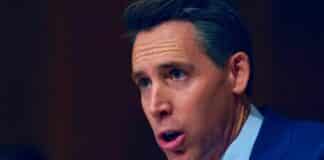




Mayor Bill de Blasio sued by business owners over New York City’s vaccine mandate
A group of restaurant owners and five small businesses filed a lawsuit Tuesday, Aug. 17, against New York City Mayor Bill de Blasio over the city’s vaccine mandate targeting “certain establishments.” The lawsuit was filed in Richmond County Supreme Court.
“This vaccine mandate is arbitrary and capricious due to the fact that it targets certain establishments but not others,” wrote the plaintiffs, led by a group called the Independent Restaurant Owners Association Rescue. Max’s Esca, DeLuca’s Italian Restaurant, Pasticceria Rocco, Evolve-33 and Staten Island Judo Jujitsu were also listed as plaintiffs. They’re seeking a permanent injunction against the order.
Staten Island Judo Jujitsu Dojo owner Joseph Cannizzo said the executive order is a “death sentence” to small businesses.
“For some reason, gyms, restaurants, we’re always the ones that have to take on this social responsibility to keep people safe. It’s not our job,” Cannizzo said. “My chances of survival are slim to none with all the other mandates and restrictions that Mayor de Blasio has put on my studio. It’s a business death sentence.”
According to the lawsuit, the mandate will “severely impact” the owners’ businesses, life savings and livelihood.
Restaurants and gyms throughout the city argue that the new rules are unfair because they don’t apply to other indoor spaces where people congregate for long periods of time, such as grocery stores with long lines and crowded office buildings.
Eateries that offer only take-out, delivery and outdoor dining are not required to ask customers for proof of vaccination but must remove or block off any indoor seating and tables.
“There are many other venues that involve groups of ‘unassociated people interacting for a substantial period of time’ such as grocery stores, pharmacies, hair salons, churches, office buildings, schools, healthcare facilities, etc. and yet these venues will not require vaccination of all workers and patrons,” the plaintiffs said.
They also noted that De Blasio’s mandate makes no exceptions for those who can’t or shouldn’t get the COVID-19 vaccine.
On Wednesday, Aug. 18, de Blasio said he would keep his comments on the lawsuit limited, but added that he had tremendous confidence that they’re in a strong legal position. “We’re in a global pandemic still. The decisions that have been taken have been taken with the leadership of our health officials who have been fighting this battle from the beginning, and we know we must get more people vaccinated,” he said.
De Blasio’s mandate is discriminatory and un-American
Some business owners have raised concerns about the mandate being discriminatory and un-American, about the rollout of fake vaccine cards and about restaurant staff having to bear the brunt of potential customers’ outrage over the new rule.
Other restaurant owners have expressed concerns about some of their workers quitting if they’re required to be vaccinated. Art Depole, who co-owns a Mooyah Burgers, Fries and Shakes franchise with his brother Nick in midtown Manhattan, said that some of his employees were not planning to get vaccinated. In a tight labor market, replacing those workers can be a huge challenge.
De Blasio’s controversial “Key to NYC” scheme officially kicked off Tuesday, separating the vaccinated and the unvaccinated in day-to-day life for the first time in a U.S. city. The cities of New Orleans and San Francisco have since followed suit with similar mandates.
New York’s rules require staff and customers at dining, entertainment and fitness venues to have at least one dose of a coronavirus (COVID-19) vaccine to enter indoor spaces. Enforcement won’t begin for another 25 days. Starting Sept. 13, businesses that don’t comply will be subject to fines.
Mary Josephine Generoso, manager of Pasticceria Rocco, responded to the mayor’s rules by erecting a huge sign outside of the bakery’s Bay Ridge location welcoming “vaccinated or unvaccinated” customers into the dining room.
Under the new rules, anyone aged 12 and older must show proof of vaccination to dine indoors in New York City’s restaurants. Customers can only dine outdoors if they fail to show their vaccine passports. Restaurant servers and bar staff have been designated as public enforcers of the mayor’s new mandate.
The Key to NYC had an uneven start, with many businesses opting out until they absolutely have to.
On Wednesday afternoon, fast-food restaurants in Manhattan were not yet asking for Centers for Disease Control and Prevention (CDC) vaccination cards or Excelsior passes, and the AMC Village 7 movie theater in the East Village said it hadn’t been checking.
A man in the East Village told DailyMail.com that he got takeout from Chipotle with no issues. He said he was only asked for his vaccination card at a bar.
Republicans back business owners’ lawsuit
Prominent Republicans like New York Rep. Nicole Malliotakis and City Council member Joe Borelli are backing the business owners’ lawsuit.
Malliotakis announced the lawsuit at a press conference earlier this month. She was joined by attorneys Louis Gelormino and Mark Fonte. Also present were Cannizzo and Charlie Cassara, who owns two gyms on Long Island and heads the U.S. Fitness Coalition.
“The U.S. Fitness Coalition is not anti-vaxxers. We are in the business of keeping people healthy and fit through proper nutrition and exercise,” Cassara said. “The city does not have the right to tell us who we can serve for any reason – that decision is up to us as private business owners.”
Cassara had already sued de Blasio last year after the mayor removed gyms from the city’s Phase 4 reopening list. He has appeared on Fox News, where he spoke about how difficult it was for some customers to feel comfortable under the mayor’s rules for gyms.
“For instance, in order for us to get rid of the social distancing inside of our gyms, we have to take people’s vaccination cards. This is creating a big problem between people who don’t want to give it or haven’t been vaccinated,” he said.