No leader can make the promise Gen. Milley made and retain the support of the military personnel he oversees.
Gen. Mark Milley, chairman of the Joint Chiefs of Staff, should resign. He went too far in preparing to resist Donald Trump’s orders in the closing days of an unstable presidency marked by an attempted coup.
Milley prepared his senior officers to slow walk any orders from Trump to use nuclear weapons or start a military confrontation with China, according to a new book by Bob Woodward and Robert Costa of The Washington Post. That’s an appalling step toward shredding civilian control over the military, a bedrock constitutional value, the chairman is sworn to uphold.
However, it is an understandable step given that Trump was living in a fantasy world as he whipped his followers into a frenzy that led to terrorism at the U.S. Capitol in a crazed attempt to overturn an election.
May none of us ever face such a crisis where our values and the law come into such conflict.
But Milley went even further.
In reassuring his Chinese counterpart that no attack was coming from the United States, Milley promised to call and warn of an impending U.S. attack if Trump ordered one.
Such a call would have inevitably cost the lives of American troops tasked with following the orders of the lawful commander in chief. Milley’s effort to thwart the potential demands of an unhinged president became a betrayal of the men and women he commands.
No leader can make such a promise and retain the support of the military personnel he oversees. The Army knows this because this idea is at the center of its leadership training for officers. First among the “Army Values” is loyalty to the Constitution, your unit and other soldiers. Fourth is selfless service: “Put the welfare of … your subordinates before your own.”
The revelations about Milley’s actions come from “Peril,” a new book by Woodward and Costa.
Suggesting that the nation’s highest ranking military officer resign is not something I take lightly. The man deserves respect. Over 39 years in the Army, he has deployed to more countries than I have visited, including three tours in Afghanistan. He has more military medals than I have merit badges.
Even so, one thing a soldier can never betray and retain command is his fellow service members. Milley promised a communist dictatorship just that.
He must go. If he doesn’t resign on his own, President Joe Biden should show him the door.
(The Verge) The 20Gbps Free Space Optical Communications tech for Project Taara was originally part of Project Loon
In January, Google’s parent company, Alphabet, shut down Project Loon, an initiative exploring using stratospheric helium balloons to distribute wireless internet (an attempt to use solar-powered drones folded in 2017). However, some technology developed as a part of the Loon project remained in development, specifically the Free Space Optical Communications (FSOC) links that were originally meant to connect the high flying balloons — and now that technology is actively in use providing a high-speed broadband link for people in Africa.
Sort of like fiber optic cables without the cable, FSOC can create a 20Gbps+ broadband link from two points that have a clear line of sight, and Alphabet’s moonshot lab X has built up Project Taara to give it a shot. They started by setting up links in India a few years ago as well as a few pilots in Kenya, and today X revealed what it has achieved by using its wireless optical link to connect service across the Congo River from Brazzaville in the Republic of Congo and Kinshasa in the Democratic Republic of Congo.
In 20 days, Project Taara lead Baris Erkmen says the link transmitted nearly 700TB of data, augmenting fiber connections used by local telecom partner Econet and its subsidiaries. The reason for testing the technology in this location is not only the climate, which the team admits is better suited to wireless optical communications than a foggy city like San Francisco but the obstacle created by the deep and fast-flowing river. The cities are only a few miles apart as the crow flies, but Taara says a fiber link to Kinshasa has to run nearly 250 miles (400 kilometers), making it five times as expensive to get online.
Despite sending its communications without the protection of a physical fiber, Taara says that during the test period, its link had 99.9 percent availability. The team tells The Verge that end users don’t know when their communications are using FSOC instead of fiber and that it aims to provide an indistinguishable experience. They also said that they hadn’t experienced any weather conditions in the Congo that affected the connection on this link so far. They credit its resilience in the face of haze, light rain, birds, and other obstacles to the ability to adjust laser power on the fly, as well as improved pointing and tracking.
Project Taara pointing and tracking system
Project Taara links are placed high up, naturally, since they need to be able to see each other, and as you can see in the GIF above, they’re capable of automatically adjusting their mirrors to connect “a light beam the width of a chopstick accurately enough to hit a 5-centimeter target that’s 10 kilometers away.” The system can adjust itself within +/-5 degree cone, and the team says that if that fails for some reason, they can attempt to remote control them into a connection before sending technicians out.
Another COVID whistleblower has come forward as exclusively reported by Gateway Pundit to allege that the statistics about ICU’s being overrun are wildly inflated, over-reported, and in many cases an outright LIE by political officials.
Josh Snider worked in facilities management at Missouri Baptist Medical Center or “MBMC”, “I watched our hospital administrators say in the media that our intensive care units were overflowing with COVID patients, at 98% capacity, knowing that it was a complete and utter lie.”
THIS MISSOURI HOSPITAL NEVER HAD 98% ICU OCCUPANCY, ADMINISTRATORS LIED TO UNCRITICAL MEDIA
HOSPITAL SHUT DOWN ICU FLOORS, DRAMATICALLY REDUCING CAPACITY
“And even after shutting down three-fourths of our ICU capacity, they were still never more than 50% full with that drastically reduced overall capacity. These medical systems that are saying they are overrun with COVID patients are likely LYING TO THE PUBLIC,” Snider said.
Snider says that three out of floor ICU floors were closed because there were no COVID patients to put in them. So when hospitals like theirs say they are at 98% of capacity, they are LYING.
COVID whistleblower Josh Snider took photos of 3 of 4 of the MBMC ICU wings SHUT DOWN because there were no COVID patients to admit during the pandemic.
MBMC has refused to comment for this story after repeated requests for comment.
Snider provided documentary proof of the COVID case load of the MBMC system, whose COVID patients do not track national trends, and where the number of COVID patients in ICU were, at many points, a single, solitary person.
“I would have to adjust the airflow in some of the rooms of people in the ICU with COVID, they were fine. I believe in COVID, I know it’s serious, but I also personally saw people who were fine, they had a terminal case of boredom. I spoke with these people and they weren’t sick at all, they felt fine but were told they had to stay there. Many brought their PlayStations with them to waste away the days with video games instead.”
WHISTLEBLOWER TALKED TO PATIENTS IN INTENSIVE CARE WHO WERE FINE, BORED, PLAYING VIDEO GAMES
The case charts published by the MBMC hospital chain also demonstrate that COVID hospitalizations were always very minor. Snider says their ICU COVID capacity was 60 patients.
Snider provided an INSIDER CHART from the hospital that shows VERY DIFFERENT NUMBERS than were being reported to the public and to the government.
This chart was INTERNAL and distributed to employees of MBMC. In it, you can see that the number of COVID patients in critical care was always under 20. The hospital shut down 3 of 4 ICU wings, and in the remaining one had the capacity for 60 beds/patients. They never came close to being at capacity for COVID ICU patients.
These charts, provided by Snider, show that there was a relatively normal track for COVID infections at the MBMC Center, an acute care facility in St. Louis. Even during periods of infection spikes in the national population, those spikes are not found in the hospital data. As well, the bottom line showing serious cases of COVID requiring intensive care remain significantly small and reduced throughout the months of the pandemic.
INTERNAL: on August 18, 2021, MBMC said they had 19 COVID patients in ICU.
EXTERNAL: on August 20, 2021, MBMC told the public they had 35.3 COVID patients in ICU.
THE PUBLIC NUMBERS ARE OFF FROM THE INTERNAL REPORTS OF COVID PATIENTS IN THE ICU BY ALMOST 100%
Here is the chart generated from information submitted to the US Department of Health and Human Services, as published by the Gannett News Service:
The overstated COVID ICU statistics are visible here. Not only is this chart misrepresenting reality because it doesn’t account for the three ICU wings that were shut down, but the actual numbers presented are almost 100% off what they were reporting to employees internally.
The government reports this data very poorly on this site as well.
Snider has provided his personal statement, documentary evidence, and clear data discrepancies that all suggest that hospitals are not telling the public the truth about the COVID pandemic.
“The real flu season in the hospital was always more serious than COVID has been,” Snider said. “Flu season in a hospital is very challenging, and even the tamest flu season in years past was still worse than COVID has been so far. The people who have been suffering and sadly dying are clearly people who are hundreds of pounds overweight, and people with multiple other comorbidities like stage 4 cancer. I’m not a Doctor, but the response and panic to this virus is clearly wildly disproportionate to reality.”
Special counsel John Durham is seeking a grand jury indictment against Michael Sussmann, a lawyer aligned with the Democratic National Committee and Hillary Clinton, for making false statements to the FBI, according to reports late Wednesday.
Mr. Sussmann, a partner at the Perkins Coie law firm, represented the DNC when Russia hacked its servers in 2016.
Perkins Coie also has ties to Fusion GPS, which hired British ex-spy Christopher Steele, who compiled a dossier of salacious, unverified allegations about former President Donald Trump and Russia.
The case against Mr. Sussman stems from an alleged false statement to the FBI about a client’s identity when he was pushing now-discredited claims about secret communications between the Trump Organization and Russia’s Alfa Bank ahead of the 2016 presidential election, according to The New York Times.During a meeting with former FBI General Counsel James Baker in September 2016, Mr. Sussmann relayed data and analysis from cybersecurity researchers who claimed that odd internet data was evidence of back-channel communications.
During the meeting, Mr. Sussmann reportedly claimed he was representing a cybersecurity expert, but investigators are probing whether he was secretly working for the Clinton campaign when he made the accusations.
The potential case against Mr. Sussmann is based on an “inconsistency” in the story he told Mr. Baker, The Times reported.
Mr. Baker told investigators he recalled the lawyer telling him that he was not meeting him on behalf of a client, but Mr. Sussmann testified to Congress in December 2017 that he met with the FBI on behalf of the cybersecurity expert.
Time is running out for Mr. Durham to charge Mr. Sussman, as the five-year statute of limitations expires this weekend. There is also no guarantee that a grand jury will return an indictment if asked.
Neither Mr. Durham nor the Justice Department responded to requests for comment from The Washington Times.
Mr. Sussmann’s lawyers denied any wrongdoing in a statement to The New York Times.
“Mr. Sussmann has committed no crime,” they told the outlet, insisting that their client was not meeting with the FBI on behalf of the Clinton campaign.
“’Any prosecution would be baseless, unprecedented and an unwarranted deviation from the apolitical and principled way in which the Department of Justice is supposed to do its work,” the lawyers’ statement said.
The FBI concluded there was no merit to the allegations of hush-hush communications between Trump and Alfa Bank. Special counsel Robert Mueller doesn’t mention the claims in his massive report.
Mr. Durham is said to have acquired Perkins Coie’s billing records and found that Mr. Sussmann reportedly charged the time he spent on the Alfa Bank allegations to the Clinton campaign, The Times reported.
However, the hours he spent with Mr. Baker were not part of those billing records, The Times said.
Lawyers for Mr. Sussmann said the billing records are misleading because he was not charging the cybersecurity expert for his work but needed to show the firm internally that he was working on something.
The cybersecurity expert who Mr. Sussmann said he was representing has also hired a lawyer, according to The Times.
Mr. Durham was appointed in May 2019 by then-Attorney General William P. Barr to look for wrongdoing by the FBI and others in the early stages of the Trump-Russia collusion probe.
Initially, Mr. Durham, once the U.S. attorney for Connecticut, was reviewing the case as a federal prosecutor. Mr. Barr elevated him to special counsel in late 2020 so his work could continue uninterrupted under President Biden.
The investigation initially was hailed by former President Donald Trump as critical to getting to the bottom of how the FBI made so many mistakes in its Russia investigation.
By the probe’s second anniversary in May, it became popular among conservatives to mock it. Mr. Trump and other conservatives accused Mr. Durham of disappearing without uncovering anything.
The Durham probe so far has produced a single criminal charge against former FBI attorney Kevin Clinesmith, who admitted to altering an email related to the surveillance of former Trump campaign aide Carter Page.
Clinestmith was sentenced to 12 months probation and 400 hours of jail time.
The ISIS leader behind the 2017 Niger attack that led to the deaths of four U.S. troops, was killed in an August drone strike, according to the French military.
Adnan Abu Walid al-Sahrawi, the leader of the Islamic State in the Greater Sahara, had been killed in a French drone strike. Sahrawi was killed near the border between Mali and Niger.
French President Emmanuel Macron first announced Sahrawi’s death in a Wednesday tweet. “Adnan Abou Walid al Sahrawi, leader of the terrorist group Islamic State in the Greater Sahara was neutralized by French forces. This is another major success in our fight against terrorist groups in the Sahel.”
French Armed Forces Minister Florence Parly discussed the strike further in a Thursday press conference.
“His death deals a decisive blow to the leadership of the Islamic State in the Sahel,” Parly said.
Parly said the strike mission, which took place between Aug. 17 to Aug. 20, involved cooperation between France and local forces, as well as European U.S. military counterparts.
The Washington Post reported Gen. Thierry Burkhard, the French army’s chief of staff, described the attack in detail. French special forces chose their targets based on information from two captured Islamic State members who were close to Sahrawi. Drones and fighter jets killed around a dozen militants, while 20 soldiers stormed a hideout in a forest near the Mali-Niger border.
Reviewing the battlefield, French forces determined Sahrawi had been one of two people on the back of a motorcycle fleeing the site of the attack, who had been hit by a drone strike.
Sahrawi had previously associated with Al Qaeda affiliates in Africa but later changed loyalties to the Islamic State terrorist group. According to the Washington Post, Sahrawi founded the branch of ISIS in the Sahel region of West Africa, known as the Islamic State in the Greater Sahara, or ISGS.
ISGS is primarily located in Mali, Burkina Faso and Niger, and has targeted U.S. and French troops in those countries.
In October 2017, a U.S. Special Forces team was carrying out reconnaissance in Niger when ISGS militants launched an ambush attack, resulting in the deaths of four U.S. service members. At least four more Nigerien troops were also killed and two more U.S. troops were injured. The U.S. State Department had offered a $5 million bounty for information leading to Sahrawi’s capture.
In addition to the 2017 ambush on U.S. troops, Sahrawi was also linked to the 2020 murder of six French aid workers and their local guides in a nature reserve in Niger. France has attributed the deaths of around 2,000 to 3,000 civilians in the region to Sahrawi’s militants since 2013.
The Biden administration is flouting the law to push through a massive financial favor to the powerful and lucrative abortion industry that backed Joe Biden’s presidential candidacy with tens of millions of dollars.
A new leaked document shows the Biden administration flouting the regulatory process in order to push through a massive financial favor to the powerful and lucrative abortion industry that backed Joe Biden’s presidential candidacy with tens of millions of dollars.
Less than two weeks after an already abbreviated period of time for the public to review and comment on the proposed regulatory change, Biden’s Department of Health and Human Services circulated a draft final rule that violates the clear language of Obamacare in order to benefit Planned Parenthood and other corporate abortion interests. The leaked document, dated August 10 and more than 300 pages long, was then sent to the Office of Management and Budget for final approval, according to multiple sources familiar with the federal rule making process. OMB posted confirmation of receipt August 19, a mere 50 days after the major rule change was first proposed to the public.
“In their rush to finalize the rule, HHS and [Secretary Xavier] Becerra are making a mockery of the rule making process. Their efforts to minimize public input and provide only cursory review shows the rule was predetermined,” said Rachel Morrison, a policy analyst at the Ethics & Public Policy Center who submitted comments opposing the rule.
In order to pass the Patient Protection and Affordable Care Act, known as Obamacare, in 2010 on a mostly party-line vote, Democrats included a provision to placate pro-life members of the party reluctant to vote for it. Section 1303 of the bill requires separate billing for medical procedures that end unborn human lives. Pro-life Democrats said this would ensure no federal funds were spent on abortions. Plan users would write one check for their premium, and another for an abortion rider.
However, the Obama administration ignored the statutory language and made it harder for plan users to know if they were funding abortion by allowing insurers to bury the abortion surcharges deep in plan documents. Before the end of the Trump administration, the regulation governing such payments for abortion was updated to make it compliant with the law as written. Planned Parenthood and then-California Attorney General Xavier Becerra sued to block the rule. Becerra was rewarded by Biden, who regularly emphasizes his devotion to the Roman Catholic Church, with an appointment as secretary of Health and Human Services.
On July 1, the Biden administration proposed to eliminate and replace the Trump administration’s separate billing requirement.
Normally, such an important and economically significant rule change would require giving the public months of opportunity to comment, followed by months more of rigorous review of and response to the comments, before finalizing the rule. In a stunning move, the Biden administration provided only 28 days for public comment, thereby receiving only 341 comments.
By contrast, President Donald Trump gave the public a full two months to comment on his administration’s rule governing the billing for abortion services, receiving more than 75,000 public comments. This was consistent with Executive Order 12866, signed by President Bill Clinton in 1993, which provides that rules should generally have at least 60 days for public comment. The Administrative Procedure Act says that unless it’s a national security crisis or other urgent situation, less than 30 days of review is not advisable.
What makes the abnormally short public comment period even more surprising is that HHS admitted in its final draft this rule “is expected to be a ‘major rule’ … because it is likely to result in an annual effect on the economy of $100 million or more.”
One of the most difficult and time-consuming portions of the regulatory process is the period in which an agency reviews and responds to public comments, which they are required to do by law. The Administrative Procedure Act (APA) requires any rule that has force or effect of law to be open to public inspection and comment before finalized. Agencies must take comments into account.
That means an agency must read and respond to them in the preamble to the final rule. If they don’t, agency has violated the APA and the regulation can be blocked. Limiting the public comment period to less than a month truncated the number of public comments drastically, but regulatory experts say less than two weeks was way too little time to review several hundred comments, some of which were dozens of pages long and dealt with comprehensive legal and regulatory arguments. The draft final rule indicated no changes from the July 1 proposed rule in response to the substantive public comments on the controversial portions of the proposed rule.
“To me this signals that unfortunately [Centers for Medicare & Medicaid Services] has already made up its mind about all of these complicated issues and is rushing to finalize the rule without really considering the public comments and frankly without giving the public enough opportunity to weigh in on a number of controversial provisions,” said Randy Pate, former director of the Center for Consumer Information and Insurance Oversight at HHS. He noted that the rule change not only covered the separate billing for abortion issue, but also raised premiums on users, and removed flexibility for states in how they operate their insurance exchanges.
The rushed rule change covers one of the most important legislative battles Democrats waged in order to pass Obamacare, which legislated a massive regulatory overhaul of the health insurance marketplace. Sen. Ben Nelson, a pro-life Democrat from Nebraska, authored the section requiring separate payment for abortion services. The bill would not have passed without the provision.
Nelson explained during the debate over Section 1303 that separate payment meant separate billing and separate transactions: “[I]f you are receiving Federal assistance to buy insurance, and if that plan has any abortion coverage, the insurance company must bill you separately, and you must pay separately from your own personal funds—perhaps a credit card transaction, your separate personal check, or automatic withdrawal from your bank account— for that abortion coverage. Now, let me say that again. You have to write two checks: one for the basic policy and one for the additional coverage for abortion. The latter has to be entirely from personal funds.”
Planned Parenthood said in a lawsuit that following Obamacare’s requirement of separate billing for abortion services, as also required by the Trump regulation, would have a “devastating” financial impact on the abortion corporation. They said the Trump rule would result in less profitable abortions than insurance-covered abortions as well as fewer abortions overall due to insurers and patients dropping coverage.
“Planned Parenthood is desperate to hide abortion surcharges from consumers because they know transparency and truth is bad for business,” said Roger Severino, former director of the HHS Office for Civil Rights.
‘Post-vaccine, what we are seeing is a drop in your killer T-cells, in your CD8 cells,” said Dr. Ryan Cole.
A doctor has found an increase in cancers since the COVID-19 inoculation rollout.
On March 18, Dr. Ryan Cole, a board-certified pathologist and owner and operator of a diagnostics lab, reported to the public in a video produced by Idaho state government’s “Capitol Clarity” project, that he is seeing a massive ‘uptick’ in various autoimmune diseases and cancers in patients who have been vaccinated.
This doctor trained at the Mayo Clinic and runs the largest independent testing laboratory in Idaho.
“Since January 1, in the laboratory, I’m seeing a 20 times increase of endometrial cancers over what I see on an annual basis,” reported Dr. Cole in the video clip shared on Twitter.
“I’m not exaggerating at all because I look at my numbers year over year, I’m like ‘Gosh, I’ve never seen this many endometrial cancers before’,” he continued.
Explaining his findings at the March 18 event, Cole told Idahoans that the vaccines seem to be causing serious autoimmune issues, in a way he described as a “reverse HIV” response.
Cole explained that two types of cells are required for adequate immune system function: “Helper T-cells,” also called “CD4 cells,” and “killer T-cells,” often known as “CD8 cells.”
According to Cole, in patients with HIV, there is a massive suppression of “helper T-cells” which cause immune system functions to plummet, and leave the patient susceptible to a variety of illnesses.
Similarly, Cole describes, “post-vaccine, what we are seeing is a drop in your killer T-cells, in your CD8 cells,”
“And what do CD8 cells do? They keep all other viruses in check,” he continued.
Much like HIV causes immune system disruption by suppressing CD4 “helper” cells, the same thing happens when CD8 “killer” cells are suppressed. In Dr. Cole’s expert view, this is what seems to be the case with the COVID-19 jabs.
Cole goes on to state that as a result of this vaccine-induced “killer T-cell” suppression, he is seeing an “uptick” of not only endometrial cancer, but also melanomas, as well as herpes, shingles, mono, and a “huge uptick” in HPV when “looking at the cervical biopsies of women.”
This is not the first time the COVID-19 vaccines have been linked to serious issues regarding women’s health.
According to a German research study, polyethylene glycol, an ingredient found in the Pfizer and Moderna jabs, has been found to pose a “potential toxicity risk” to women’s ovaries.
Dr. Michael Yeadon, a former vice president at Pfizer, has cited the German study as a possible explanation for the large number of menstrual irregularities and miscarriages being reported by vaccinated women.
Yeadon warns young women to avoid the vaccine for, in his expert opinion as a toxicologist, the shots will likely impede a woman’s ability to get pregnant and carry a baby to term.
Dr. Cole states in his video that, not only are melanomas showing up more frequently, like endometrial cancers, the melanomas are also developing more rapidly, and are more severe in younger people, than he has ever previously witnessed.
“Most concerning of all, there is a pattern of these types of immune cells in the body keeping cancer in check,” stated the doctor.
“I’m seeing invasive melanomas in younger patients; normally we catch those early, and they are thin melanomas, [but] I’m seeing thick melanomas skyrocketing in the last month or two,” he added.
Cole came into prominence in January of 2021 when the Idaho government put in place an effort called “Capitol Clarity,” with the stated goal of keeping Idahoans informed about the facts surrounding COVID-19.
Capitol Clarity has since hosted Dr. Ryan Cole multiple times to provide information to the public about vaccine safety and COVID-19 measures more broadly.
The videos of Dr. Cole at these events, which were originally posted on YouTube, have since been deleted by the Google owned video platform in a continual effort of censorship by Big Tech.
“You’re not being told the truth,” said Yeadon “Thinking about this, I try to imagine that I was speaking to my own young adult daughters, for whom I would be very concerned if they got these vaccines.”
Last night on CNN 351,000 “Yes” votes disappeared in an instant during live coverage of the Newsom Recall Election in California.
This happened live on CNN last night.
This happened during the 2020 presidential election too. Notice, it ALWAYS only affects Trump supporters and Republicans. Must be a coincidence, right?
A federal appeals court judge voted with his colleagues Friday in overturning a Tennessee heartbeat abortion ban, but in the process also lambasted the U.S. Supreme Court for legalizing abortion “without a shred of support from the Constitution’s text.”
U.S. Sixth Circuit Court of Appeals Judge Amul Thapar voted with two other judges in a 3-0 decision overturning a section of a Tennessee law that would prohibit abortion when a heartbeat is detected. Thapar dissented from a 2-1 majority opinion that reversed a section of the law that prohibits abortion based on a baby’s race, sex or Down syndrome status.
Thapar, though, made clear he disagreed with the Supreme Court’s two historic abortion decisions: Roe v. Wade and Planned Parenthood v. Casey. He also urged the Supreme Court to overturn Roe.
Thapar said he was bound by Supreme Court precedent.
“Only the Supreme Court can tow our jurisprudence back to the safe harbor of democratic legitimacy,” he wrote. “… The Constitution leaves decisions like this to the states. The state legislatures can do what we can’t: listen to the community, create fact-specific rules with appropriate exceptions, gather more evidence, and update their laws if things don’t work properly. And if the public is unhappy, it can fight back at the ballot box. The courts should return this choice to the American people – where it belongs.”
He was nominated to the court by President Trump after being placed on the district court by President George W. Bush.
“Roe and Casey are wrong as a matter of constitutional text, structure, and history,” Thapar wrote. “As Justice [Clarence] Thomas recently reminded us, these cases ‘created the right to abortion out of whole cloth, without a shred of support from the Constitution’s text.’
“… By manufacturing a right to abortion, Roe and Casey have denied the American people a voice on an important political issue,” Thapar wrote.
Thapar then quoted a 1992 opinion by former Justice Antonin Scalia, “‘The permissibility of abortion, and the limitations upon it, are to be resolved like most important questions in our democracy: by citizens trying to persuade one another and then voting.'”
Roe and Casey, Thapar wrote, “are wrong.”
“The Roe/Casey framework doesn’t just conflict with the original understanding of the Constitution – it cannot be justified under any modern approach to constitutional interpretation,” he wrote.
Further, Thapar noted that the United States has some of the least restrictive abortion laws in the entire world.
“In recent years, dozens of legislatures elected by tens of millions of voters have passed hundreds of laws to protect life. And public polling shows that most Americans support significant limitations on abortion. That shouldn’t surprise us,” he wrote. “… [But] only seven countries join us in permitting abortions after twenty weeks. And this list includes China and North Korea. That alone should give us pause.”
Medical experts across the country say the mental health of children deteriorated during the pandemic — with a large number of children taking up beds in emergency rooms due to a shortage of placements, providers and resources to combat the crisis.
Since the onset of the pandemic, Children’s hospitals throughout the country have seen a “meteoric” rise in the number of children who need mental health help.
To make matters worse, hospitals that struggled to meet the demand for mental health services before the pandemic are now dealing with even fewer resources — like hospital beds, providers, therapists and counseling — thanks to COVID.
Mental health among young people deteriorated during the pandemic when cabin fever increased family conflicts and closed schools left children isolated from activities and their peers.
According to The Washington Post, from June of last year to late spring 2021, an average of five children each week were admitted to the medical school’s teaching hospital at East Carolina University in Greenville, North Carolina, for overdoses of acetaminophen, opiates, antidepressants and Ritalin.
Normally, the hospital sees only five kids a month.
In May, Children’s Hospital in Colorado declared a “state of emergency” as kids being treated for anxiety doubled, depression numbers tripled and substance abuse and eating disorders increased compared to pre-pandemic levels.
“We really have never seen anything like this rapid growth in kids presenting with mental health problems and the severity of those problems,” said Jenna Glover, director of psychology training at Children’s Hospital Colorado. “I’ve never seen this in my entire career.”
Other hospitals saw even bigger increases. In January, Wolfson Children’s Hospital in Jacksonville, Florida, saw a 300% increase in the number of behavioral health emergency admissions since April 2020.
In January through April 2021, behavioral health emergency department visits were up 72% over the same time period two years ago, the hospital said.
The Centers for Disease Control and Prevention found emergency department visits for suspected suicide attempts during February and March of 2021 were more than 50% higher for teen girls compared to 2019, and more than 4% higher for boys.
“In the last year, there’s been an avalanche of very severely depressed and anxious children and adolescents,” said San Francisco child psychiatrist Michelle Guchereau. It’s “heartbreaking” and “overwhelming” to have to turn some away, she said.
From April to October 2020, U.S. hospitals saw a 31% increase in 12- to 17-year-old kids seeking help for their mental health, and a 24% increase for kids ages 5 to 11.
In March of this year, Seattle Children’s Hospital reported seeing one or two patients every night for attempted suicide. The hospital boarded kids in the emergency department because there were no pediatric psychiatric beds available.
A Massachusetts state report showed 39% of pediatric patients who came to the ER for mental health issues in 2020 took up beds in the emergency department due to unavailability of pediatric beds.
During the pandemic, Ann & Robert H. Lurie Children’s Hospital of Chicago reached what Dr. Jennifer Hoffmann, an emergency medicine physician, called a “crisis point.” There were so many mental health-related emergency room visits it activated a response usually reserved for disaster management.
“It allows for coordination at the highest level of leadership in order to address the mental health crisis among children,” said Hoffmann.
Hoffmann’s hospital also had to board kids in the emergency department or admit them to medical beds, where they sometimes waited for days until a psychiatric inpatient bed opened up.
What’s known as emergency room boarding of psych patients has risen between 200% + 400% monthly in MA during the pandemic. CDC says emergency room visits after suicide attempts among teen girls were up 51% earlier this year as compared w/ 2019 #TheDefenderhttps://t.co/esbwnpCAZ3
— Children's Health Defense (@ChildrensHD) June 30, 2021
Colleague Dr. John Walkup, chair of the Pritzker Department of Psychiatry and Behavioral Health at the hospital, said the pandemic exacerbated access problems that have been around for a while.
“We’ve never had an adequate mental health system in the United States for kids — never — and so you take an inadequate system to begin with, and then all of a sudden, you put kids who are at elevated risk … in a very difficult living and life situation. And you now have a crisis of access,” Walkup said.
Many of the kids Walkup’s hospital treated in the ER had a mental health problem that was never diagnosed, or was inadequately treated before the pandemic. Now, when they seek help, they can’t get a regular appointment with a therapist. Even before the pandemic, studies showed it can sometimes take months to get a first appointment.
“Those kids, when you take away school, family support, income support, food support, housing support or they lose a relative — those kids really become symptomatic in a big way,” Walkup said.
Zach Zaslow, senior director of government affairs at Children’s Hospital Colorado said his hospital ends up boarding kids in the emergency department or inpatient unit, not because it’s what’s best for the children, but because “there’s literally nowhere else for them to go.”
“Sometimes they get transferred to out-of-state residential facilities to get the care they need, which splits up families,” Zaslow said. “And that can be traumatizing for kids as well.”
UK experiencing similar crisis
The UK is experiencing a similar pediatric mental health crisis, with a third of acute hospital beds in parts of England now occupied by vulnerable children who do not need acute medical care but have nowhere else to go, safeguarding experts warned.
Doctors say they feel like expensive “babysitters” for vulnerable children — many of whom are in care but whose placements have broken down because of their violent and self-harming behavior.
Others have severe neurodevelopmental or eating disorders and need specialist treatment not available on ordinary children’s wards, where they get “stuck,” sometimes for months at a time.
Police are increasingly called to help restrain the children, or to bring them back when they run away, and pediatricians deal with vulnerable children who were not physically ill but displayed such challenging behavior they could not be looked after in other placements.
More than two-thirds of U.S. counties don’t have psychiatrist
An article in the Academic Pediatrics Journal examined barriers to management of psychosocial problems from 2004 to 2013, and found even before the pandemic, pediatricians were overwhelmed with caring for children with mental health problems.
Psychologists have reported a 30% increase in demand for services for children under 13, and a 16% increase for adolescents. At one hospital in Michigan, admissions of adolescents with eating disorders more than doubled during the pandemic.
As of Sept. 9, more than 124 million Americans live in mental health “professional shortage areas,” according to federal data, and the country needs at least 6,500 more practitioners to fill the gaps.
Currently, there are on average only 9.75 U.S. child psychiatrists per 100,000 children under age 19. Poor access to child and adolescent psychiatrists has long been a concern raised by pediatricians and families. The American Academy of Child and Adolescent Psychiatry said we need more than four times as many as are available.
Wait times for new appointments can be many months, and families may be required to pay out-of-pocket or travel long distances as psychiatrists congregate in big cities. More than two-thirds of U.S. counties don’t have a psychiatrist at all.
According to The Guardian, facilities that provide mental health services for children have been systematically undermined and underfunded by successive local and national governments — even though successful outcomes lead to a reduced demand for adult services, which could save the UK’s National Health Service considerable expenditures.
Those with power to overhaul and expand the mental health system are simply not doing it.



/cdn.vox-cdn.com/uploads/chorus_asset/file/22854621/unnamed.gif)





Hospitals Lying About COVID Stats: Whistleblower
Another COVID whistleblower has come forward as exclusively reported by Gateway Pundit to allege that the statistics about ICU’s being overrun are wildly inflated, over-reported, and in many cases an outright LIE by political officials.
Josh Snider worked in facilities management at Missouri Baptist Medical Center or “MBMC”, “I watched our hospital administrators say in the media that our intensive care units were overflowing with COVID patients, at 98% capacity, knowing that it was a complete and utter lie.”
THIS MISSOURI HOSPITAL NEVER HAD 98% ICU OCCUPANCY, ADMINISTRATORS LIED TO UNCRITICAL MEDIA
Snider relates that the MBMC hospital, part of a larger $5.5 billion annual network within the Barnes Jewish hospital system in St. Louis, Missouri, actually shut down three out of four floors of intensive care during COVID because they were UNUSED.
HOSPITAL SHUT DOWN ICU FLOORS, DRAMATICALLY REDUCING CAPACITY
“And even after shutting down three-fourths of our ICU capacity, they were still never more than 50% full with that drastically reduced overall capacity. These medical systems that are saying they are overrun with COVID patients are likely LYING TO THE PUBLIC,” Snider said.
Snider says that three out of floor ICU floors were closed because there were no COVID patients to put in them. So when hospitals like theirs say they are at 98% of capacity, they are LYING.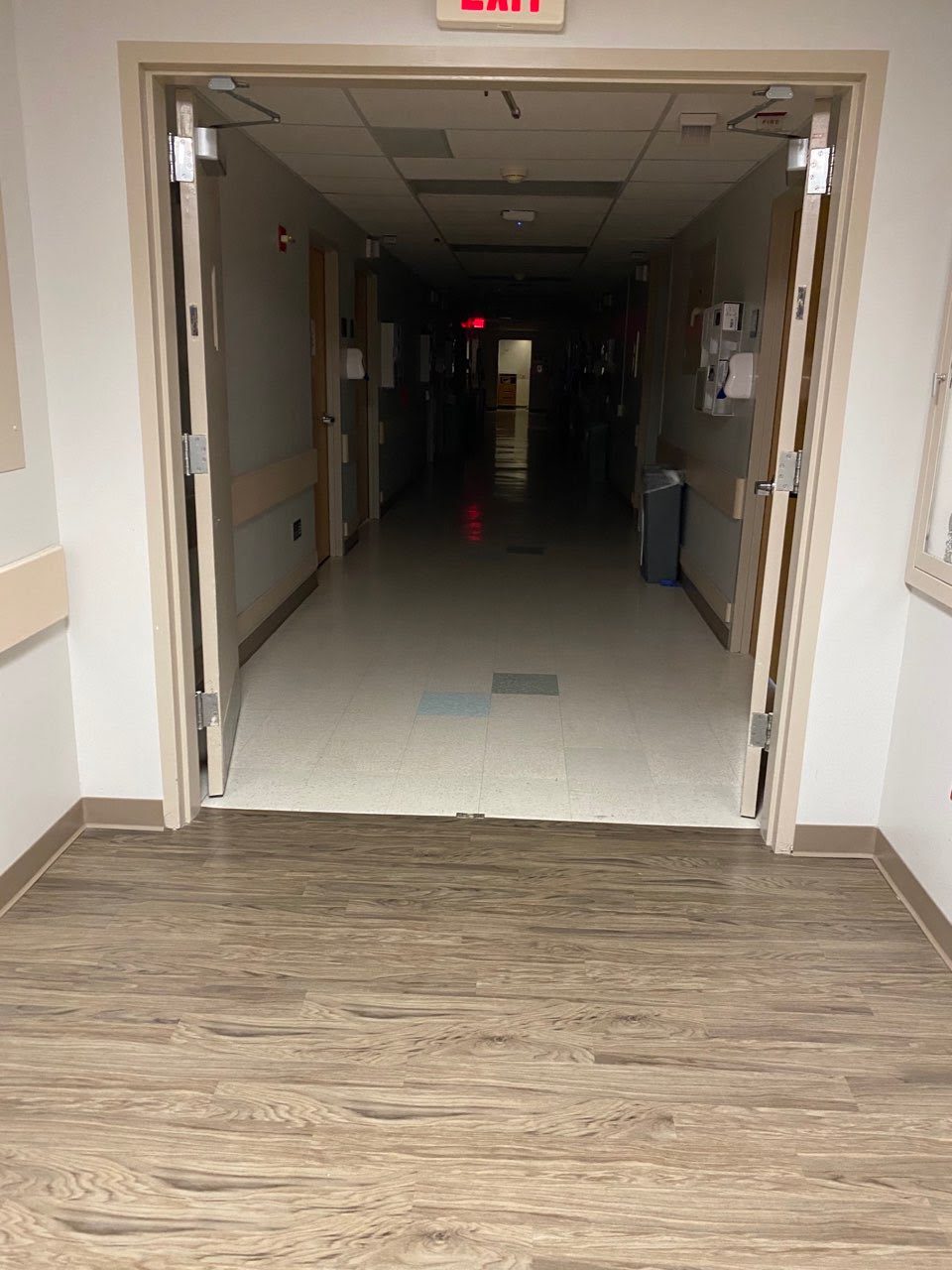
COVID whistleblower Josh Snider took photos of 3 of 4 of the MBMC ICU wings SHUT DOWN because there were no COVID patients to admit during the pandemic.
MBMC has refused to comment for this story after repeated requests for comment.
Snider provided documentary proof of the COVID case load of the MBMC system, whose COVID patients do not track national trends, and where the number of COVID patients in ICU were, at many points, a single, solitary person.
“I would have to adjust the airflow in some of the rooms of people in the ICU with COVID, they were fine. I believe in COVID, I know it’s serious, but I also personally saw people who were fine, they had a terminal case of boredom. I spoke with these people and they weren’t sick at all, they felt fine but were told they had to stay there. Many brought their PlayStations with them to waste away the days with video games instead.”
WHISTLEBLOWER TALKED TO PATIENTS IN INTENSIVE CARE WHO WERE FINE, BORED, PLAYING VIDEO GAMES
This matches news today from World Net Daily that many COVID hospitalizations were for mild or non-existent cases.
The case charts published by the MBMC hospital chain also demonstrate that COVID hospitalizations were always very minor. Snider says their ICU COVID capacity was 60 patients.
Snider provided an INSIDER CHART from the hospital that shows VERY DIFFERENT NUMBERS than were being reported to the public and to the government.
This chart was INTERNAL and distributed to employees of MBMC. In it, you can see that the number of COVID patients in critical care was always under 20. The hospital shut down 3 of 4 ICU wings, and in the remaining one had the capacity for 60 beds/patients. They never came close to being at capacity for COVID ICU patients.
These charts, provided by Snider, show that there was a relatively normal track for COVID infections at the MBMC Center, an acute care facility in St. Louis. Even during periods of infection spikes in the national population, those spikes are not found in the hospital data. As well, the bottom line showing serious cases of COVID requiring intensive care remain significantly small and reduced throughout the months of the pandemic.
HERE IS THE CHART RELEASED TO THE PUBLIC, where the LIES CAN BE SEEN
THE PUBLIC NUMBERS ARE OFF FROM THE INTERNAL REPORTS OF COVID PATIENTS IN THE ICU BY ALMOST 100%
Here is the chart generated from information submitted to the US Department of Health and Human Services, as published by the Gannett News Service:
The overstated COVID ICU statistics are visible here. Not only is this chart misrepresenting reality because it doesn’t account for the three ICU wings that were shut down, but the actual numbers presented are almost 100% off what they were reporting to employees internally.
The government reports this data very poorly on this site as well.
Snider has provided his personal statement, documentary evidence, and clear data discrepancies that all suggest that hospitals are not telling the public the truth about the COVID pandemic.
“The real flu season in the hospital was always more serious than COVID has been,” Snider said. “Flu season in a hospital is very challenging, and even the tamest flu season in years past was still worse than COVID has been so far. The people who have been suffering and sadly dying are clearly people who are hundreds of pounds overweight, and people with multiple other comorbidities like stage 4 cancer. I’m not a Doctor, but the response and panic to this virus is clearly wildly disproportionate to reality.”