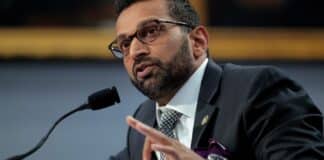
Kevin Warsh sat down in front of the House Financial Services Committee Tuesday for his first hearing as Federal Reserve chair. He didn’t sugarcoat it.
“In six weeks, we have caused, I think, a sea change in new thinking, the beginning of a set of reforms that are going to be put in place across at least five dimensions in monetary policy,” Warsh told Rep. Andy Barr (R-KY) during the three-hour session.
The target of his sharpest criticism: the flexible average inflation targeting framework, a Powell invention that tolerated above-2-percent inflation as a feature rather than a bug when growth was slow. Warsh called it what critics have said for years.
“That central bank wasn’t the first central bank to ask for a little more inflation and end up with a lot more,” he said. “It was a mistake.”
He said his predecessors had already tossed the framework before his arrival. He was glad to see it go.
“Inflation is a choice,” Warsh told the committee. “We monetary policymakers need to choose lower prices.”
His remarks came one day after the Labor Department posted the biggest monthly consumer price drop since April 2020. Prices fell 0.4 percent in June from May. Annual inflation came in at 3.5 percent, down sharply from 4.2 percent in May, with most of the relief driven by a temporary dip in energy costs during a short-lived ceasefire with Iran. Core inflation, stripping out food and energy, clocked at 2.6 percent annually.
“Resist declaring ‘mission accomplished,'” he said, conscious of what happens when American leaders say that mid-conflict.
The Iran situation hangs over everything. U.S. strikes have resumed. Iran’s effective shutdown of the Strait of Hormuz is pushing energy costs back up. Warsh said the Fed is watching the war closely.
“We’re interested in what’s happening in the war,” he told the committee. “We have to take that all in, but then we have to shut the door and make our very best decision.”
On Fed independence, Warsh was direct throughout. Trump repeatedly pressured his predecessor Jerome Powell to cut rates sooner, and after the Fed held rates steady at Warsh’s first meeting last month, the president backed him publicly but signaled he’d find future hikes hard to stomach. Warsh made clear he isn’t making decisions based on what Trump finds comfortable.
“The Fed will remain independent on my watch,” he told Rep. Mike Flood, R-Neb. “Fed independence is essential to the proper conduct of monetary policy, and I expect and will ensure that monetary policy is independent over the four years of my term.”
On crypto and stablecoins, Rep. Brad Sherman, D-Calif., pressed Warsh on whether the central bank would backstop digital assets if investors fled.
“We do not want to be in the bailout business wholesale,” Warsh said. If a run happens on his watch, he said, he wants to be in a position “where we’re not bailing out anybody.”
With Iran heating back up and energy prices poised to climb again, the question isn’t whether the Fed’s June win can hold. It’s whether the brief window of relief is already closing.