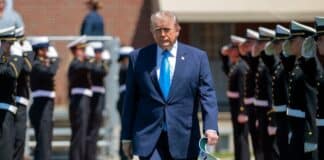
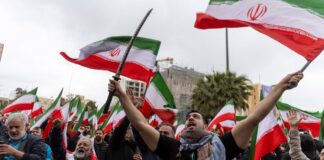
President Trump on Tuesday rejected reports that the United States agreed to bankroll a $300 billion reconstruction fund for Iran, dismissing the claims as fake news as the preliminary peace deal he announced Sunday runs into its first serious disputes.
Speaking at the Group of Seven summit in Evian-les-Bains, France, Trump said flatly that the U.S. would not be investing any money in Iran. The denial came after Tehran insisted Washington had committed to helping rebuild the country following more than three months of war.
Trump told reporters the deal was done and moving to a second phase, which he said he believed would actually be easier to negotiate than the first.
Vice President JD Vance, who played a central role in brokering the ceasefire, pushed back on the reconstruction claims Monday during an appearance on CBS News. Vance said any rebuilding funds would flow from a Gulf Coast Coalition of regional nations, not American taxpayers. The countries involved would have access to such support only if Iran honored its obligations under the deal.
Qatar, which served as a central intermediary in the negotiations, said Tuesday it had not committed any funds to the effort. Qatari Foreign Ministry spokesman Majed al-Ansari told reporters he did not expect the region to return to normal after the war’s conclusion and said there was significant need for dialogue about guaranteeing regional security.
The deal announced Sunday would open the Strait of Hormuz, through which roughly 20 percent of the world’s oil supply flows, and formally end direct U.S.-Iran military hostilities. A second phase of negotiations is expected to address Iran’s nuclear ambitions.
Trump warned Tuesday that Tehran pursuing nuclear weapons would bring severe consequences, telling reporters that all hell would rain down if Iran went down that road, according to the Washington Times.
The agreement is drawing skepticism at home. Republican allies on Capitol Hill have responded coolly. Israel has refused to sign on, and Prime Minister Benjamin Netanyahu has continued strikes on Hezbollah in Lebanon over Trump’s objections.
Trump addressed the friction directly on Tuesday, saying there would be no Israel without U.S. support, and no Israel at all without his own decisions in office. He added that Netanyahu needed to show more responsibility regarding Lebanon.
Conservative analyst Bill O’Reilly, appearing on NewsNation Tuesday, called Israel’s refusal to participate a significant signal. He said the Israelis were making clear they wanted the ability to strike back against any attack at any time, a position O’Reilly said he understood and did not fault.