Iran launched a surprise overnight barrage of ballistic missiles at U.S. military forces in Jordan on Tuesday, striking the Muwaffaq Salti Air Base and the regional headquarters of U.S. Central Command. American and Jordanian air defenses intercepted all incoming missiles. No casualties were reported.
U.S. Central Command confirmed the attack in a statement, calling it a “surprise attack” and saying every missile was shot down. Jordan’s military said five Iranian missiles had been intercepted and destroyed.
President Trump responded Wednesday morning in a phone interview with Fox News chief foreign correspondent Trey Yingst. “We’re going to beat the [expletive] out of them,” the president said. “We’ll be hitting them hard. They’re going to get a beating.”
Trump said he personally reviewed footage of U.S. personnel calling out coordinates in real time during the intercept operation.
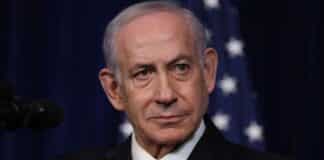
The missile strike came hours after Trump met with Israeli Prime Minister Benjamin Netanyahu at the White House to discuss regional strategy and coalition-building among Middle East allies. It was also the first publicly acknowledged attack since Trump announced a pause on strikes against Iran last Friday, a move intended to create space for diplomatic negotiations between Washington and Tehran.
Iran’s Islamic Revolutionary Guard Corps claimed responsibility for the attack in a statement carried by state-run IRNA news agency.
Earlier in the evening, U.S. and Saudi fighter jets had struck multiple Iran-backed Shiite militia logistics and weapons depots in eastern Iraq. Trump told Fox News those strikes were coordinated with the Iraqi government. He called the militias “a cancer on the world” and said additional measures against Iranian proxies were under review.
Saudi Arabia’s Defense Ministry issued a warning alongside the joint operation: it “does not seek escalation but will respond to any aggression.”
Despite the overnight flare-up, Trump said diplomatic talks with Iran would continue.
The attack marks a significant escalation in a conflict that began in February, when the U.S. and Israel launched strikes on Iranian nuclear facilities. Iran retaliated by restricting oil traffic through the Strait of Hormuz, setting off cycles of military strikes and ceasefire negotiations. Last week, Trump had considered large-scale combat operations against Iran before advisers warned of dwindling munitions stockpiles and the risk of broader regional escalation.