Three Senate Democrats filed a war powers resolution Thursday seeking to strip President Trump of the ability to use military force against Cuba without congressional authorization, drawing sharp pushback from Republicans who say the move would shield a regime that murdered American citizens.
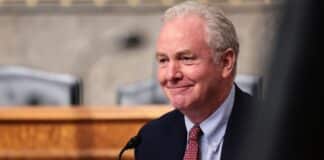
Sens. Adam Schiff of California, Tim Kaine of Virginia and Ruben Gallego of Arizona introduced the resolution, which would require Trump to remove U.S. forces from any hostilities against Cuba not explicitly authorized by Congress. The measure is the second such Cuba-specific bill the trio has introduced this year; a similar measure filed in March died along party lines.
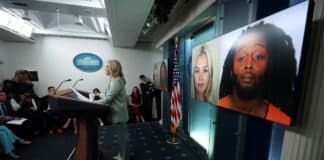
The push comes one week after the Justice Department unsealed a federal indictment charging 94-year-old former Cuban President Raul Castro with murder and conspiracy in the 1996 shoot-down of two civilian aircraft over international waters. The planes belonged to Brothers to the Rescue, a Cuban exile group that flew pro-democracy missions toward the island. Four Americans were killed: Carlos Costa, Armando Alejandre Jr., Mario de la Pena and Pablo Morales.
Prosecutors say Castro personally ordered the attack. Acting Attorney General Todd Blanche said prosecutors have Castro on audio claiming responsibility. “For nearly 30 years, the families of four murdered Americans have waited for justice,” Blanche said at a commemoration ceremony in Miami. “Nations and their leaders cannot be permitted to target Americans, kill them, and not face accountability.”
Cuban MiG fighters shot down two of three Cessnas that day using air-to-air missiles. The planes were unarmed and heading away from Cuba when they were struck. No warnings were issued before the attack, according to the indictment.
The Trump administration has used the indictment and other pressure tools, including sanctions, an oil blockade and a freeze on energy supplies, to squeeze Havana toward economic and political reform. Trump has said the U.S. is “freeing up Cuba” and suggested American assistance once the regime falls. Secretary of State Marco Rubio has been negotiating directly with Cuban officials, and CIA Director John Ratcliffe visited the island earlier this month to press for reforms.
The USS Nimitz Carrier Strike Group is currently deployed in the Caribbean, a show of force the administration has not characterized as targeting Cuba specifically but has not dismissed as coincidence either.
Schiff said Cuba does not pose a meaningful threat to U.S. national security. “Much as I wish the regime gone and a better future for the Cuban people, there is no indication that Cuba poses a significant national security threat to the United States,” he said in a statement.
Kaine, a member of both the Senate Armed Services and Foreign Relations Committees, called any military intervention in Cuba a “regime change war” that would produce a migration crisis with “no clear benefit” to the U.S.
Gallego accused Trump of manufacturing a pretext for military action. “His polling numbers are hovering near historic lows,” Gallego said. “Trump is ginning up a reason to invade and looking for a quick win to feel tough.”