When Colorado baker Jack Phillips was asked to bake a cake for a same-sex wedding, he likely had no idea his polite refusal would snowball into one of the biggest First Amendment cases of the modern era.
Thanks to the Colorado Anti-Discrimination Act, Phillips was subject to a years-long court battle that culminated in a 2018 Supreme Court ruling that fell short of definitively affirming the baker’s right to decline his services to events he disagreed with on a religious basis, yet did rule that the Colorado Human Rights Commission had demonstrated undue hostility when addressing his case.
This left other Colorado business owners concerned that they could also be prosecuted under CADA if they declined to provide their services for same-sex weddings, such as web designer Lorie Smith of 303 Creative.
Smith, with the representation of the Alliance Defending Freedom (ADF), the firm that represented Phillips all the way to the high court, decided to take action and try to get a court to affirm that she indeed had the right to decline to lend her creative talents to celebrations of an institution that she disagreed with.
Like Phillips, who happens to have designed Smith’s wedding cake, according to the ADF, the designer will make her services available to anyone, regardless of their lifestyle choices, when issues of matrimony are not involved.
However, also like Phillips, Smith maintains that marriage is an institution between a man and a woman, and if she is going to use her God-given talents to celebrate a union, she would prefer to do so for traditional marriages only.
In 2016, ADF filed a pre-enforcement challenge to the CADA on Smith’s behalf, which would have forced her to design websites for same-sex weddings or face legal repercussions.
According to ADF, a pre-enforcement challenge is a method that can be used to test a law in court before it even takes effect. It’s a strategy most often associated with liberal groups, like the American Civil Liberties Union and Planned Parenthood.
In 2019, a federal judge ruled that Colorado officials could indeed force Smith to create websites for clients peddling messages she disagrees with.
She appealed in the 10th Circuit Court of Appeals in Denver, which ultimately upheld the previous ruling, determining that CADA’s demands supersede Smith’s First Amendment rights.
In a 2-1 ruling issued July 26, the judges determined that CADA “permissibly compels” Smith’s speech, and that it is a “is a neutral law of general applicability, and that it is not unconstitutionally vague or overbroad.”
In his dissent, however, 10th Circuit Chief Judge Timothy Tymkovich wrote that “this case illustrates exactly why we have a First Amendment” and that the decision was “in a word, unprecedented.”
“Taken to its logical end, the government could regulate the messages communicated by all artists, forcing them to promote messages approved by the government in the name of ‘ensuring access to the commercial marketplace,’” he wrote.
In a statement, ADF Senior Counsel John Bursh agreed, citing not only the Phillips case, but also that of Washington state florist Barronelle Stutzman, who had an appeal rejected by the Supreme Court after she was fined for refusing to provide floral services to celebrate a gay wedding.
“The government should never force creative professionals to promote a message or cause with which they disagree. That is quintessential free speech and artistic freedom,” Bursh said in the statement.
“Colorado cake artist Jack Phillips has been harassed for years; Washington floral artist Barronelle Stutzman stands to lose nearly everything she owns; and now Lorie Smith is being told that she must speak views she opposes and can’t post about her beliefs on her own business website.
“How many more creative professionals will have to suffer before they receive recognition of their constitutionally protected freedoms — the rights they have always had in this country?” he asked.
The ADF has vowed to appeal the decision in the U.S. Supreme Court, which could perhaps be the silver lining here — depending on how the high court treats this case. In the Stutzman case, only three justices — Clarence Thomas, Samuel Alito and Neil Gorsuch were in favor of hearing it, according to The Washington Post. At least four justices must be willing to accept a case before it can be argued.
We are in sore need of a firm decision on the part of the Supreme Court on whether laws such as CADA violate the First Amendment rights of Americans, but the court has so far ruled very narrowly on cases such as Phillips’ or the recent decision regarding foster care agencies that decline to work with same-sex couples.
Until then, Smith has a big, fat target on her back for the same LGBT mob that came for Phillips, who is in the midst of a second legal battle after declining to bake a gender transition cake for a transgender activist, a request that was made of him the day that the news broke that the SCOTUS would take him his same-sex wedding case.
Not so many years ago, Christians were denounced as hysterical for being concerned that Obergefell v. Hodges, the 2015 Supreme Court decision that legalized same-sex marriage across the land, would result in legislation that would compel traditional marriage advocates to violate their conscience — yet that is exactly what has happened, isn’t it?
And unless the line is clearly drawn in the sand between gay rights and the First Amendment, and fast, we could be headed for the utter destruction of the latter very soon.
Florida Governor Ron DeSantis (R) signed an executive order late this week that allows parents to make the choice of whether they want to have their children wear masks in school, which comes in response to the Biden administration making new recommendations through the CDC about wearing masks in school.
“Today, Governor Ron DeSantis issued Executive Order 21-175, in response to several Florida school boards considering or implementing mask mandates in their schools after the Biden Administration issued unscientific and inconsistent recommendations that school-aged children wear masks,” the governor’s office said in a statement on Friday. “The Florida Department of Health will enter rulemaking in collaboration with the Florida Department of Education to protect parents’ freedom to choose whether their children wear masks.”
DeSantis said at a press conference where he signed the executive order that “the federal government has no right to tell parents that in order for their kids to attend school in person, they must be forced to wear a mask all day, every day.”
“Many Florida schoolchildren have suffered under forced masking policies, and it is prudent to protect the ability of parents to make decisions regarding the wearing of masks by their children,” DeSantis added.
The executive order ensures that local school boards “do not violate Floridians’ constitutional freedoms,” “do not violate parents’ right under Florida law to make health care decisions for their minor children,” and makes sure that “children with disabilities or health conditions who would be harmed by certain protocols such as face masking requirements” are protected.
DeSantis hosted a roundtable on masks earlier this week with Dr. Jay Bhattacharya, Professor of Medicine at Stanford University; H. Cody Meissner, MD, pediatrician and the Chief of the Division of Pediatric Infectious Disease and Professor of Pediatrics at the Tufts University School of Medicine; Mark McDonald, MD; and Dr. David Withun.
“I think our fear is that seeing some of those rumblings, that there be an attempt from the federal level or even some of these organizations to try to push for mandatory masking of school children,” DeSantis said. “It should not be mandated. I know our legislature feels strongly about it, such that if you started to see a push from the feds or some of these local school districts, I know they’re interested in coming in, even in a special session to be able to provide protections for parents and kids who just want to breathe freely and don’t want to be suffering under these masks during the school year.”
America’s oil and gas industry employs over 11 million people and is worth more than $1.6 trillion, making the energy transition more difficult than it may seem.
The Biden administration is making strides in reducing the United States’ dependence on fossil fuels for its energy needs. The federal government’s post-pandemic plan involves hundreds of billions in financing for renewable energy and electric vehicle projects. But it might be harder to get rid of oil and gas than some would like to believe.
In a recent report commissioned by the American Petroleum Institute, PwC described the oil and gas industry as a critical one for the United States in terms of both direct and indirect impacts in the form of employment, labor income, and value added. The report makes for quite interesting and sobering reading.
For example, the oil and gas industry employed 11.3 million Americans in 2019, both directly and indirectly. Labor income from these jobs, which PwC defines as wages and salaries, and benefits as well as proprietors’ income, came in at $892.7 billion for that same year. Finally, the value added by the oil and gas industry in the US for 2019 came in at about $1.688 trillion. In other words, the oil and gas industry contributed close to $1.688 trillion to the national GDP.
PwC noted that each direct job in the oil and gas industry supported another 3.5 in other industries. And that is counting only so-called backward linkages, as the authors of the report point out. Backward linkages refer to those with the industry’s suppliers. Forward linkages, which were not included in the calculation of the impact of oil and gas on the US economy, refer to those with the industry’s consumers.
Now, the pandemic last year wrought havoc on the oil and gas industry, but it didn’t kill it—it is far too big to kill, if you will. This year, it is in recovery mode, and even production has been growing consistently, albeit cautiously. Yet green transition plans envisage a much smaller role for oil and gas for the U.S. economy. What will replace it?
The obvious answer would be “Renewable energy”. Yet wind and solar farm construction is very different from oil and gas production. Let’s talk about employment as it would be the simplest example. Oil wells are drilled and then monitored and maintained. Solar farms, once built, need a lot less maintenance and monitoring than an oil well—after all, that’s one of the best things about solar; the panels just sit there soaking the sun’s heat, turning it into electricity. Oil and gas, meanwhile, need someone watching them flow out from the ground properly.
What this means is that oil and gas production needs more people than solar farm operations. And what this means is that oil and gas production creates more jobs than solar farm construction could, on a permanent basis. On the one hand, this makes oil and gas an uneconomical industry. On the other, it creates jobs, and job creation is good for the economy.
And what about those $1.688 trillion that oil and gas production, transport, storage, and property generated for the US economy? Some $1.4 trillion of this total came from direct and indirect operations, PwC said. Capital investments by the industry added another $245.4 billion. The total amount accounted for 7.9 percent of US GDP for 2019.
Here are some of the industries that oil and gas impacted indirectly with regard to GDP generation: the service sector was by far the most heavily impacted, followed by finance, insurance, real estate, rental, and leasing. Wholesale and retail trade was also considerably affected by oil and gas, as were manufacturing, transportation, and warehousing, and information, although to a lesser extent. The total indirect impact of oil and gas on these industries came in at $924.3 billion, in both operational and capital investment impacts.
Now let’s consider renewables and their impact on job creation and GDP. A 2016 report by the International Renewable Energy Agency estimates that “Given the distributed and labor-intensive nature of renewable energy, direct and indirect employment in the renewable energy sector could reach 24.4 million people in 2030.” That’s 24.4 million people globally.
Also, the IRENA estimated that “Doubling the share of renewables in the global energy mix increases global GDP in 2030 by up to 1.1%, equivalent to USD 1.3 trillion.” That’s compared with $1.688 trillion in GDP contributions from oil and gas in the US alone in 2019.
In a more recent report, from last year, IRENA estimates that the total number of energy sector jobs globally will increase to almost 100 million under an energy transition scenario the agency called ambitious yet realistic that would allow the world to achieve its goal of limiting global warming to 2 degrees Celsius. That’s almost a doubling of the 58 million employed in energy in 2017.
As to what these renewable-energy jobs would be, IRENA is scarce on the details, mentioning renewable energy and energy efficiency as some job avenues in its scenario. At the same time, the agency forecasts a 40-percent decline in fossil fuel jobs in North America, as well as Europe.
IRENA mentions the effects of the energy transition on GDP, too, noting these would be mostly positive, but they would depend on differences in the “socio-economic starting point.” Yet for North America, the agency sees GDP gains from the transition, to the tune of $659 per capita per year.
From IRENA’s perspective, this outweighs any economic benefits the oil and gas industry in any country could provide because these go hand in hand with emissions. However, the US government data cited in the PwC report suggests that emissions or not, the contributions of oil and gas might be difficult to let go of.
An overly conservative Bayesian analysis shows beyond a reasonable doubt that SARS-CoV-2 is laboratory derived. There’s a 99.8% probability SARS-CoV-2 came from a laboratory and only a 0.2% likelihood it came from nature
None of the 80,000 samples from 209 different animal species has been found to contain SARS-CoV-2
Of the first 259 cases in China, not one was traced back to animal contact. All were human-to-human transmissions. This is the equivalent of going to Las Vegas and flipping a coin and getting heads 259 times, which is virtually impossible
When one combines these two statistical anomalies, the real likelihood of the virus coming from nature is less than one in all the atoms of the universe — 1080 — which is a very, very large number, making it virtually impossible
SARS-CoV-2 has a protein signature that is similar to that found in melittin, a bee venom toxin
(Mercola) In this interview, Dr. Steven Quay — one of the most-cited scientists in the world1 — discusses his Bayesian analysis,2 published January 29, 2021, which concludes beyond a doubt that SARS-CoV-2 is laboratory derived. Quay is an M.D. with a Ph.D. in chemistry. You can learn more about Dr. Quay on his website.
He did his medical residency at Mass General at Harvard Hospital and his postdoctoral work at MIT with a Noble laureate. He holds 87 patents in 22 fields of medicine, including the gadolinium used with MRI imaging.
During his career, Quay published 360 papers, which have been cited over 10,000 times. His COVID origin paper, however, has already been downloaded 170,000 times. Bayesian analysis,3 or Bayesian inference, is a statistical tool used to answer questions about unknown parameters by using probability distributions for observable data.
Quay’s highly conservatively-skewed analysis shows there’s only a 0.2% likelihood that this virus came from nature, and a 99.8% probability that it came from a lab. His 140-page paper can be downloaded from zenodo.org4 for those who want to dive into the nitty gritty of this statistical analysis. He presented these data to House Representatives during a June 26, 2021, subcommittee on the coronavirus crisis meeting.5
Instead of using the observed statistics of the data he gathered, he radically reduced the probability to 1 in 20. When one combines all the statistical anomalies from the 26 different data points he collected, the real likelihood of the virus coming from nature is less than 1 in all the atoms of the universe — 1080 — which is a very, very large number, making it virtually impossible.
SARS-CoV-2 Has a Protein Sequence Found in Bee Venom Toxin
As early as January 2020, Quay knew SARS-CoV-2 could be problematic.
“Nobody was paying any attention because there was no need to at that point,” he says. “I saw this virus coming out of China. I looked at the sequence of it and I remember telling my wife, ‘I know what this thing is going to do in cells,’ because for five years at Stanford, I was studying and was the world expert on the toxin melittin, which is a bee venom toxin, the thing that hurts when you get a bee venom …
This melittin, this toxin in bee venom, has the same sequence that SARS-CoV-2 had … I run a public company, so I went to the board a couple weeks later and said, ‘Look, I think we can come up with some therapeutics and some ideas around this.’ We actually are in clinical trials with some products for therapeutics against SARS-CoV-2.
Then I started hearing some really crazy public health advisories around masks, social distancing and things, so I ended up writing a little book that was a No. 1 best seller for a few weeks called ‘Stay Safe: [A Physician’s Guide to Survive Coronavirus,]’ on Amazon. That took me through the summer. Then I started going back to something. I was very concerned about what I saw as properties of this virus that had never been seen before.
It’s now public knowledge that the government identified one of my papers, so I was contacted by the State Department in the fall and basically was an adviser to their programs there, including a three-hour deep dive from all of the different committees or agencies there …
I continue to push this because … if it came from nature, there are certain things we should do differently to not have this happen again. If it came from a laboratory, there’s a completely different set of things you need to do. It’s not a blame game.”
There Are Several Ways to Make a Virus More Dangerous
Quay recently published another paper in which he reveals that the Wuhan Institute of Virology (WIV) is also working on another virus, the Nipah virus, which has a 90% lethality rate. It doesn’t take a genius to figure out what might happen if a virus with that lethality got out. Quay explains:
“[The WIV] published an early paper on samples from COVID patients in the hospital … It’s the most-read paper from the beginning of the pandemic. I did a deep dive into their raw data. The sequence is 30,000 nucleotides — the raw data’s 55 million nucleotides. What you can see in there is a fingerprint of everything they’ve been doing for the last two years. They’re doing a lot of crazy research.”
As explained by Quay, the WIV has been around for about 40 years. In 2003, after SARS-Cov-1 emerged, the U.S. and France helped China refurbish the WIV into a more secure BSL 4 biolab, the only one in China. Since then, the WIV has become a primary laboratory for zoonotic viruses. It’s also one of the top three laboratories for gain-of-function synthetic biology, which can be accomplished in several ways.
If you know what you want to alter, you can insert a new synthetic amino acid into the pathogen. If you don’t have a precise idea of the change you want to achieve, but you want the pathogen to adapt from an animal to a human, you can do what is called serial passage, where the virus is passed through a series of animal and human tissues.
For example, you could start by infecting 20 humanized mice with a virus, then isolate the virus from the sickest mouse and give it to another 20. Humanized mice are genetically modified mice to have human lung tissue. After four or five passages like that, the virus will have mutated to attack and kill human hosts.
“The third way is to drop big chunks of material in there. For example, the part of the virus of SARS-CoV-2 that interacts with the cell is about 200 amino acids, so times three for nucleic acid, so that’s 600. You can just drop a big piece of 600 in and instantly go from an animal to humans, or whatever direction you want.
So, those are the three [primary strategies]: Knowing what to do with single spots, randomly letting nature do it in serial passage, and then dropping big chunks in.”
The Bayesian Theorem
As mentioned, Bayesian analysis is a statistical tool using probability distributions. The theorem was developed by Thomas Bayes, a 17th century Presbyterian minister and statistician-mathematician who published many papers during his lifetime. After his death, his estate discovered private notes detailing a process for understanding large complex events in a simple straightforward fashion. The Bayesian equation is A multiplied by B, divided by C. Quay explains:
“It’s exactly the same thing we do when we have a favorite baseball team and we watch it during the season. Before the season, we know what they did last year. We know who the new players are, the new coaches, all those things, and we come up with what we call a prior prediction.
We rank the teams according to what we think will happen at the World Series, and that’s what’s called our prior, our posterior probabilities. Then the season happens and you start winning games, losing games, people get injured, new players, transfers, and you update that every week.
At the start of the World Series, you’re probably quite far from where you were at the beginning of the season, because you’re now down to two teams but, nonetheless, you still don’t know the final analysis. One of the caveats for this 140-page work is, at the end, although I say there’s a 1 in 500 chance it came from nature, but that means … 499 times out of 500 it came from a laboratory.”
Bayesian Analysis of SARS-CoV-2 Origin
With regard to SARS-CoV-2, “A” would be the prior estimate of the likelihood of it coming from a lab or from nature. “B” is the new evidence, the new probability that it came from a lab, and “C” is the probability that it came from nature. When you multiply A and B and divide it by C, you get a new A prime, a single probability. However, as new data accumulate, the answer changes.
“The first thing I did was assume the prior likelihood it came from nature or a lab, knowing nothing, basically. That has to be your starting point. Three papers informed that. One paper says that eight times a year, there’s a natural jump from nature to a human.
Another paper said, once a year, there’s a lab leak in Asia, so 8-to-1 [in favor of natural origin]. That’s like 85% probability [that it came] from nature. I used three papers, and my starting point was a 98% probability it came from nature, knowing nothing else.”
Quay did not include the three papers mainstream media and fact checkers have leaned on to debunk the lab origin theory, and in his paper he explains why they were excluded. In short, they relied on speculation and not science, so the clear bias and lack of scientific facts made them too unreliable.
Next, he entered 26 different pieces of evidence into the equation. The first piece of data was the fact that the virus first emerged in Wuhan, China, which has never happened before. Wuhan has a population of 11 million people. It’s a very urban area with little man-nature contact. Wuhan also has one of only three biosafety level (BSL) 4 laboratories in the world that are conducting coronavirus research specifically. Next, he calculated probabilities.
“You know the area of China; you know the population of China. If the virus happened randomly, what is the chance it would happen in Wuhan? If there’s a laboratory in Wuhan, what are the chances it would have escaped somewhere else in China and not appeared in Wuhan?
You do the flip. If it came from nature, why did it end up in Wuhan? If it came from Wuhan, what is the probability it could have first appeared somewhere else in China? That hits your probabilities pretty hard out of the box. That was item No. 1. Then you just work through the others.”
Zoonotic Transmission
One key piece that makes a big difference in this Bayesian calculation is the question of zoonosis. In order for zoonosis to apply, you must have an animal with a backbone (vertebrae) that is infected with a microbe. Malaria, for example, is not a zoonotic disease, because mosquitoes do not have vertebrae. Malaria is a vector-transmitted disease.
The key to finding the origin of a zoonotic transmission is to locate the animal. If the animal is in the community, then zoonotic transmission occurs through a natural process. If the transmission occurs in a lab, then it’s a laboratory-acquired infection, not a zoonotic transmission. Early on, we were told up to 70% of the earliest COVID patients had visited one or more markets in Wuhan, some of which have live animals for sale.
The problem is SARS-CoV-2 was not found in any of the more than 1,000 animal specimens collected from those markets. They also sampled more than 1,000 pieces of frozen food imported from outside of China, all of which came back clean. About 15% of environmental samples, however, did have the virus.
They also collected samples from all the other markets across the Hubei Province, where Wuhan is located. No virus. About 1,000 bats in Hubei were tested, and no virus was found. Over 80,000 animals representing 209 species from every province of China were eventually tested, and no SARS-CoV-2 was found.
For comparison, SARS-1 was found in 85% of animals tested. The original host was identified as the civet cat. MERS, which came from the Middle East, originated in a bat that had jumped to a camel before turning into a human virus, and it was found in 90% of animals. Yet, after the largest surveillance ever conducted in the history of the world, having tested 80,000 animal specimens, not one has been found to carry SARS-CoV-2.
“In my Bayesian analysis … even though I should drop 80,000 into the denominator of my equation, what I did was I degraded it to the standard in clinical trials of biology to a P of .05. I said, ‘Despite the fact that zero out of 80,000 had this [virus], I’m going to treat this as if it’s a 1 in 20 event,’ because that’s the only way I could keep doing the analysis. Otherwise, I was done at the get-go,” Quay explains.
To be clear, this gives a very unfair advantage to the zoonotic origin theory, but Quay wanted to have a complete analysis of all the parameters. Diversity is a hallmark of nature, yet there’s no diversity in nature for this virus. Zoonotic proponents have argued that the virus must be found in high concentration in an intermediate species, yet not one out of 80,000 samples from 209 different animal species is a carrier of the virus.
No Animal Reservoir or Intermediate Host Has Been Found
Another key piece of the analysis is the virus itself. Bats are nature’s reservoirs for coronaviruses. The bats are never sickened by them, so the virus is never rooted out. It just lives in the bats for decades, mutating and recombining with other viruses along the way. Bat-to-human contact is very rare, so most of the time, the transfer occurs between the bats, the reservoir host and an intermediate host before it enters the human population.
Of the first 259 cases in China, not one was traced back to animal contact. All were human-to-human transmissions. This is the equivalent of going to Las Vegas and flipping a coin and getting heads 259 times, which is virtually impossible.
That’s what happened with SARS-1 and MERS. Early cases of SARS-1 and MERS were divided evenly between human to human transmission, and transmissions that occurred between different animals and humans. This means both of these viruses were most likely zoonotic in origin.
As mentioned earlier, Quay cites research showing natural jumps from nature to a human occur eight times a year, and lab escapes occur once a year. That gives us an 8-to-1 chance of zoonotic origin. However, of the first 259 cases in China, not one was traced back to animal contact. All were human-to-human transmissions.
As noted by Quay, “This is the equivalent of going to Las Vegas and flipping a coin and getting heads 259 times. When you ask your statistician to do that, it’s a P value with 84 zeros and a number, so again, that’s absolutely impossible.”
To understand how big this number is, the estimated number of atoms in the universe is 10 to the 80th power. Despite this showing it’s more or less impossible for SARS-CoV-2 to have a zoonotic origin, Quay gave this a P value of just 0.5 (or a 1 in 20 chance) — again, just to keep the analysis going.
“It’s not in the animals in nature. The virus is a pure virus … It hit the ground with one sequence, and it makes a mistake every two weeks randomly and if it’s the kind of mistake it really likes, it keeps it and then that one takes off,” he says.
“Again, SARS-1, MERS, every other zoonosis, when it jumps into humans, it’s a two-step process. Initially, it jumps into humans, but it doesn’t have all the things it needs. It can’t make very many baby viruses, et cetera, and so it burns out, and then it tries again, and it tries again. It jumps back to camels, that sort of thing.
Eventually, it gets all the mutations it needs to support human to human transfer. Then you have the foundation for an epidemic, but that’s a long process. With SARS-1 it took a year and a half. With MERS, it took two and a half years in camels before it got there. What does that mean though? Every time a human gets an infection … there is a record in their blood. They make antibodies to the virus.
Once you know that a zoonosis is going to jump into humans and leave a record in the hospital specimens and you have a test from the epidemic of the virus itself, you can go back into the hospital and find specimens. Typically, it can range from 1, to 4, to 7, to almost 20% of the specimens.
For example, people working in the market will have antibody evidence that they had the infection, whether they knew it or not.
This is a very powerful tool … Because of the unique capability of this virus to hit human to human transmission from the get-go, [Kristian Andersen, a virologist at the Scripps Research Institute in California who published a paper6 supporting zoonotic origin] predicted that there would be a lot of pre-epidemic seroconversion.
These are fancy words for ‘go into a hospital, take samples out of the refrigerator, test them and find a high percentage.’ Of course, people took him up on that and tested over 9,900 banked specimens from December [2020] and before in Wuhan. How many do you think they found that were positive?
My statistician says they should have had 100 to 400. They got zero. You run the crank on that, and that’s a 1 in a million probability.
The virus has the incredible capability of being the most aggressive human to human virus that’s ever been seen in the history of virology, but it does not have the hallmark of how you would build that in nature, which is pre-epidemic human contact. You can’t have both of these properties in the same virus if it came from nature.
Now, if you take a mouse that’s been humanized in a laboratory to have human lungs and you serial passage there, that is an effective way to do it.
Amazingly, two months after the epidemic broke out, we’re February-March 2020 now, Dr. Shi at the Wuhan Institute of Virology and Dr. Baric in America, the No. 1 synthetic biologist in the world of coronavirus research in North Carolina, published a paper saying, ‘Hey, if you grow this virus in transgenic mice, it kills the mice and, by the way, they get brain infections, which is really unusual.’
I’m saying, ‘Yeah, that’s probably the experiment that was done in 2019 that led to the spill.'”
Again, using extremely conservative data, Quay’s analysis shows there’s a 99.8% probability that SARS-CoV-2 is a laboratory creation. If you want to read through it all, his paper can be downloaded from zenodo.org.7
Odd SARS-CoV-2 Proteins Suppress Your Immune Function
At the end of the interview, Quay delivers yet another bombshell. SARS-CoV-2 makes three primary kinds of proteins. The first are the structural proteins for a virus — the spike, envelope and nucleoplasm proteins. It also makes proteins that take over the cells’ manufacturing process, thereby allowing the virus to replicate inside the cell. In addition to those, it also makes two very odd proteins that are excreted into your blood.
“These strange proteins, they’re not the virus, they’re not in the cell,” Quay explains. “When you get an infection, you get a fever, you get sweaty and you get chills, you feel like crap. That’s not the virus. That’s your own interferon signaling and it helps you fight the virus and probably in prehistory it told your fellow tribe members to isolate you in your own tent. So, it evolved as a social signal for survival of the tribe.”
Last week, I wrote in this column about the recent research of George Barna, who has concluded that America’s religion is no longer one of orthodox belief but rather a new syncretistic faith that he called moralistic therapeutic deism – a nonjudgmental don’t-worry-be-happy “fake Christianity” where self-actualization and personal affirmation are now our highest goods. The result of my article? My critics came unglued.
“First and foremost, you need to get your facts straight,” said one. “America has no Christian basis whatsoever.”
“Pure drivel,” stated another. “Let’s start with the fact the majority of our founding fathers were deists.
The crowd then piled on (there are over 400 comments. Go check out the original piece). “What an ignorant op-ed… [There is] a sea of documented evidence that there was no intention of having any religion of primacy in our nation,” they shouted.
Well, I’d like to take my detractors at their word. Let’s “get our facts straight.” Let’s consider the “evidence” as to what our nation’s founders and subsequent leaders actually believed about religion, Christianity, and the Bible.
Stuff like,
John McHenry (signer of the Constitution) said, “The holy Scriptures… Can alone secure to society, order, and peace… In vain, without the Bible, we increase penal laws and drop protections around our institutions.”
Or Thomas Paine (one of the least religious of our founding fathers) who scolded, “It is from the error of the schools… [that] evil has… generate[d] in the pupils a species of atheism. Instead of looking through the works of the creation to the Creator himself, [we] stop short and employ the knowledge [we] acquire to create doubts of His existence.”
And how about Noah Webster (the lexicographer recruited by Alexander Hamilton to lead Federalist thinking) who admonished, “Our citizens should early understand that the genuine source of correct Republican principles is the Bible – particularly the New Testament….”
Or Benjamin Rush (who signed the Declaration of Independence) and proclaimed, “We err… only because we do not know the Scriptures and obey their instructions. Immense truths… are concealed in them. The time, I have no doubt, will come when posterity will view and pity our ignorance of these truths….”
Or Fisher Ames (who was responsible for the final wording of the First Amendment), who said, “We have a dangerous trend beginning to take place in our education. We’re spending less time in the classroom in the Bible, which should be the principle text in our schools….”
And we can’t forget,
Samuel Adams – “Just and true liberty… may be best understood by reading and carefully studying the institutes of the Great Law Giver and Head of the Christian Church, which are to be found clearly written and promulgated in the New Testament.”
Patrick Henry – “This book [the Bible] is worth all the other books which have ever been printed….”
Daniel Webster – “To the free and universal reading of the Bible… Men are much indebted for our right view of civil liberties….”
James Wilson (who signed the Declaration and was appointed as one of the original justices to the Supreme Court) – “Human law must rest its authority ultimately upon the… revelation contained in the Holy Scriptures.”
Benjamin Franklin – “The longer I live, the more convincing proofs I see of this truth – that God governs in the affairs of men… I firmly believe this, and I also believe that without His concurring aid, we shall succeed in this political building no better than the builders of Babel.” (Doesn’t sound much like a deist, does it?)
And if this isn’t good enough and you still think the “evidence” is lacking, maybe we could look to our nation’s first public education law enacted in 1647. It warned: “It being one chief project of that old deluder, Satan, to keep men from the knowledge of Scriptures….”
Or if you don’t like that one, consider the Northwest Ordinance that instructed, “Religion, morality, and knowledge, being necessary to good government and the happiness of mankind, schools and the means of education shall be forever encouraged.”
Then we have John Quincy Adams (sixth President of United States) who said, “I deem myself fortunate… to bear my solemn testimonial of reverence and gratitude to that book of books, the Holy Bible….”
And Calvin Coolidge (our nation’s 30th president) wrote, “The foundation of our society and government rest so much on the teaching of the Bible that it would be difficult to support them if faith in these teachings would cease to be practically universal in our country.”
Or, Justice Earl Warren (the 14th Chief Justice of the Supreme Court), who proclaimed, “I believe the entire Bill of Rights came into being because of the knowledge our fathers had of the Bible and their belief in it.”
This list of quotes could literally go on and on and on. One could write endless columns about them. Maybe the smart folks who keep scolding us about “facts” and “evidence” would do well to go back and read a bit before they embarrass themselves further. A little education never hurt anyone.
• Everett Piper (dreverettpiper.com, @dreverettpiper), a columnist for The Washington Times, is a former university president and radio host. He is the author of “Not a Daycare: The Devastating Consequences of Abandoning Truth” (Regnery) and, most recently, “Grow Up: Life Isn’t Safe, But It’s Good.”
MyPillow CEO Mike Lindell is pulling ads from Fox News after they refused to run a commercial, saying that it claimed there was “voter fraud” in the 2020 election. The news means that Fox News will lose one of its biggest advertisers.
The Wall Street Journal was the first to report on the news. Company founder Mike Lindell told The Daily Beast in an interview, “shame on Fox News! Shame on them.”
“When I was told they wouldn’t run the ad, I said to cut off advertising on Fox immediately and indefinitely,” added Lindell, according to Yahoo News.
However, it was reported by Human Events‘ Jack Posobiec that the ad made “NO CLAIMS about the election,” and that instead the ad was a “promo” for an upcoming event.
Just watched the Mike Lindell ad that Fox refused to play. Media is lying. He makes NO CLAIMS about the election in it. It is a promo for his event, and includes a spot for FrankSpeech. That's it. https://t.co/faQ7lHQppL
Fox News issued a statement in response to Lindell’s decision, which reads: “It’s unfortunate Mr. Lindell has chosen to pause his commercial time on FOX News given the level of success he’s experienced in building his brand through advertising on the number one cable news network.” While Fox has rejected the ad, its competitors OAN and Newsmax have both agreed to run the controversial ad. OAN had also previously aired “docu-movies” made by Lindell about election fraud.
The news comes as Lindell had increasing frustration with Fox News.
Lindell’s claims of voter fraud have landed him and his company in hot water, with at least 18 vendors dropping the made in America MyPillow products from their inventories.
Lindell, along with many other pro-Trump voices, was also permanently banned from Twitter after the site determined that he was using his platform to spread “election misinformation.”
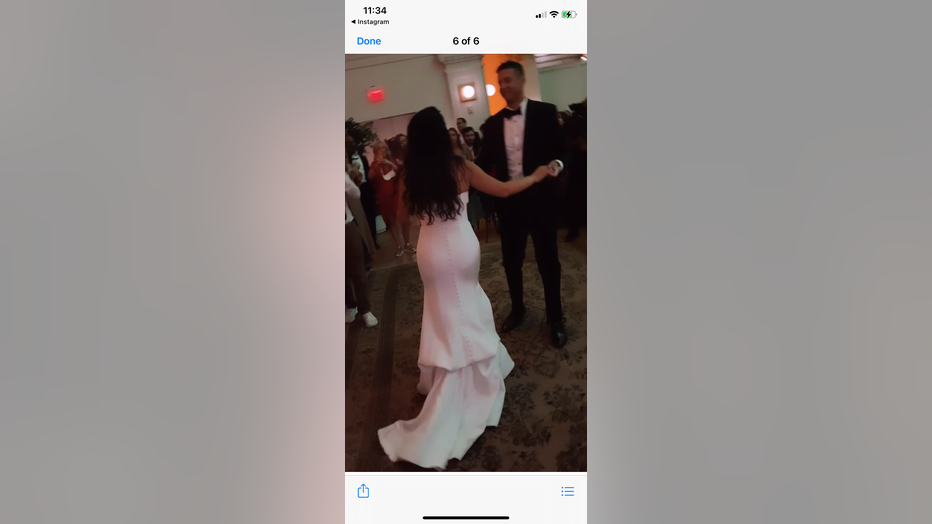
Videos and photos circulating on social media show a maskless D.C. Mayor Muriel Bowser officiating a large wedding in the District on Saturday despite a newly reinstated indoor mask mandate in the nation’s capital.
Social media posts show many people attending the wedding Saturday at The LINE DC, a 5-star hotel in Adams Morgan.
Bowser officiated the wedding on the hotel’s rooftop before drinks and dancing that later headed inside.
Bowser officiated the event less than 24 hours after being photographed maskless with comedian Dave Chappelle on Friday night at The Anthem, where Chappelle performed a comedy set. That celebration occurred a few days before Bowser’s birthday on Monday.
Bowser reinstated an indoor mask mandate in D.C., regardless of vaccination status, following the alarming surge in new COVID-19 infections driven by the Delta variant.
DC Health’s Dr. LaQuandra Nesbitt says the daily case rate has gone up five-fold since the beginning of July, and The District currently has a “substantial” rate of transmission as the variant spreads across the country.
“Given the trends in cases that we see, we want to get ahead of it, nip it in the bud,” Bowser said Thursday. “We know masks can be very effective in doing that.”
The Washington Examinerfirst reported Mayor Bowser’s presence at the largely unmasked event.
Bowser’s office sent FOX 5 this statement that says in part:
“On Saturday, July 31st, Mayor Bowser officiated an outdoor, rooftop wedding ceremony, followed by an indoor dinner. The Mayor wore a mask indoors in compliance with the mandate, and the organizers and venue staff worked to create a safe environment for the staff and guests. The Friday, July 30th evening event called into question by conservative media was outdoors, on a rooftop.”
“We continue to emphasize everyone should be vaccinated as soon as possible and to wear a mask at indoor public settings to protect yourself, your loved ones and your neighbors,” the statement reads.
The statement did not address a published photo of a maskless Mayor Bowser inside during the wedding dinner, and not eating or drinking.
Sophie Penichet, general manager at The LINE, said in a statement that the hotel does not comment on guests at private events.
“The safety of our team, guests and wider community is our utmost priority. The Line Hotel is adhering to the updated mask mandate and requires all employees and guests to be masked when indoors, or not actively eating or drinking,” Penichet tells FOX 5.
President Donald J. Trump raised more than $56 million online in early 2021, ending June with nearly $102 million in cash on hand.
QUICK FACTS:
Trump raised far more money online than any other Republican in the first half of 2021, according to Reuters.
He “ended June with a war chest of more than $100 million,” according to The New York Times.
The money was raised with WinRed, the party’s main donation-processing website.
With $23 million in transfers to his new political action committees (PACs) from 2020 included, Trump actually raised nearly $82 million in the first six months of 2021.
Trump’s committee will collect 75% of the Trump Make America Great Again Committee’s fundraising, the rest going to the Republican National Committee (RNC).
The committee’s recurring donations program—where most of the money raised by the Make American Great Again Committee came through—collected nearly $3.5 million across Trump’s various PACs, notes the Times.
NEW: Top fundraisers on the GOP's @WinRed platform in the first half of 2021:
$34.36M – Trump MAGA $26.71M – NRCC $23.02M – NRSC $21.27M – Trump Save America (Joint Cmte) $19.09M – RNC $7.79M – Tim Scott $7.79M – Team Scalise pic.twitter.com/nHaN6JPVWQ
Senator Tim Scott of South Carolina boasted the next strongest online fund-raiser among Republican politicians, raising raised $7.8 million.
President Trump’s Save America committee had raised an average of $108,000 in the five days leading up to the launch of the “desk” page, according to the Times.
“His PAC raised roughly $421,000 per day on average in the five days after, including more than $900,000 on one day,” writes Times.
Even with major social media platforms banning President Trump, he is still the dominant political force in the Republican Party.
“[Trump’s] influence over the party’s finances also expanded greatly after he made his first public speech since leaving office at the Conservative Political Action Conference on Feb. 28,” notesForbes, “where he told supporters to donate directly to his political groups.”
“The result was the largest single day of fundraising throughout the entire year, according to the Times, with $3.5 million being given straight to Trump’s PACs.”
“Polling suggests Trump would be the overwhelming favorite to win a third-straight GOP nomination if he decides to run again,” also notes Forbes.
Jon Fleetwood is Managing Editor for American Faith.
Last month,the Chinese Communist Party celebrated its centenary with all the internal fanfare you would expect. The party, which has ruled China since 1949, touted the Twitter congratulations of worldleaders from Russia, Pakistan, Kazakhstan, Egypt, Serbia, and elsewhere lauding its record of supposed social, cultural, economic, and environmental progress.
Of course, the Chinese communists’ actual record is quite different — a blunt fact painfully highlighted at last month’s International Religious Freedom Summit in Washington, D.C.
Tursunay Ziyawudun, a Uyghur Muslim woman from East Turkestan (aka, Xinjiang, China) was forced to flee her homeland for the United States. She spoke at the summit, telling through her tears the story of her imprisonment and torture in a Chinese concentration camp.
“Though it is exceedingly difficult for me to speak about my experiences,” she said, “I have come to see it as my duty to be the voice for those people who are in the camps, those who died in front of my own eyes, and those who are being unjustly held in prison.” Ziyawudun went on to detail her arrest and her time in an internment camp, where she was subject to questioning, torture, and forced labor along with thousands of her Uyghur countrymen in the name of Chinese communist-style “assimilation.”
Turkic Uyghurs are mostly Muslim. They have the distinction of being both an ethnic and religious minority in China. As such, they’re subjected to especially brutal suppression. Ziyawudun and her fellow prisoners were forced to watch propaganda films and swear loyalty oaths to the party. The screams of prisoners from across the camp kept her awake at night, but that was not the worst of it. Armed Chinese police officers removed her from her cell and raped her repeatedly.
Today, her memories of prisoners being beaten, bleeding to death, or literally going insane keep her awake at night. “My nightmares make me feel as though I’m living in that fear once again,” Ziyawudun said. “My physical body is free, and so is my voice, but I am suffering deeply. I am only beginning to overcome this suffering by telling my story.”
Sadly, oppression of the Uyghur Muslims is only one piece of the Chinese communists’ real record over the last century. Through civil war, execution, or starvation, the CCP under Mao Zedong alone was responsible for the deaths of roughly 80 million Chinese people in the 20th century. The Chinese communist death toll tops the grim work of Hitler and Stalin.
Sadder still, those numbers exclude the hundreds of millions of Chinese left alive after torture, forced sterilization, or other abuse. And that goes without mentioning the 400 million infants, mostly baby girls, killed by abortion over the past 40 years under the “one-child policy.”
Some anniversary.
Former Secretary of State Mike Pompeo also spoke at the Washington summit, which was co-hosted by Sam Brownback, the former U.S. ambassador-at-large for international religious freedom, and Katrina Lantos Swett, the former chairwoman of the U.S. Commission on International Religious Freedom. All made championing the rights of religious minorities in China (Muslims, Christians, and Tibetan Buddhists, among others) a cornerstone of their tenures.
Pompeo warned against totalitarian regimes that seek to undermine all political liberties by way of restricting religious liberty: “When people lose their capacity to practice their faith, authoritarian regimes will dominate. That basic truth today is being shown in China. Our American Founders understood that, that when nations disregard religious freedom, tyranny … will soon follow.”
The Chinese Communist Party maintains the Xinjiang camps holding over a million Uyghurs are for benign “reeducation.” It denies any and all human rights abuses. But that hasn’t stopped survivors such as Ziyawudun from telling the real story of the ethnic and religious suppression taking place there. They are the voices of the Uyghurs.
Let us hope the world listens to their voices and continues to fight the religious oppression and ethnic genocide taking place in China. Let us hope the Biden administration steps up and names an ambassador for international religious freedom with the leadership stature of a Sam Brownback or Katrina Lantos Swett.
Maureen Ferguson is a senior fellow for the Catholic Association.
Many Americans are expressing their disappointment and anger at athletic shoemaker Converse, which has launched a new line of sneakers in collaboration with fashion designer Rick Owens featuring a satanic pentagram which is the logo of his brand DRKSHDW.
“This is sad, I grew up wearing Converse but seeing that satanic marketing through your shoes, I won’t be buying into this. God help you!” says a comment on the shoemaker’s Instagram account, where it launched the sneakers featuring a pentagram in place of the iconic Chuck Taylor star last week.
Another follower thanked Converse for showing its “real side.” “No more purchase,” they added.
In the launch post on social media, Converse wrote, “The aesthetic is all about disrupting formality—embracing traditional structure and then blowing it up. Rick Owens crafts a Chuck 70 unlike any other. And it’s only the beginning for Converse x DRKSHDW.”
In another post by Converse, Owens wrote, “I’ve been using this pentagram for a long time because obviously, it has adolescent occult associations.”
He added that he likes “geometric diagrams like that because, in a very primal way, they are a culture’s grasp for control. And a way to organize thoughts and systems.”
Owens continued: “And a pentagram, in this day and age with all of its associations… I like the fact that it refers to an alternative system. And that suggests openness and empathy. It suggests the pursuit of pleasure, this pursuit of sensation. But one of the main things that I think it suggests is empathy and a consideration of systems of living that might not be standard. So that leads us to be more accepting and tolerant of other systems, which I think is a good thing.”
Earlier this year, MSCHF, a Brooklyn-based collective, modified Nike Air Max 97s into a “Satan Shoes” line and released it in collaboration with rapper Lil Nas X.
The controversial shoes incorporated drops of blood and ink into an air bubble. They were decorated with a pentagram pendant and a reference to Luke 10:18: “And he said to them, ‘I saw Satan fall like lightning from heaven.’”
The Satan Shoes release coincided with Lil Nas X’s single, “Montero (Call Me By Your Name),” and its accompanying music video. In the video, Lil Nas X descended a stripper pole and gave Satan a lap dance.
The Satan Shoes line was a follow-up to the release of the collective’s Jesus Shoes, which reportedly contain holy water. The white shoes were marked with the phrase “MT. 14:25,” which references Matthew 14:25.
Both the release of the Satan Shoes and the music video were announced ahead of Palm Sunday weekend.




America was not founded by atheists and deists
Last week, I wrote in this column about the recent research of George Barna, who has concluded that America’s religion is no longer one of orthodox belief but rather a new syncretistic faith that he called moralistic therapeutic deism – a nonjudgmental don’t-worry-be-happy “fake Christianity” where self-actualization and personal affirmation are now our highest goods. The result of my article? My critics came unglued.
“First and foremost, you need to get your facts straight,” said one. “America has no Christian basis whatsoever.”
“Pure drivel,” stated another. “Let’s start with the fact the majority of our founding fathers were deists.
The crowd then piled on (there are over 400 comments. Go check out the original piece). “What an ignorant op-ed… [There is] a sea of documented evidence that there was no intention of having any religion of primacy in our nation,” they shouted.
Well, I’d like to take my detractors at their word. Let’s “get our facts straight.” Let’s consider the “evidence” as to what our nation’s founders and subsequent leaders actually believed about religion, Christianity, and the Bible.
Stuff like,
John McHenry (signer of the Constitution) said, “The holy Scriptures… Can alone secure to society, order, and peace… In vain, without the Bible, we increase penal laws and drop protections around our institutions.”
Or Thomas Paine (one of the least religious of our founding fathers) who scolded, “It is from the error of the schools… [that] evil has… generate[d] in the pupils a species of atheism. Instead of looking through the works of the creation to the Creator himself, [we] stop short and employ the knowledge [we] acquire to create doubts of His existence.”
And how about Noah Webster (the lexicographer recruited by Alexander Hamilton to lead Federalist thinking) who admonished, “Our citizens should early understand that the genuine source of correct Republican principles is the Bible – particularly the New Testament….”
Or Benjamin Rush (who signed the Declaration of Independence) and proclaimed, “We err… only because we do not know the Scriptures and obey their instructions. Immense truths… are concealed in them. The time, I have no doubt, will come when posterity will view and pity our ignorance of these truths….”
Or Fisher Ames (who was responsible for the final wording of the First Amendment), who said, “We have a dangerous trend beginning to take place in our education. We’re spending less time in the classroom in the Bible, which should be the principle text in our schools….”
And we can’t forget,
Samuel Adams – “Just and true liberty… may be best understood by reading and carefully studying the institutes of the Great Law Giver and Head of the Christian Church, which are to be found clearly written and promulgated in the New Testament.”
Patrick Henry – “This book [the Bible] is worth all the other books which have ever been printed….”
Daniel Webster – “To the free and universal reading of the Bible… Men are much indebted for our right view of civil liberties….”
James Wilson (who signed the Declaration and was appointed as one of the original justices to the Supreme Court) – “Human law must rest its authority ultimately upon the… revelation contained in the Holy Scriptures.”
Benjamin Franklin – “The longer I live, the more convincing proofs I see of this truth – that God governs in the affairs of men… I firmly believe this, and I also believe that without His concurring aid, we shall succeed in this political building no better than the builders of Babel.” (Doesn’t sound much like a deist, does it?)
And if this isn’t good enough and you still think the “evidence” is lacking, maybe we could look to our nation’s first public education law enacted in 1647. It warned: “It being one chief project of that old deluder, Satan, to keep men from the knowledge of Scriptures….”
Or if you don’t like that one, consider the Northwest Ordinance that instructed, “Religion, morality, and knowledge, being necessary to good government and the happiness of mankind, schools and the means of education shall be forever encouraged.”
Then we have John Quincy Adams (sixth President of United States) who said, “I deem myself fortunate… to bear my solemn testimonial of reverence and gratitude to that book of books, the Holy Bible….”
And Calvin Coolidge (our nation’s 30th president) wrote, “The foundation of our society and government rest so much on the teaching of the Bible that it would be difficult to support them if faith in these teachings would cease to be practically universal in our country.”
Or, Justice Earl Warren (the 14th Chief Justice of the Supreme Court), who proclaimed, “I believe the entire Bill of Rights came into being because of the knowledge our fathers had of the Bible and their belief in it.”
This list of quotes could literally go on and on and on. One could write endless columns about them. Maybe the smart folks who keep scolding us about “facts” and “evidence” would do well to go back and read a bit before they embarrass themselves further. A little education never hurt anyone.
• Everett Piper (dreverettpiper.com, @dreverettpiper), a columnist for The Washington Times, is a former university president and radio host. He is the author of “Not a Daycare: The Devastating Consequences of Abandoning Truth” (Regnery) and, most recently, “Grow Up: Life Isn’t Safe, But It’s Good.”