Home Blog Page 3511

What is really going on between Beijing and Washington in the South China Sea?

In today’s polarised world, the situation in this hugely significant region of the Pacific is frequently portrayed as either Chinese expansionism or American imperialism. As ever, the truth of the matter is much more complicated.

While attempting to brush off the ongoing catastrophe in Afghanistan, US Vice President Kamala Harris is pursuing her long-awaited tour of Southeast Asia, with stops in Singapore and Vietnam. Here, she has accused Beijing of “intimidation” and “coercion” in the South China Sea, a key strategic waterway which Beijing has long claimed as its own via the ‘nine-dash line’. The US has for some time made resisting China’s claims in this region a staple of its foreign policy, incorporated under the ‘Indo-Pacific Strategy’, wherein it sought to increase its naval presence in the contested waters through ‘freedom of navigation’ exercises and encourage allied countries to do the same.

Roughly a year ago, Mike Pompeo officially denounced the nine-dash line as illegitimate, with Australia following suit. The anti-Beijing narrative seeks to simplistically portray the South China Sea situation as an example of ‘expansionism’ and ‘aggression’ by China. This may seem logical to some, given it puts the surrounding countries in an uncomfortable situation, but is this really the case? Is there not more to this story? Every coin has two sides, and the South China Sea debacle is in fact a reaction to Washington’s growing anti-China policies, a cycle of escalation which commenced in the Obama era, as opposed to the simplistic interpretation of ‘aggressive’ or ‘ambitious’ behaviour towards Beijing. It is less specifically about third-party countries, as much as they may be aggravated by it, and more about responding to America’s attempts to encircle and militarize China’s periphery. This created a loop, kicking off with the ‘US pivot to Asia’ and subsequently intensifying.

Of course, there is a reasoned historical background to this. If one only consumes mainstream media coverage, you might be inclined to believe that China one day ‘decided’ that it ought to own the South China Sea. It is conventional enough to conceive it that way, but in fact the ‘nine-dash line’ map is a territorial and maritime claim which pre-dates the existence of the People’s Republic of China itself, and was a claim advocated by the predecessor Republic of China State (the government of which is now in Taiwan, and still officially claims this boundary) in 1947 as part of a UN haggling. With the surrender of Japan, who had of course seized territory from many Asian nations and left a litany of disputes behind, the Republic of China argued that it rightfully owned the Paracel, Pratas, and Spratly Islands. Yet it doesn’t stop with this; the insistence upon the nine-dash line as a maritime boundary has even deeper origins, as a product of clashes between the Qing Dynasty and the French Empire who ruled ‘Indo-China’.

This is a historical issue which has subsequently taken on a contemporary strategic significance, something exacerbated by growing strategic distrust with the US, and also the fact China simply has the capabilities and also the urgency to consolidate its claims and ‘control’ the region in a way that was not relevant in the past few decades. Mao Zedong never had the navy nor the technology for it to be taken seriously, and nor was the US at that point in time attempting to pursue a regionalized containment of China. Beijing’s own strategic logic has long interpreted American behaviour through the lens of ‘encirclement’ – that is, an effort to establish military supremacy all the way around China’s exterior in a bid to politically dominate and constrain it.

Its primary strategic objective is not ‘hegemony’, as is so misleadingly claimed. It is preventing this from occurring – but of course this, by default, expands China’s military power, provoking tensions. Beijing sees a number of American-aligned chess pieces in this game. This includes Japan, increasingly South Korea, the island of Taiwan, the US territory of Guam, the US territory of the Northern Mariana Islands, to some extent the Philippines to the east, India to the west, and then of course the UK sailing its aircraft carriers through the region too. Put them all together and you have an entire coalition of US partners and allies surrounding you, with America itself increasing its naval and military assets in the region. What do you do in order to prevent this?

The South China Sea, as it happens, has significant stakes. It’s a passage between Asia and the rest of the world, to the east or west. It’s China’s primary maritime route in and out of Asia to the rest of the world, comprised of 64% of its shipping trade, one third of global shipping as a whole, and an accumulated value of $3.37 trillion. In a conflict scenario, China fears that the United States and its allies would attempt to navally embargo China via this encirclement strategy – simply cutting it off to the world, bringing its economy to its knees, nixing its energy imports, as well as providing easy access for these countries to bomb China’s territory. Whilst this is one reason China is extensively pursuing transcontinental land routes via the Belt and Road initiative, it’s also the reason China is responding to American activities by increasing its military presence in the South China Sea through building up its navy, building military and air bases on contested islands, as well as radars, anti-aircraft weapons, and ballistic missile capabilities. This is all part of a conflict strategy premised on ‘area-denial’ that is making it impossible for US forces to enter, ensuring it can secure the mainland and prevent others from aiding Taiwan.

The US and its allies like to frame their response to China through the constant buzz-phrase “freedom of navigation” – saying “we will sail where we like” and that it is “upholding international norms,” but this is sugar-coating what is actually happening: military-led containment of China is masquerading as an upkeep of international law. Of course, in normal times, China is not truly trying to block the passage of anyone, and it all stands as a code-word for sustaining US naval supremacy, a logic of hegemony which is derived from the “Britannia rules the waves” mantra of old. If you have the most powerful navy and want to sustain global dominance, of course you’re going to insist on a rule which demands you can sail absolutely anywhere without restriction because it favours your preferences.

In reality, the US is not a party to the UN convention on the law of the sea, yet subsequently preaches it to China. But Beijing’s challenge in the midst of these diplomatic offensives by Washington, and what invites the US presence into the region, is that the South China Sea controversy inevitably infringes upon the maritime claims of third parties, and these third parties subsequently become the means which the US strives to justify its regionally focused China containment policy. If Beijing is to beat out the US, it has to learn to compromise with these countries accordingly and assure them its intentions are not threatening. However, for the US to be pushed out of the region means you are de-facto accepting Chinese dominance.

In this case, despite US pressure, is it any wonder the states of Southeast Asia really do not want to ‘choose’ in this dispute? The South China Sea at its most basic insight is a US versus China military struggle for supremacy in the region, with Beijing ramping up its militarization to counter American encirclement, which itself creates a cycle of escalating tensions. However, since China is ‘the home team’, so to speak, with a permanent geographic advantage, one wonders how long the US and its allies can keep up this game.


Biden Accidentally Says Kamala Harris Is ‘Gonna Be’ A Female President ‘Pretty Soon’

“It’s one thing for somebody say that and keep pounding that in the head of your five granddaughters as well, but to, guess what, until they see it until they watch, it becomes real then.”

Democrat President Joe Biden appeared to suffer a slip of the tongue on Monday, implying that Vice President Kamala Harris may become the first female President by stating, “that’s why we have a female Vice President of the United States of America, who’s gonna be, we’re gonna have some [female] presidents pretty soon.”

“My two daughters were born, that you can do anything a man do,” Biden said on Monday. “It’s one thing for somebody say that and keep pounding that in the head of your five granddaughters as well, but to, guess what, until they see it until they watch, it becomes real then.”

“That’s why, by the way, She [Kamala Harris] happens to be in Asia for me right now, but that’s why we have a female Vice President of the United States of America, who’s gonna be, we’re gonna have some presidents pretty soon,” Biden concluded. It is unclear why Biden would begin saying that he believes Kamala Harris will be the first female President of the United States, given that he has not indicated any move to let Harris run in his stead in the 2024 election.

A stunned Biden was told on Sunday that a CBS poll found most Americans do not believe he is “competent, focused, or effective” as POTUS:

“And then, a question on the public response: A new poll out today shows Americans wanted to withdraw from Afghanistan, but they disapprove of the way you’ve handled it,” Biden was told on Sunday. “The poll also found that based in part on what’s transpired in the last week, the majority of Americans – forgive me, I’m just the messenger – no longer consider you to be competent, focused or effective at the job.”

A visibly shaken Biden said, “I haven’t seen that poll,” shook his head in bewilderment, and laughed awkwardly when told the poll was released by CBS on Sunday morning. Biden then repeated previous talking points about how he made the decision to withdraw troops from Afghanistan, a decision that was actually made under the Trump administration and delayed by the Biden regime.

Biden’s new ‘death tax’ threatens family farms, small businesses

Proposal draws intraparty opposition

President Biden’s proposal for a new death tax to help pay for his $3.5 trillion social welfare expansion is hitting resistance from members of Congress, including a top farm state Democrat who warns that the tax will hurt family farms.

The proposal would change the way capital gains are calculated on inherited assets worth more than $1 million, taking a bigger bite out of inherited stocks, real estate, businesses and farms.

Of all the proposed tax increases to help pay for Mr. Biden’s bigger welfare state, this one would have the greatest impact and rake in an estimated $800 billion in revenue.

Mr. Biden has said he would give breaks to “certain” family-owned businesses, possibly farms, but that hasn’t sold the idea for House Agriculture Committee Chairman David Scott, Georgia Democrat.

“I am very concerned that proposals to pay for these investments could partially come on the backs of our food, fiber and fuel producers,” Mr. Scott wrote to Mr. Biden in June.

On the eve of the House’s first planned vote on the $3.5 trillion budget bill, the lawmaker’s worries had not been allayed, a spokesman said.

Proprietors of small businesses also are worried.

Far-left lawmakers such as Sens. Bernard Sanders of Vermont and Elizabeth Warren of Massachusetts have said a repeal of what is known as step-up basis would finally make millionaires and billionaires pay their fair share.

The calculation would apply the capital gains tax to the increased value of an asset during the deceased’s lifetime. Inheritance currently is subject to a capital gains tax on the asset’s value at the time of death, or its step-up basis.

Pat McDowell said the tax would spell the end of the McDowell Ranch, which he owns with his two brothers in central Texas.

The brothers want to pass the ranch to their niece to keep it in the family, as it has been for five generations. If the proposed tax is approved, she would have to sell off part of the ranch just to pay the death tax, he said.

Then there might not be enough ranch left to thrive.

“This plan punishes our family, just because we want the next generation to be able to make a living in agriculture,” Mr. McDowelll said.

The federal government already imposes a death tax on the total value of an inheritance, but only 50 of 31,000 farms whose owners died last year were subject to the tax, according to the Agriculture Department.

More farms, businesses and estates are expected to be taxed under Mr. Biden’s proposal.

The tax kicks in when the deceased has a net worth of $11.7 million or more, and it applies a 40% tax after the first $1 million in taxable assets.

The Biden death tax would apply a 40.8% capital gains tax to inherited assets with an exemption for the first $1 million and another $250,000 exemption for a personal residence. Married couples would get a $2 million exemption and the exemption for their residence, according to the proposal.

Details of the $3.5 trillion budget bill, including inheritance tax, are still being finalized. The House is preparing to vote Tuesday to advance the package, agree to its price and send it to committees to work out the details.

Democrats plan to pass the bill in party-line votes in the House and Senate. They will use a special budget procedure known as reconciliation, which allows the Senate to avoid the 60-vote hurdle that most legislation must clear. Instead, Senate Democrats plan to pass the legislation with a simple 51-vote majority, with Vice President Kamala Harris breaking the tie. That is the only way Democrats can get the liberal wish list of anti-poverty, education and health care programs through the evenly split Senate.

Liberals for years have been pushing for higher taxes on the wealthy to fund more benefits for working-class Americans.

The left-leaning Center on Budget and Policy Priorities argued that the current inheritance tax is unfair because it lets those who are rich enough to own valuable real estate, stocks or businesses escape taxes as their wealth grows.

The group pointed to Amazon founder Jeff Bezos, who paid income taxes on his $81,840 salary last year. At death, under current tax law, Mr. Bezos’ heirs would not have to pay taxes on the $100 billion that his Amazon stock generated from 2010 to 2018.

Their estimates were based on Securities and Exchange Commission filings.

In addition to taxing the full appreciation of inherited assets, Mr. Biden proposes increasing the rate of the capital gains tax to 40.8% from 23.8%.

The tax bill on an inherited $100 million estate could nearly double to $61.1 million, according to the conservative Tax Foundation.

Mr. Biden promised to soften the impact by delaying the tax for some family-owned businesses until the business is sold to someone outside the family. However, neither he nor congressional Democrats released details of such a plan.

“Families in agriculture and other small businesses feel this tax hike is about punishing them and know that Democrats are unlikely to provide any exemption,” said Rep. Kevin Brady of Texas, the top Republican on the tax-writing House Ways and Means Committee.

Biden’s Afghanistan debacle has weakened America around the world

President Joe Biden insists his calamitous withdrawal from Afghanistan has not diminished America’s global credibility.

He must be living on another planet.

U.S. allies and foes knew the Afghanistan withdrawal was coming. What they did not know is that Biden would withdraw with such chaotic disregard for American interests, honor, and innocent life. Nor did they expect that Biden would react with such petulance and scorn even Donald Trump can hardly rival when challenged on this record.

Questioned as to the morality of abandoning Afghan soldiers and intelligence officers who had fought and died alongside Americans for nearly 20 years, Biden simply declared them all to be cowards. Asked about the images of Afghan bodies flying off the wings of fleeing American planes, Biden angrily insisted it didn’t matter because the images were a few days old.

Asked to offer public leadership, Biden hid out in the forests of Camp David. It was only when the criticism became a cacophony that the president was finally shamed into returning to Washington. Witnessing the Taliban’s obstruction of U.S. and Afghan citizens seeking access to Kabul airport, Biden warned of consequences. But when witnessing harassment, Biden has done nothing.

This ignominious experience has taught other governments two things: Biden is unreliable as a leader and apparently detached from reality. It’s not a great look.

China now says Biden’s Afghan debacle shows Taiwan it can no longer rely on America. In response, Taiwan’s president says her nation must “be stronger, more united, and more resolute in protecting ourselves.” Taiwanese media has reported the defense ministry will unveil a special $7 billion missile procurement plan.

Nor are America’s NATO allies comfortable. The British Parliament was in an uproar last week, with one MP describing Biden’s conduct as “shameful.” Other NATO leaders are now pointing to Afghanistan as proof of the need for an independent European security strategy that would likely entail a closer European compromise with China. The connection point between America’s Afghanistan debacle and America’s top foreign policy priority is thus clear.

The broader question marks are abundant.

Can Israel still trust Biden’s commitment he will never allow Iran to become a nuclear weapons power? Or will Israel’s hawkish prime minister decide that only force can be trusted to deliver protection against a second Holocaust?

Will Ukraine still view Biden as its key means of deterring Russia? The question bears particular note in light of Biden’s previous weakness toward that democracy. After all, in recent months, we have seen the president cancel planned naval deployments in the Black Sea and gift Vladimir Putin with his Nord Stream 2 energy-blackmail pipeline.

Will India continue strengthening its strategic partnership with America? Or will its leaders judge from Biden’s unreliability they must instead compromise with China?

Witnessing the rubble of Biden’s Afghanistan strategy, will Putin be more or less likely to intimidate and subvert U.S. allies on his western flank? Will he be more or less likely to deploy his assassination squads across the globe?

Witnessing Biden’s failure to challenge the Taliban’s roadblocks, will Kim Jong Un be more or less likely to return to ballistic missile extortion?

Witnessing Biden’s hide-in-the-forest approach to leadership, will Xi Jinping be more or less likely to conduct cyber espionage and gunboat diplomacy?

Biden says the buck stops with him. For the future of American national security, that is the real problem.

CIA Director Burns Secretly Met With Taliban Leader in Kabul

CIA Director William Burns secretly met with the Taliban’s de facto leader, Abdul Ghani Baradar, in Kabul on Monday, The Washington Post is reporting.

The CIA declined comment on the meeting, the newspaper said. The talks came amid a frantic effort to evacuate people from Afghanistan and chaotic scenes from Kabul’s international airport.

The meeting also came as President Joe Biden gets set to decide whether to push back the Aug. 31 deadline for U.S. troops to withdraw from Afghanistan.

Biden had warned on Sunday the evacuation was going to be “hard and painful,” Reuters reported. He said troops might stay beyond the deadline to coordinate the evacuation. Biden was expected to decide on Tuesday.

The Post noted the Taliban have warned any extension of the deadline would cross a “red line.” It has threatened the U.S. would face consequences on any delay,” NBC News noted.

The news network pointed out Biden is facing criticism in the U.S., as well as abroad, for the chaotic evacuation.

NBC News said there are fears that if Biden tries to change the deadline, the Taliban will target Americans and other foreign nationals still in the country.

Meanwhile, the Post reported the irony of the Taliban’s Baradar meeting with the CIA director. Baradar had been arrested 11 years ago in a joint CIA-Pakistani operation that put him behind bars for eight years.

It said Baradar is a close friend of the Taliban’s founding supreme leader, Mohammad Omar.

Before the meeting between Burns and Baradar had been made public, State Department spokesman Ned Price had been asked on Monday about why senior officials had not talked with Baradar.

“Our discussions with the Taliban have been operational, tactical,” Price said. “They have been focused largely on our near-term operations and near-term goals … what is going on at the airport compound … That is what we’re focused on at the moment.”

Calif. church offers religious exemption letters for people opposed to COVID vaccine

A church in California that has a history of defying pandemic lockdown orders is offering religious exemption letters for people opposed to being vaccinated against COVID-19.

KCRA News reports that after Sunday services last week, there were long lines of people waiting to pick up exemption letters from Destiny Christian Church in Rocklin, led by Pastor Greg Fairrington. Some say they traveled over two hours to get a letter. 

Fairrington told the outlet that he doesn’t believe vaccine requirements are “right.”

“America is a free country. We have freedom of religion, and if a person has a moral objection to taking the vaccine, we want to come alongside of them,” he said in a video interview. 

Destiny Christian Church, which averages 10,000 people online and in-person for its worship services, recently sent a statement to the Los Angeles Times explaining the importance of the exemption letters.

Fairrington said the church has gotten “thousands of phone calls from doctors, nurses, educators, and first responders, in tears, fearing that their livelihoods hang in the balance because of their religious convictions.”

“The vaccine poses a morally compromising situation for many people of faith,” stated Fairrington. “The religious exemptions we are issuing speak to that, honor that, and affirm that.”

Earlier this month, Fairrington and his wife, Kathy, led their congregation in a prayer for those who work in healthcare, education or other fields threatened with losing their job because they refuse to get the COVID-19 vaccine on moral grounds.

Michelle Mello, a professor of law and medicine at Stanford University, told the Times that she believes the exemption letters are “irrelevant” since most workplaces and the courts already recognize “bona fide” and “sincere” religious exemptions.

“You have to do one of two things to protect other people from the risk that you pose to them,” Mello told The Los Angeles Times, getting vaccinated or getting tested regularly.

“That’s not a mandate. A mandate is when you withhold an important benefit because a person declines to receive vaccination.”

As the COVID vaccine becomes more widely available, many schools and businesses have required workers and others to get vaccinated or, if exempted for medical or religious reasons, to submit to wearing face masks in public and getting tested regularly.

While Destiny Church has offered to provide religious exemption letters, other Christian bodies like the Roman Catholic Archdiocese of New York have refused to allow their clergy to give such exemptions.

In a memorandum dated July 30, Chancellor John P. Cahill informed all clergy and staff that there is “no basis for a priest to issue a religious exemption to the vaccine.”

“Pope Francis has made it very clear that it is morally acceptable to take any of the vaccines and said we have the moral responsibility to get vaccinated,” wrote Cahill.   

“By doing so [a priest] is acting in contradiction to the directives of the Pope and is participating in an act that could have serious consequences to others.”

The archdiocese concluded that while a person “is free to exercise discretion on getting the vaccine based on his or her own beliefs,” their clergy “should not be active participants to such actions.”

Fairrington made headlines earlier this month when he urged congregants to vote to recall Gov. Gavin Newsom during the recall election on Sept. 4. He told The Sacramento Bee that Newsom’s policies during the pandemic have had “traumatic consequences for families, schools, communities, and the church.”

Newsom came under fire as his administration enacted restrictions on in-person worship services during the COVID-19 pandemic. Several churches disobeyed the guidelines and some challenged them in court. In April, the U.S. Supreme Court vacated a lower court ruling against South Bay Pentecostal Church, which sought injunctive relief against the restrictions. 

Joe Biden Caves to Taliban: Sticks with August 31 Withdrawal Deadline

President Joe Biden on Tuesday caved to the Taliban and pledged to honor the August 31 withdrawal deadline for U.S. personnel in Afghanistan, Reuters reported.

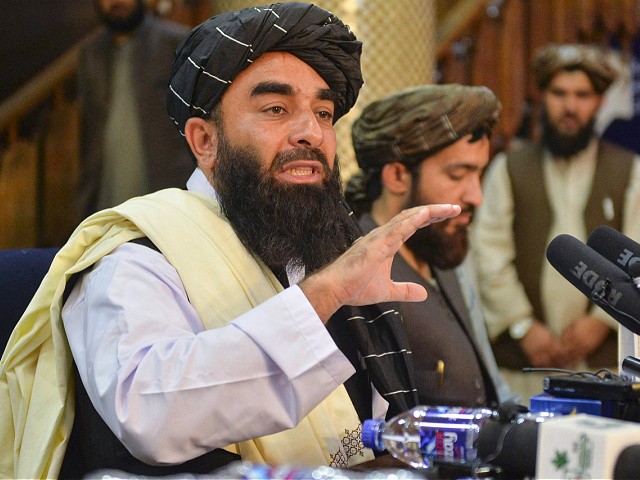
Biden’s decision comes after Taliban spokesman Zabihullah Mujahid said Tuesday morning that the terrorists will accept “no extensions” to the August 31 deadline.

The Taliban reportedly met with CIA Director William Burns on Monday who negotiated face-to-face with Taliban leader and co-founder Abdul Ghani Baradar. They do not appear to have reached any agreement.

Mujahid said he was “not aware” the CIA met with the Taliban, “but he did not deny that such a meeting took place,” the Associated Press observed. The CIA would neither confirm nor deny the negotiation.

The deadline of August 31, six days from Tuesday, was not Biden’s original withdrawal deadline. Biden broke the deal his predecessor, Donald Trump, negotiated with the Taliban to be out by May 1 of this year, extending the U.S. presence to September 11 before shortening it to the end of August.

If the evacuation of American citizens and the U.S. military had been completed by the original date, the evacuation would have been accomplished before the Afghan fighting season that occurs in the summer, avoiding the choice, warm months of fighting. But politics perhaps played a part in the Biden and Harris administration’s decision to extend the war until late August or September.

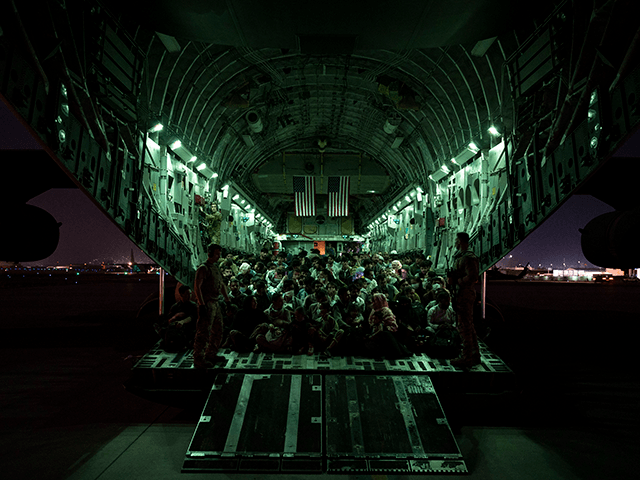
Meanwhile, thousands of Americans are still stranded behind Taliban lines. Reports indicate about 3,300 Americans have been evacuated since the collapse of Afghanistan. Other non-American citizens have also been evacuated to various country’s included Qatar, where a report has surfaced about unsanitary conditions for the refugees.

Axios reported a leaked email Tuesday that depicts evacuees are living in a facility “awash with loose feces, urine, and a rat infestation.”

Spokesperson for U.S. Central Command William Urban told Axios that “We recognize this is a challenging and difficult situation” and the “current conditions in Doha are of our own doing.”

Hollywood Director Spike Lee Says He Has ‘Questions’ About Investigation Into 9/11 Attacks

On 11 September 2001, a group of al-Qaeda* terrorists hijacked four airplanes, which they then crashed into the World Trade Centre and the west side of the Pentagon. The fourth jet crashed into a field in Pennsylvania. The tragic events have prompted numerous conspiracy theories, with people alleging that the US government masterminded the attacks.

Hollywood director Spike Lee has excited supporters of conspiracy theories after hinting that the World Trade Centre collapsed not as a result of a terrorist attack, but a controlled demolition. The two-time Academy Award winner made the statement in an interview with The New York Times as he spoke about his new work dedicated to the anniversary of the September 11th attacks, commonly known as 9/11.

“New York Epicenters: 9/11-2021½” is based on interviews with witnesses to the tragic events, from ordinary citizens and officials to healthcare workers, police officers, and firefighters. The series also features interviews with supporters of conspiracy theories, in particular, members of the group Architects and Engineers for 9/11 Truth, who have for years claimed that the attacks were orchestrated by the administration of then-President George W. Bush.

When the NYT’s correspondent asked the acclaimed director why he decided to interview supporters of the conspiracy theories surrounding the events he said the following:

“Because I still don’t … I mean, I got questions”.

When pressed on the results of the investigation, which said that jet fuel caused the steel beams in the buildings to melt, and subsequently led to the towers’ collapse, Lee hinted that he doesn’t believe it.

“The amount of heat that it takes to make steel melt, that temperature’s not reached. And then the juxtaposition of the way Building 7 fell to the ground — when you put it next to other building collapses that were demolitions, it’s like you’re looking at the same thing. But people going to make up their own mind. My approach is put the information in the movie and let people decide for themselves. I respect the intelligence of the audience”, he said.

The director voiced hope that his new work would prompt members of the US Congress to hold a hearing on the issue.

As mentioned earlier, 9/11 has prompted numerous conspiracy theories, with people suggesting that the US government was either involved or masterminded the attacks, which the White House reportedly used as a pretext to launch the invasions of Afghanistan and Iraq.

Supporters of these conspiracies point to the “unusual” collapse of the World Trade Centre, specifically Building 7, which they described as a controlled demolition.

According to an investigation conducted by the National Institute of Standards and Technology (NIST), falling debris from the North Tower started fires on the tenth floor of Building 7. The fire safety system in Building 7 couldn’t extinguish the fires because the collapse of the North and South Towers led to a break in the city’s water main.

As a result, the fires in Building 7 continued to burn for hours, which investigators say led to the collapse of the structure. The NIST computer model, which was based on photos, videos, and witness testimonies, showed that the heat from the fires expanded long support beams, causing the connections and floors to fail.

Although the NIST investigators admit that it is very rare for high-rise buildings in the United States to collapse as a result of fire, they say they found no evidence that Building 7 came down as a result of a controlled demolition.

Fauci Dismisses “Freedom” In Call For Vaccine Mandates: “The Time Has Come. Enough Is Enough.”

“We’ve just got to get people vaccinated.”

After the FDA fully approved the Pfizer COVID vaccine, Anthony Fauci immediately issued a decree via his permanent CNN propaganda platform that it is time for nationwide vaccine mandates.

Fauci declared that “There was some poll that showed about 30% of people who are not anti-vax, they were just waiting to get what they felt was the real final stamp of approval, which we just got today with the Pfizer product.”

He continued, “And those 30% are saying when that occurs, they will feel very, very comfortable about getting vaccinated. So right away, you’re talking about 30%. I hope they come through with what the survey said.”

Fauci added “They’re going to give a lot of incentive and backing for a lot of institutions and organizations and places of employment to mandate, and that could be colleges, university, the military, organizations that employ a lot of people, some of the big corporations are going to say if you want to work for us in person, you’ve got to be there and get vaccinated.”

Fauci then dismissed freedom as an after thought, noting “I know I respect people’s freedom, but when you’re talking about a public health crisis that we’ve been going through for well over a year and a half, the time has come. Enough is enough. We’ve just got to get people vaccinated.”

“If we keep lingering without getting those people vaccinated that should be vaccinated, this thing could linger on, leading to the development of another variant which could complicate things.” Fauci further proclaimed.

Watch:

Fauci’s comments come after Joe Biden called for more private companies to implement mandates:

Rand Paul slams ‘incompetent’ withdrawal by Biden